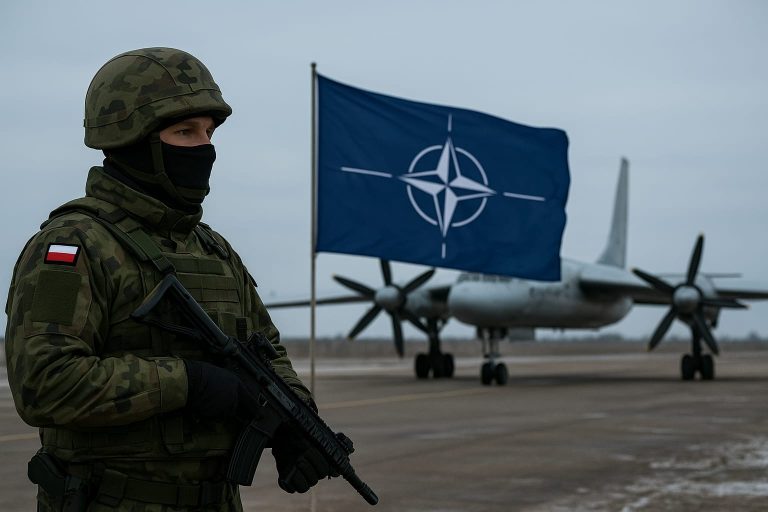
Putin Over Poland: Why Moscow Would Dare Cross NATO’s Red Line — And What the Alliance Must Do

Russia’s drone incursion into Poland underscores the fragility of NATO’s deterrence and the Kremlin’s strategy of probing allied thresholds. Poland, now NATO’s psychological tripwire, faces not just tactical provocations but existential tests of credibility. Moscow’s calibrated violations aim to erode unity, force hesitation, and broadcast weakness. NATO’s response must be decisive: integrated defences, rehearsed protocols, and unified political messaging. Poland is more than geography—it is the frontline of Europe’s collective security, where ambiguity fuels aggression and clarity sustains deterrence.
Read MorePutin Over Poland: Why Moscow Would Dare Cross NATO’s Red Line — And What the Alliance Must Do

Guarding Europe’s Eastern Horizon: How NATO and Poland Can Turn Russian Probes into Strategic Strength

As tensions mount on NATO’s eastern flank, Poland emerges as a pivotal actor in defending Europe’s security architecture. Russia’s aerial and cyber probes are not only a threat but also a test of alliance cohesion. By investing in forward defense, intelligence sharing, and rapid-reaction capabilities, Poland and NATO can transform these provocations into opportunities to harden Europe’s eastern horizon, signaling to Moscow that unity and readiness—not hesitation—define the future of European security.

Read MoreGuarding Europe’s Eastern Horizon: How NATO and Poland Can Turn Russian Probes into Strategic Strength

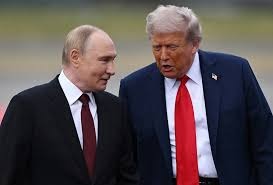
The Trump–Putin Summit and its implications for Sustainable Development

The Trump–Putin summit in Anchorage underscored shifting geopolitical dynamics with far-reaching consequences for sustainable development. While dominated by the Russia–Ukraine war, its implications extend to energy security, climate goals, food supply chains, and global cooperation. Agreements hinting at fossil fuel dependency, U.S. security guarantees to Ukraine, and weakened multilateralism risk slowing progress on the SDGs. With disruptions to trade, aid, and decarbonization, the summit highlights the need for vigilant international advocacy for sustainability, inclusivity, and cooperative governance.

Read MoreThe Trump–Putin Summit and its implications for Sustainable Development

Strategic Partner or Dominant Power? Rethinking U.S. Influence on NATO’s Consensus Model

For decades, intergovernmental military alliance NATO has held up its consensus-based decision-making as proof of its democratic values. A system where every member has an equal voice and consensus dictates agreement through unity. Yet, as the dominant military and financial contributor, the influence of the United States has always been apparent. In 2025, does that influence increasingly override collaborative negotiation?

Read MoreStrategic Partner or Dominant Power? Rethinking U.S. Influence on NATO’s Consensus Model

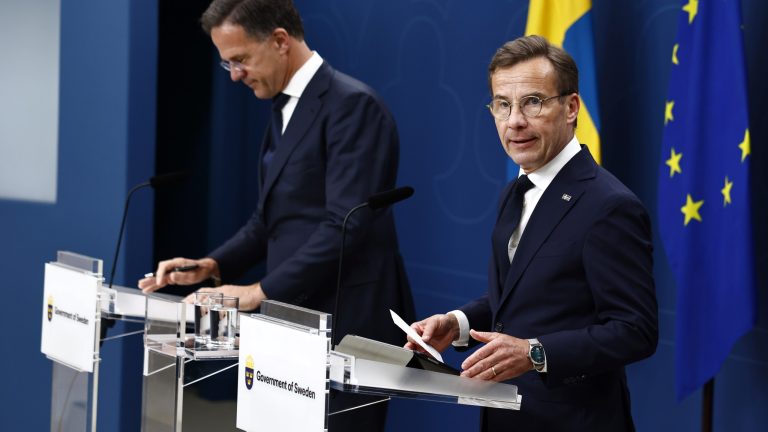
Sweden Commits 5% of GDP to Domestic and NATO Security

Sweden has unveiled one of the most ambitious defence investments in its modern history, committing to allocate 5% of its GDP to national and NATO security by 2030. The multi-party agreement includes $31 billion in new spending to modernise Sweden’s military and civil defence. As geopolitical tensions escalate, particularly around the Baltic, Stockholm’s move positions it as a frontline NATO contributor. However, balancing long-term ambition with economic and operational constraints will test Sweden’s resilience and readiness in the years ahead.

Read MoreSweden Commits 5% of GDP to Domestic and NATO Security

Britain Re-Arms: What the UK’s 2025 Strategic Defence Review Really Signals

Britain’s 2025 Strategic Defence Review marks a profound shift from post-Cold War complacency to strategic realism. With increased defence spending, revived industrial capacity, nuclear modernization, and a global military posture, the UK is preparing for long-term global disorder. From missile stockpiles to cyber resilience and AI-driven warfare, the review signals that Britain is rearming not for the last war, but for a future of great-power rivalry and enduring geopolitical turbulence.

Read MoreBritain Re-Arms: What the UK’s 2025 Strategic Defence Review Really Signals