AI in 2025: The Good, the Bad, and the Ugly

By 2025, artificial intelligence has shifted from disruptive innovation to strategic infrastructure. It is boosting productivity, accelerating scientific discovery, and expanding access to knowledge, while simultaneously intensifying labour disruption, market concentration, and governance gaps. More troublingly, AI is eroding trust in information, enabling surveillance, and compressing decision-making in ways that strain democratic and security systems. AI is no longer a neutral tool; it is a force multiplier whose impact depends less on capability and more on the strength of institutions that govern it.

Read MoreAI in 2025: The Good, the Bad, and the Ugly

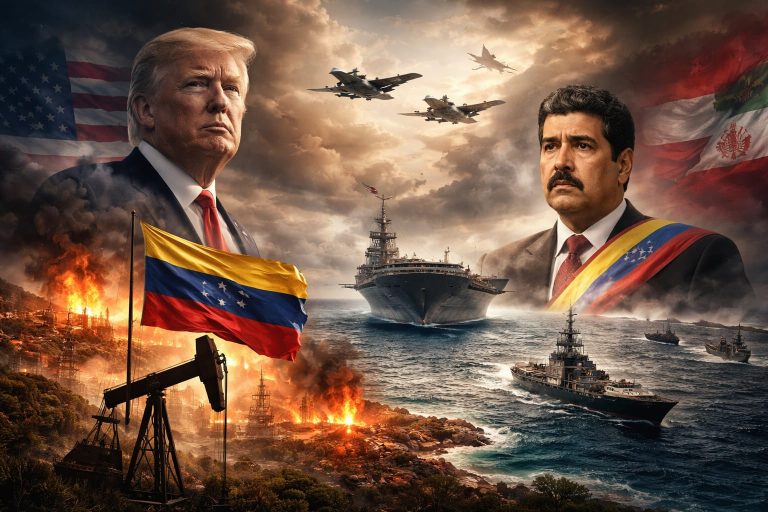
What Trump Really Wants in Venezuela and How it Affects India?

Trump’s Venezuela strategy is less about democracy and more about power: oil leverage, geopolitical signaling, and dismantling rival influence from Russia, China, and Iran. By framing pressure on Caracas as a war on drugs, Washington creates legal and political cover for escalation. For India, the fallout is tangible—sanctions disrupt crude supplies, stall ONGC Videsh investments, and expose the fragility of energy planning in a sanctions-driven world. Geopolitics, not markets, now dictates access.

Read MoreWhat Trump Really Wants in Venezuela and How it Affects India?

Trump-Putin summit ends without material changes

The Trump–Putin summit in Alaska ended without progress on a ceasefire, underscoring the entrenched positions of both leaders. While Trump hailed the meeting as a success, little substance emerged beyond vague promises of future talks. Putin, however, gained symbolic victories—international recognition and time to advance Russia’s offensive in Ukraine. With Zelensky absent, peace remains distant and fragile. Europe now faces the task of pressuring both Washington and Moscow to sustain support for Kyiv and keep prospects for a fair settlement alive.

Read MoreTrump-Putin summit ends without material changes

India at Tianjin: Modi’s SCO Gambit in a Multipolar World

India enters the SCO summit walking a razor’s edge. Between Russia’s embrace, China’s rivalry, and America’s pressure, New Delhi’s old habit of “working with everyone” is becoming unsustainable. Modi’s meetings with Xi and Putin are more than routine diplomacy—they are tests of India’s strategic agility in a fractured world. The question is no longer whether India can remain non-aligned, but how long it can keep balancing before being forced to choose a side.

Read MoreIndia at Tianjin: Modi’s SCO Gambit in a Multipolar World

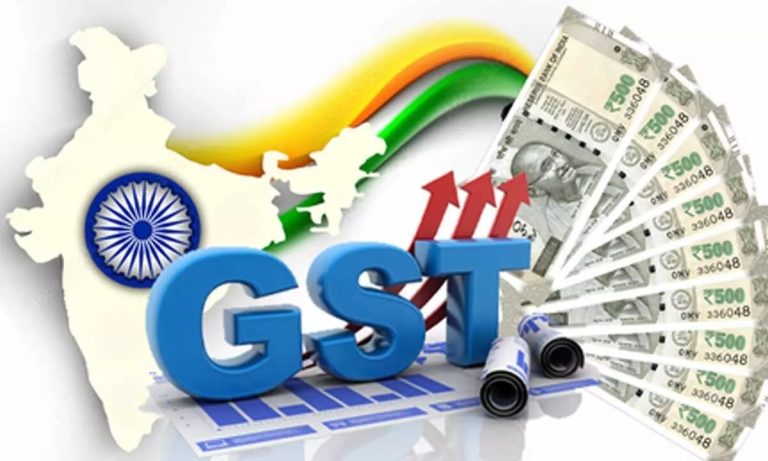
India’s GST Reforms: Balancing Simplification, Growth, and Self-Reliance

India is set to overhaul its Goods and Services Tax (GST) system, simplifying its multi-tiered structure into two main rates—5% for essentials and 18% for most goods, with a 40% rate on demerit products. The reforms focus on structural fixes, rate rationalization, and ease of compliance to boost consumption, support MSMEs, and attract global investment. Success will depend on managing Centre–state fiscal tensions and ensuring transparency. If implemented effectively, GST reforms could strengthen India’s self-reliance and secure stable, growth-driven development.

Read MoreIndia’s GST Reforms: Balancing Simplification, Growth, and Self-Reliance

Trump’s India Tariff Is Less About Trade 

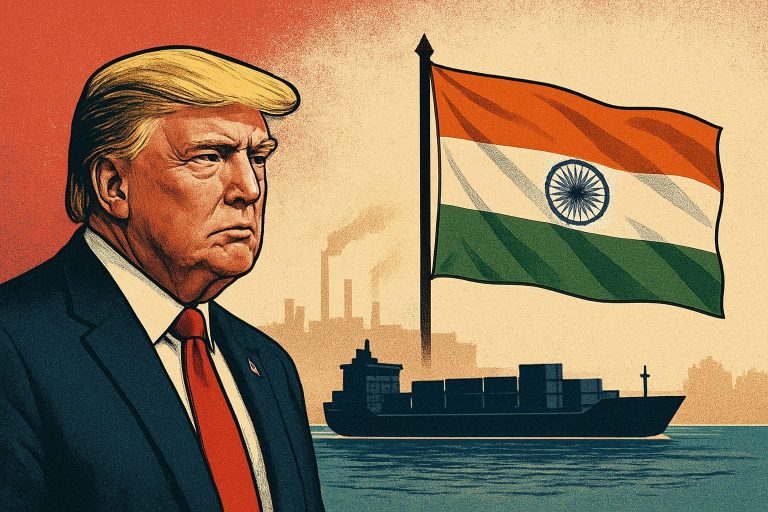
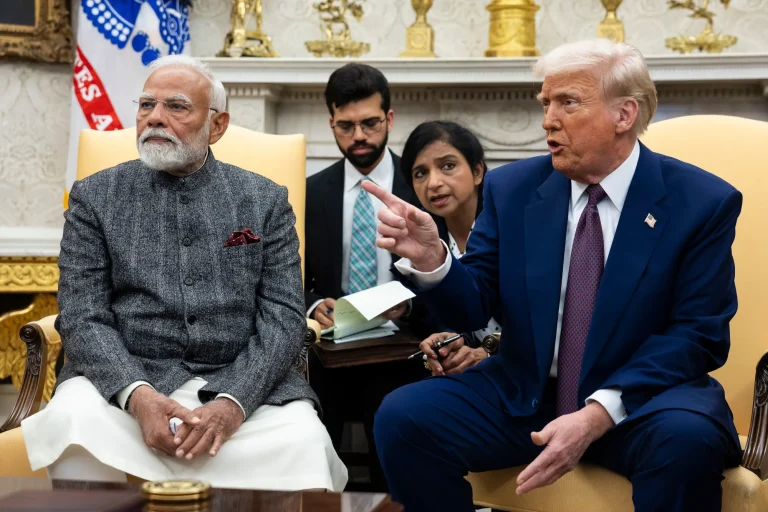
Trump’s tariff on Indian goods is less about trade and more a geopolitical ultimatum. It forces India to choose between aligning with U.S. strategic preferences or facing economic pain. The move targets key sectors like textiles, gems, and auto parts, pressuring India’s hedging strategy amid global power competition. Legal routes like the WTO offer little relief. India must respond swiftly with tactical diplomacy, market diversification, economic restructuring, and a clear narrative asserting its strategic autonomy to preserve sovereignty and growth.

Read MoreTrump’s India Tariff Is Less About Trade 

India After the Tariffs: What Next in a World Where the WTO Can’t Save You?

The Trump-era tariff revival against India signals more than a trade dispute—it’s a strategic message. As the U.S. recalibrates its economic alliances, India must confront hard truths: WTO diplomacy won’t suffice. New Delhi must pivot toward resilient trade diversification, domestic manufacturing strength, and assertive bilateral diplomacy. This is not just about steel or solar panels—it’s about global positioning. In the shifting tides of protectionism, India must act not as a victim, but as a counterforce.

Read MoreIndia After the Tariffs: What Next in a World Where the WTO Can’t Save You?

Tensions Reignite: The Aftermath of Operation Sindoor

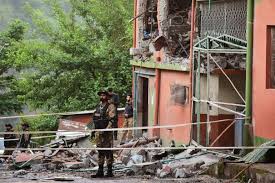
Muhammad Khalid Jamali, issued a provocative warning during a televised interview: Pakistan is prepared to use the “full spectrum of power, including nuclear,” should India attempt to either restrict water flows from the Indus system or carry out additional cross-border strikes. The statement raised alarm across global capitals, intensifying concerns about potential military escalation between two nuclear-armed neighbors.

Read MoreTensions Reignite: The Aftermath of Operation Sindoor

From Restraint to Retaliation: India’s Strategic Suspension of the Indus Waters Treaty

The treaty’s complex dispute-resolution mechanism precipitated several challenges for India’s hydropower projects, such as the Kishenganga and Ratle plants located on the Jhelum and Chenab rivers respectively. The Treaty’s annexure D permits India to only build run-of-river hydroelectric plants on the Indus water system’s Wester Rivers.

Read MoreFrom Restraint to Retaliation: India’s Strategic Suspension of the Indus Waters Treaty

The U.S.-China Trade War in 2025: A New Chapter in Economic Confrontation

After Donald Trump returned to the presidency in January 2025, he reignited his administration’s protectionist trade policies under the banner of “America First.” Central to this approach is the aggressive use of tariffs, taxes imposed on imports to curb trade deficits, promote domestic manufacturing, and punish what Trump calls “unfair trade practices,” particularly by China.

Read MoreThe U.S.-China Trade War in 2025: A New Chapter in Economic Confrontation