This program deals with  the evolving geopolitical landscape of North and South America, focusing on U.S. foreign policy, regional security, economic policies, and technological leadership.

AI in 2025: The Good, the Bad, and the Ugly

By 2025, artificial intelligence has shifted from disruptive innovation to strategic infrastructure. It is boosting productivity, accelerating scientific discovery, and expanding access to knowledge, while simultaneously intensifying labour disruption, market concentration, and governance gaps. More troublingly, AI is eroding trust in information, enabling surveillance, and compressing decision-making in ways that strain democratic and security systems. AI is no longer a neutral tool; it is a force multiplier whose impact depends less on capability and more on the strength of institutions that govern it.
Read MoreAI in 2025: The Good, the Bad, and the Ugly

Prioritising Safety and Accountability: Addressing the Drug Cartel Threat in the US

Over the past ten months, some political debates have centred on complex issues: opposition to a comprehensive audit of federal government operations, decisions around the deportation of certain undocumented immigrants, and questions about the inclusion of biological males in women’s sports. Among these, the matter of drug trafficking has drawn particular attention.

Read MorePrioritising Safety and Accountability: Addressing the Drug Cartel Threat in the US

South Africa, the G20, and the Limits of Host-Nation Power: A Geopolitical Analysis

South Africa’s G20 membership is not America’s to revoke, but Trump’s attempt to bar Pretoria from the summit exposes a deeper crisis in global governance. It signals a sharp downturn in U.S.–South Africa relations, threatens the credibility of the G20, and risks pushing emerging economies closer together against unilateralism. By standing firm, South Africa defends not only its place at the table but the principle that multilateral forums cannot be controlled by any single host.

Read MoreSouth Africa, the G20, and the Limits of Host-Nation Power: A Geopolitical Analysis

Israel Attacks Qatar: Implications for US-Gulf Relations:

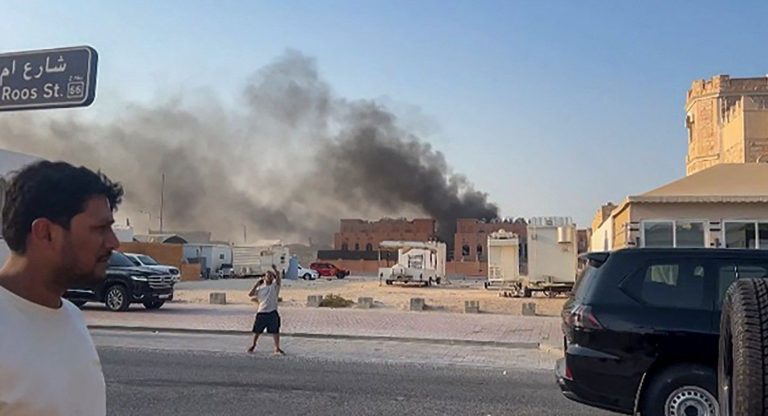
Israel’s airstrike on Hamas leaders in Doha has shaken US–Gulf relations, undermining Washington’s reputation as a reliable security guarantor. Gulf states now view the US as prioritizing Israel over their sovereignty, prompting calls for greater self-sufficiency and alternative security arrangements. Qatar’s suspension of mediation efforts and backlash against the Abraham Accords signal potential diplomatic fallout. Unless Washington reins in Israeli overreach, it risks losing influence, weakening regional partnerships, and ceding ground to rival powers such as China or Russia.

Read MoreIsrael Attacks Qatar: Implications for US-Gulf Relations:

India at Tianjin: Modi’s SCO Gambit in a Multipolar World

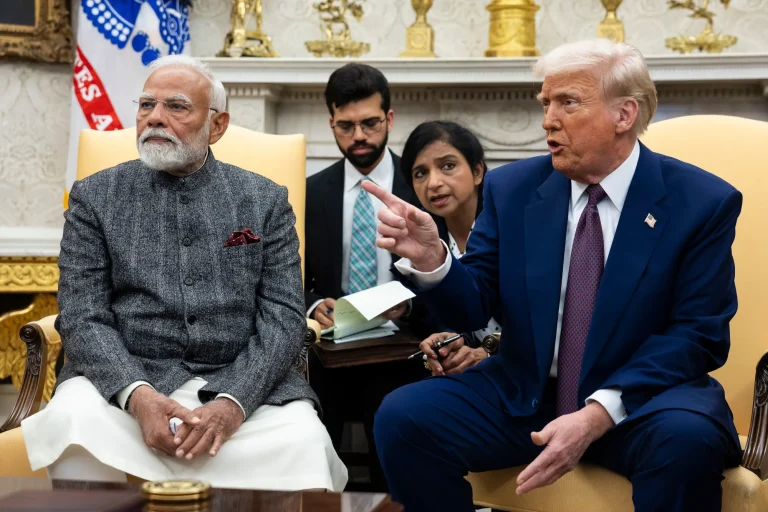
India enters the SCO summit walking a razor’s edge. Between Russia’s embrace, China’s rivalry, and America’s pressure, New Delhi’s old habit of “working with everyone” is becoming unsustainable. Modi’s meetings with Xi and Putin are more than routine diplomacy—they are tests of India’s strategic agility in a fractured world. The question is no longer whether India can remain non-aligned, but how long it can keep balancing before being forced to choose a side.

Read MoreIndia at Tianjin: Modi’s SCO Gambit in a Multipolar World

The Alaska Summit: Why Trump and Putin’s Meeting Marks a Diplomatic Success

The Alaska Summit between Trump and Putin marked a subtle but meaningful diplomatic success. While no ceasefire or land swap was announced, the meeting established common ground, opened channels for future talks, and secured a commitment to reconvene. Trump’s pledge to consult Zelenskyy, NATO, and European allies underscores a process-driven approach rather than unilateralism. History shows that first meetings often set the stage for breakthroughs. By creating momentum and continuity, Anchorage became a quiet step toward potential peace.

Read MoreThe Alaska Summit: Why Trump and Putin’s Meeting Marks a Diplomatic Success

India After the Tariffs: What Next in a World Where the WTO Can’t Save You?

The Trump-era tariff revival against India signals more than a trade dispute—it’s a strategic message. As the U.S. recalibrates its economic alliances, India must confront hard truths: WTO diplomacy won’t suffice. New Delhi must pivot toward resilient trade diversification, domestic manufacturing strength, and assertive bilateral diplomacy. This is not just about steel or solar panels—it’s about global positioning. In the shifting tides of protectionism, India must act not as a victim, but as a counterforce.

Read MoreIndia After the Tariffs: What Next in a World Where the WTO Can’t Save You?

To Intervene or not to Intervene – Consequences of a US Entry into the Iran-Israel Conflict

A U.S. intervention in the escalating Iran-Israel conflict risks igniting a broader regional war, straining ties with Gulf allies, and triggering domestic political backlash. As military assets mobilize and tensions rise, Washington stands at a crossroads: defend its strategic partner or uphold a doctrine of restraint. With public opinion divided and regional stability on the line, the costs of action may far outweigh the benefits. Diplomacy may be the only viable path forward.

Read MoreTo Intervene or not to Intervene – Consequences of a US Entry into the Iran-Israel Conflict

Israel Strikes Iran: What are the Implications for US Strategic Interests in the MENA Region?

Israel’s unprecedented strike on Iran has sparked a geopolitical crisis with far-reaching consequences for U.S. strategic interests in the Middle East. From derailing nuclear negotiations to straining relations with Gulf allies and complicating ties with Israel, this dispatch examines the volatile shifts reshaping America’s role in the region.

Read MoreIsrael Strikes Iran: What are the Implications for US Strategic Interests in the MENA Region?

Economic Deals and Syria Sanctions Lift- The Implications of Trump’s Middle East Tour

During a four-day tour of Saudi Arabia, Qatar, and the UAE, U.S. President Donald Trump secured historic economic and defense deals, including a $600 billion investment pact with Saudi Arabia and a $1.4 trillion AI agreement with the UAE. In a surprise move, Trump also announced the lifting of U.S. sanctions on Syria, signaling a potential diplomatic reset and opening the door to regional economic investment and reconstruction.

Read MoreEconomic Deals and Syria Sanctions Lift- The Implications of Trump’s Middle East Tour