India After the Tariffs: What Next in a World Where the WTO Can’t Save You?
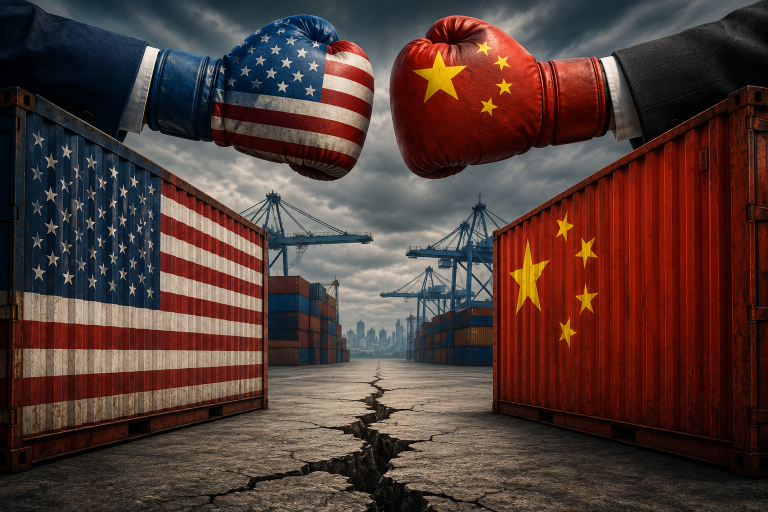
The Trump-era tariff revival against India signals more than a trade dispute—it’s a strategic message. As the U.S. recalibrates its economic alliances, India must confront hard truths: WTO diplomacy won’t suffice. New Delhi must pivot toward resilient trade diversification, domestic manufacturing strength, and assertive bilateral diplomacy. This is not just about steel or solar panels—it’s about global positioning. In the shifting tides of protectionism, India must act not as a victim, but as a counterforce.

The imposition of new tariffs by the United States on key Indian exports is not merely a trade dispute—it is a strategic signal. Washington, under the influence of Trump’s returning campaign agenda and a broader bipartisan shift toward economic nationalism, is choosing tactical pressure over negotiated cooperation. India now stands at a crossroads. The predictable impulse—filing a case at the World Trade Organization (WTO)—no longer holds the force it once did. The WTO is increasingly toothless in today’s geopolitically fragmented trade system. India must, therefore, recalibrate quickly, using the moment to rewrite its strategic playbook, not just its diplomatic script.
Why WTO Is No Longer the Answer
In theory, the WTO exists to resolve such disputes and uphold rules-based trade. In practice, it has become paralyzed—most notably by the U.S. refusal to allow new appointments to the appellate body, rendering it unable to issue binding decisions. Even when rulings are made, enforcement mechanisms are weak. The reality is simple: filing a WTO case will take years, and even a legal victory might not restore market access or remove punitive tariffs. More importantly, relying on the WTO signals that India is reacting, not shaping. In a world of strategic competition, perception is policy.
India’s Options: Strategic, Not Legal
Instead of courtroom battles, India must respond with smart, layered actions—economic, diplomatic, and narrative-driven. The U.S. tariffs may be political, but India’s response must be strategic. Here’s what India must do:
1. Forge High-Speed Bilateral and Trilateral Trade Agreements
India must immediately accelerate bilateral trade deals with countries that offer both market size and geopolitical alignment. The European Union, the UK, the Gulf Cooperation Council, and Latin American nations present fertile ground. Rather than grandiose FTAs that take years, India should pursue sector-specific, high-impact agreements—especially in pharmaceuticals, clean energy, digital services, and agri-tech.
In addition, India should explore a trilateral approach through forums like the India-Japan-EU corridor, India-Australia-UK initiatives, or expanded Quad economic dialogues. These “mini-lateral” formats are increasingly effective in a world where big multilateralism is paralyzed.
2. Build a Parallel Economic Narrative to Counter U.S. Pressure
India must not just trade better—it must tell its story better. The U.S. tariffs are partially based on political narratives that frame India as an unfair player or a threat to American manufacturing. India needs to reframe the conversation globally: “India is the world’s trusted production and innovation partner.”
This requires sustained public diplomacy—speeches at Davos and the UN, editorial campaigns in Western media, and digital platforms that showcase Indian compliance, standards, and innovation. Perception management is economic strategy. Right now, India’s global image is underleveraged.
3. Strengthen the Domestic Supply Chain and Private Sector Agility
Rather than only responding with external moves, India must deepen resilience internally. That means:
- Boosting the competitiveness of MSMEs through targeted tax relief, export incentives, and technology upgrades.
- Scaling up Special Economic Zones (SEZs) that integrate Indian production into global value chains.
- Offering strategic incentives to global firms to shift supply chains from China or elsewhere to India, especially in semiconductors, green tech, defense components, and pharmaceuticals.
India’s economy must be able to absorb shocks, pivot faster, and produce at globally competitive quality and cost. Tariffs hit hard when domestic industries are inflexible or too dependent on a single market.
4. Rethink Trade Diplomacy Beyond Formal Institutions
WTO complaints may have symbolic value, but quiet commercial diplomacy often moves faster and delivers more. India should adopt a model of trade negotiation that includes:
- Commercial alliances with U.S. firms that stand to lose from tariffs, encouraging them to lobby the administration directly.
- City-to-city and state-to-state diplomacy, engaging U.S. governors and mayors whose constituents rely on Indian imports or services.
- Strategic dialogues with influential think tanks and chambers of commerce in Washington to shift opinion from the inside out.
India must learn from countries like Japan and South Korea that leverage informal networks and corporate pressure alongside formal diplomacy.
5. Diversify Export Markets—and Signal It Clearly
India’s overdependence on U.S. markets in some sectors (like pharmaceuticals, textiles, and IT services) makes it vulnerable. To reduce exposure:
- Redirect export momentum toward Africa, Southeast Asia, Latin America, and Eastern Europe, especially in sectors where India has quality and cost advantage.
- Leverage India’s growing global goodwill to secure tariff-free corridors through short-term agreements, particularly in food, medicine, and digital services.
But diversification must be more than action—it must be signaled boldly. A coordinated campaign titled “India Beyond the West” could reinforce the message that New Delhi’s economic future is not hostage to Washington’s politics.
6. Use Strategic Subsidies and Fiscal Tools to Counterbalance Tariff Impact
India must respond to U.S. tariffs with smart fiscal cushioning for affected industries. That includes:
- Export rebates for affected goods.
- Lower compliance costs for exporters.
- Strategic credit guarantees, especially for MSMEs facing new market pressures.
Additionally, where feasible, mirror tariffs could be selectively applied to U.S. goods in politically sensitive sectors—creating diplomatic leverage without escalating to full-scale trade war.
7. Prepare the Long Game: Technology Sovereignty and Green Manufacturing
Beyond short-term tactics, India must use this moment to double down on long-term independence:
- Expand R&D funding in key export categories, especially biotech, AI, and clean energy.
- Accelerate initiatives like PLI (Production Linked Incentives) in electronics and renewables.
- Launch a new “Made for the World” campaign to present India as a supplier of strategic goods aligned with global sustainability goals.
In essence, India’s best response to American tariffs is to become the country no one wants to penalize—because it is too integral to future value chains.
Conclusion: From Victimhood to Strategic Autonomy
India must avoid the trap of playing the aggrieved party. The U.S. tariffs are not just punitive—they are an opportunity to assert a bolder, more independent trade identity. The WTO has become a relic of a more rule-abiding world. India must step fully into the new world: one where strategic diversification, smart diplomacy, agile industry, and global narrative management are the real instruments of trade defense.
India has the leverage. Now it must use it—not to retaliate blindly, but to pivot boldly.
Dr Brian O. Reuben is the Executive Chairman of The Sixteenth Council