Hormuz Control Conflict: When System Warfare Replaces Deterrence
Hormuz has shifted from deterrence to system warfare, where control of perception, risk, and flow now outweighs kinetic dominance. The U.S. is enforcing maritime order, while Iran exploits asymmetric disruption to raise systemic cost. Neither can fully control the corridor—only degrade or shape it. The result is a fragile equilibrium defined by volatility, insurance pressure, and alliance strain, where the decisive question is no longer military victory, but who sets the conditions under which global trade continues.

Strategic Overview
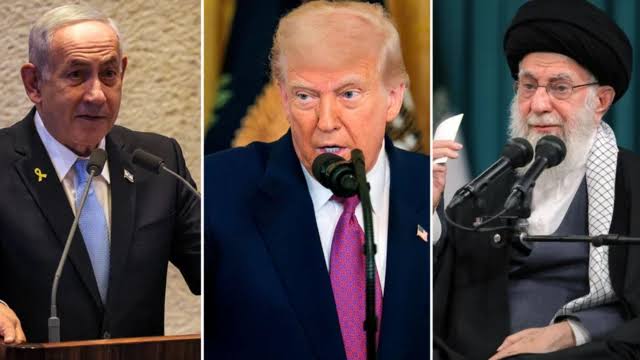
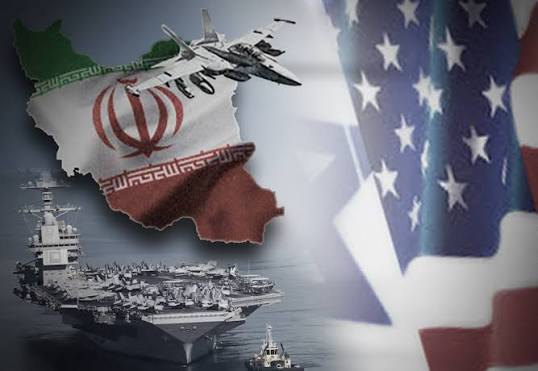
The breakdown of negotiations between the United States and Iran has pushed the Strait of Hormuz crisis beyond conventional escalation. Washington’s declaration of a maritime blockade targeting Iranian oil flows marks a decisive shift from deterrence to active system control. Tehran, lacking the capacity to defeat U.S. forces kinetically, is responding asymmetrically—leveraging disruption, ambiguity, and market sensitivity rather than direct confrontation.
The result is a dual-control contest over the :
- The U.S. seeks to enforce stability and regulate access
- Iran seeks to inject risk and raise systemic cost
This interaction has moved the crisis into a Stage 4.5 environment—active containment under rising system stress—with early indicators of transition toward global economic shock already visible in energy markets, shipping behavior, and alliance fragmentation.
Operational Context
Flow Control Dynamics:
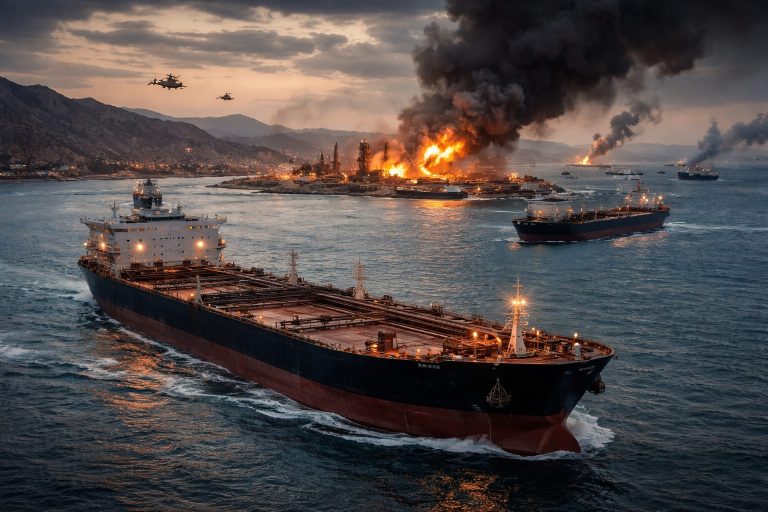
The U.S. Navy is repositioning to escort commercial shipping, clear mines, and enforce selective denial against Iranian exports. This reflects a shift from passive protection to active governance of maritime flow. Iran, however, retains escalation dominance at the margin—able to disrupt faster and cheaper than the U.S. can stabilize.
Insurance & Market Leverage:
The decisive battlespace is no longer naval—it is financial. War-risk premiums are rising sharply, and insurers are beginning to reassess exposure. Even without full closure, perceived insecurity is sufficient to reduce throughput voluntarily, effectively throttling global supply.
Selective Access Regime:
Both actors are now imposing informal filters on movement:
- U.S.: enforcement-based restriction (blockade logic)
- Iran: threat-based filtering (selective disruption)
This creates a fragmented operating environment, where passage depends not on international law but on shifting risk calculations.
Time Horizon Asymmetry:
The U.S. strategy is time-sensitive—aimed at rapid stabilization.
Iran’s strategy is time-agnostic—designed to prolong uncertainty until external pressure forces negotiation.
Geopolitical Tensions
Alliance Fracturing:
Early resistance among U.S. allies to participate in enforcement operations signals a weakening of coalition cohesion. This reduces the legitimacy of U.S. actions and increases operational burden.
Energy Dependency Pressure:
Major importers across Europe and Asia face immediate exposure to supply disruption. Their priority is not alignment, but restoration of flow, positioning them as pressure agents for de-escalation.
Narrative Contestation:
- Washington frames intervention as safeguarding global trade
- Tehran frames it as economic coercion
The outcome of this narrative battle will shape compliance, neutrality, and potential sanction evasion.
Strategic Outlook
Baseline:
The crisis has entered a phase where control and disruption coexist. Neither side can fully dominate the system; both can degrade it. This creates a structurally unstable equilibrium.
What to Watch (next 2–4 weeks):
- Trigger Events:
Any successful strike on a tanker, mining incident, or direct engagement involving U.S. naval assets - Insurance Withdrawal Threshold:
A tipping point where major insurers suspend coverage entirely, effectively halting traffic regardless of military presence - Coalition Formation (or Failure):
Whether the U.S. can expand participation beyond unilateral enforcement - Oil Price Behavior:
Sustained movement beyond psychological thresholds ($100–$120 range) as a proxy for systemic stress - Backchannel Diplomacy Signals:
Quiet engagement through intermediaries indicating movement toward Stage 6 (negotiation)
Implications
For the United States:
The shift from deterrence to enforcement increases both capability and exposure. While naval dominance allows temporary stabilization, the inability to eliminate low-cost disruptions highlights a structural limitation: control of the sea does not equal control of the system. Prolonged engagement risks strategic overextension and alliance fatigue.
For Iran:
Tehran’s approach demonstrates the effectiveness of asymmetric system warfare. By targeting perception, insurance, and timing, Iran converts geographic disadvantage into strategic leverage. Its success depends not on victory, but on sustaining disruption long enough to force concessions.
For Global Markets:
The Hormuz corridor is no longer a stable artery but a contested operating zone. Even partial disruption introduces volatility across energy, shipping, and inflation systems. The risk is not total closure, but persistent unpredictability, which is more corrosive over time.
For Major Powers (China, Europe, India):
The crisis reinforces a critical vulnerability: dependence on constrained maritime corridors. Expect accelerated investment in route diversification, strategic reserves, and alternative supply chains as states seek insulation from chokepoint risk.
Strategic Bottom Line
This is no longer a question of escalation toward war.
It is a contest over:
Who can define the conditions under which global trade continues to function
At present:
- The U.S. is attempting to impose order
- Iran is attempting to erode confidence
The system cannot fully accommodate both.
And when a system is forced to operate under competing logics, it does not stabilize—
It breaks, adapts, or compels negotiation.