Global Policy Intelligence Unit

Global Policy Intelligence Unit

The Long Tariff War: U.S. Trade Pressure on China and Its Strategic Effectiveness
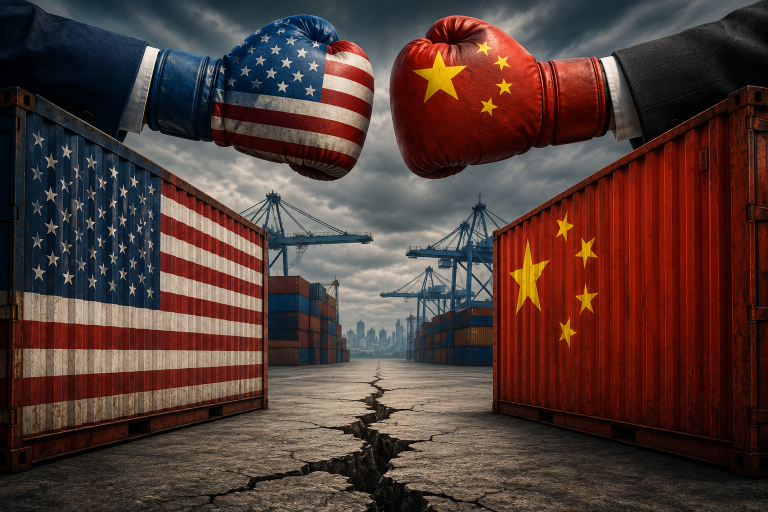
U.S. tariffs on China evolved from targeted trade measures into a central pillar of strategic competition between the world’s two largest economies. While tariffs accelerated supply-chain diversification and reshaped Washington’s approach to China, they failed to fundamentally weaken Beijing’s economic model or reverse China’s global manufacturing dominance. Instead, the trade war marked the end of the post-Cold War globalization consensus, transforming trade policy into a broader instrument of industrial strategy, technological containment, and geopolitical rivalry in an increasingly fragmented global economic order.
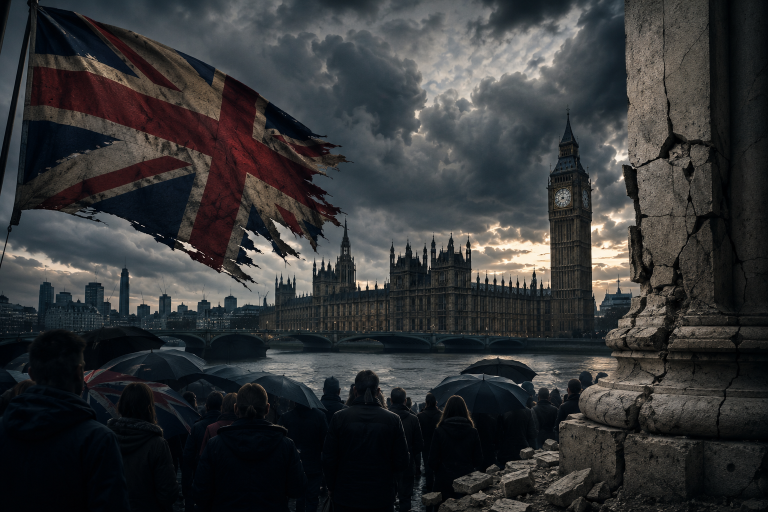

Britain’s Governance Crisis: The End of the Post-Imperial Consensus

Britain’s governance crisis is increasingly structural rather than political. Weak economic growth, rising public expectations, migration pressures, regional inequality, and declining institutional trust are converging to strain the post-war British governing model. Prime Minister Keir Starmer inherits a system facing fiscal constraints while still expected to sustain global influence, expansive public services, and domestic stability. Brexit accelerated deeper fractures around identity and sovereignty, leaving the UK in a prolonged era of political volatility where governments struggle not only to govern effectively, but to govern credibly.

China, Taiwan, and the Pacific Question: Influence Before Invasion

China’s long-term Pacific strategy may increasingly depend less on invading Taiwan and more on reshaping the strategic environment around it. President Trump’s recent Beijing visit underscored a growing geopolitical reality: Beijing is pursuing influence, alliance fragmentation, economic leverage, and naval expansion as alternative pathways to Pacific access. While Taiwan remains the decisive geographic prize in the First Island Chain, China appears focused on weakening resistance gradually rather than triggering a catastrophic conflict that could destabilize its economy and the wider global order.

Hormuz Control Conflict: When System Warfare Replaces Deterrence

Hormuz has shifted from deterrence to system warfare, where control of perception, risk, and flow now outweighs kinetic dominance. The U.S. is enforcing maritime order, while Iran exploits asymmetric disruption to raise systemic cost. Neither can fully control the corridor—only degrade or shape it. The result is a fragile equilibrium defined by volatility, insurance pressure, and alliance strain, where the decisive question is no longer military victory, but who sets the conditions under which global trade continues.

Hedging or Heading Away? The Quiet Drift of US Allies Toward China

US allies are quietly recalibrating their relationships with China, exploring economic and technological partnerships while maintaining security commitments to Washington. This hedging reflects pragmatic flexibility rather than outright abandonment, but signals a growing multipolar reality. Europe and Asia are diversifying trade, infrastructure, and tech ties with Beijing, testing limits of US influence. The trend highlights a critical choice for Washington: adapt to conditional loyalty and shared influence, or risk incremental erosion of its global primacy as allies hedge for security and opportunity

U.S. Capture of Nicolás Maduro and the Inception of a New, Volatile Foreign Policy Doctrine

The U.S. capture of Nicolás Maduro marks a watershed in global politics: a shift from rules to raw power. Framed as law enforcement by United States under Donald Trump, the operation signals a new doctrine of unilateral regime removal tied to strategic resources. The immediate prize is Venezuelan oil; the long-term cost is a destabilized international order, where sovereignty becomes conditional and retaliation increasingly likely.

2026 Geopolitics: Power Without Dominance

Geopolitics in 2026 is defined by power without dominance. Major states retain significant military and economic capacity, yet lack the ability to impose durable outcomes unilaterally. Strategic competition has shifted toward chokepoints in technology, energy, and finance, while unresolved conflicts are increasingly managed rather than resolved. Fiscal constraints, alliance recalibration, and regional power assertion are reshaping global behaviour, producing a fragmented international system marked by calibrated escalation, persistent friction, and heightened strategic uncertainty.

Global Trade in 2025: From Efficiency to Power

By 2025, global trade stopped pretending to be neutral. Efficiency gave way to resilience, markets to strategy, and institutions to power. Shipping routes, carbon rules, currencies, and data flows became tools of statecraft rather than technical details. Trade did not collapse; it realigned around security and political trust. The era of frictionless globalization ended quietly, replaced by a world where who you trade with now matters as much as what you trade.

Global Order Under Strain: The Major Foreign-Policy Shocks of 2025

2025 exposed a global order under strain, defined less by decisive realignments than by accumulating shocks. U.S.–China economic confrontation became visibly symmetric, conflict mediation in Ukraine and the Middle East lost credibility, and regional actors assumed security roles once held by global powers. Trade routes, supply chains, and deterrence norms all proved fragile. The year underscored a central reality: major powers retain ambition, but their ability to enforce outcomes is increasingly constrained, producing a more volatile and contested international system.