Explore insightful analysis and diverse perspectives on critical global issues from leading academics, policymakers, and practitioners. Our expert commentary provides in-depth insights to challenge conventional thinking and inform informed decision-making.

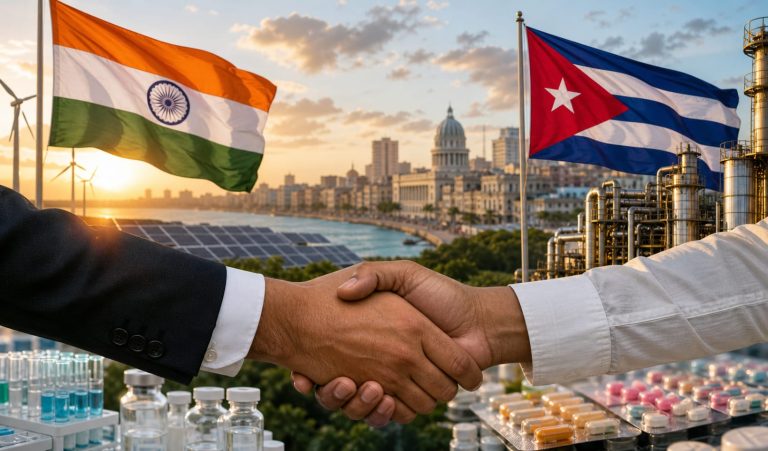
Existing Indian Economic and Strategic Interests in Cuba: Challenges and Prospects

India’s economic and strategic engagement with Cuba spans pharmaceuticals, renewable energy, digital cooperation, and development assistance, rooted in decades of South-South solidarity. Yet this relationship remains underutilised due to U.S. sanctions, Cuba’s economic fragility, and implementation gaps in key projects. With Cuba’s BRICS partner status and expanding renewable energy ambitions, India has a timely opportunity to convert commitments into tangible outcomes, deepening its role as a credible Global South partner while unlocking high-value sectors for bilateral growth.

Read MoreExisting Indian Economic and Strategic Interests in Cuba: Challenges and Prospects

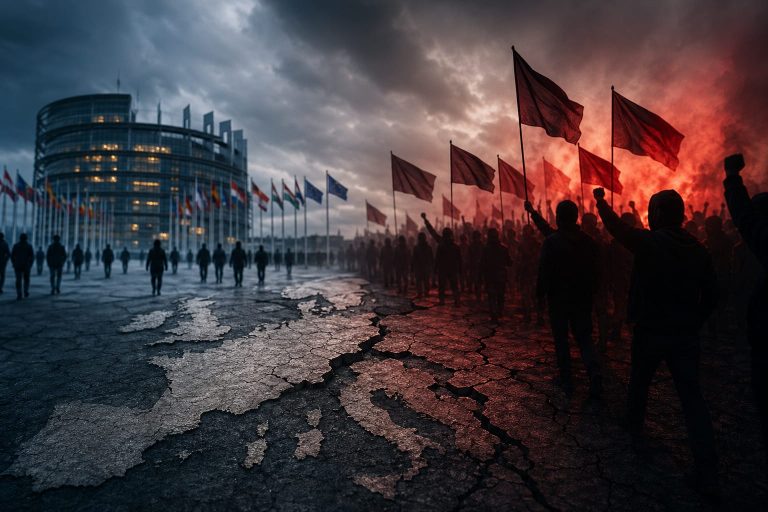
Escalation of Far-right Politics in Europe

Europe has seen a marked rise in far-right politics, driven by economic strain, migration pressures, and public dissatisfaction with mainstream governance. Nationalist and populist rhetoric has increasingly entered political discourse, influencing policy and public attitudes. This shift raises concerns for minority rights, democratic institutions, and the rule of law. Addressing these trends requires stronger democratic safeguards, enforcement of shared values, and efforts to counter disinformation while rebuilding public trust in governance.

Read MoreEscalation of Far-right Politics in Europe

Critical Minerals and the Green Transition: Europe’s New Dependency Risk

The European Green Deal is one of the most ambitious climate and industrial strategies toward a decarbonized energy system, industrial leadership, and climate resilience. However, while Europe seeks energy independence from fossil fuels, it faces an important vulnerability: dependence on critical minerals. Lithium, cobalt, nickel, rare earth elements, and graphite are indispensable for electric vehicles, renewable infrastructure, and advanced technologies — but their supply is heavily concentrated in a few countries, creating potential strategic bottlenecks.

Read MoreCritical Minerals and the Green Transition: Europe’s New Dependency Risk

Trump Can’t Take Greenland – and the World Knows Why

Any attempt by the United States to annex Greenland would collapse under its own contradictions. Washington cannot credibly defend Ukraine’s borders, threaten war over Taiwan’s sovereignty, and simultaneously flirt with territorial acquisition from a NATO ally. Such a move would not signal strength but moral exhaustion, eroding the very principles that give U.S. power global legitimacy. In a rules-based order the U.S. designed, restraint—not expansion—is what sustains leadership.

Read MoreTrump Can’t Take Greenland – and the World Knows Why

The Fragmentation of Western Politics 

Western politics is fragmenting as unilateral power eclipses post-WWII cooperation. Assertive US interventions, from Venezuela to Greenland, expose weak international enforcement and embolden rival powers. Europe faces alliance uncertainty, rising nationalism, and economic coercion while NATO’s credibility strains. The precedent of unchecked interference risks normalising ‘might makes right,’ encouraging China and Russia to test boundaries. Without renewed collective security and democratic oversight, Western cohesion erodes, reshaping global stability and accelerating a volatile, multipolar order under growing strategic mistrust worldwide today.

Read MoreThe Fragmentation of Western Politics 

EU–Mercosur: A Win–Win Partnership in an Era of Strategic Uncertainty

After more than two decades of negotiations, the EU–Mercosur Agreement creates one of the world’s largest free trade areas, connecting over 700 million consumers. It offers Mercosur preferential access to the EU’s high-income market for agri-food and bioeconomy exports, while providing the EU improved access to Mercosur markets for industrial goods, machinery, automobiles, and services. This structural complementarity drives mutual gains rather than zero-sum competition, enhancing economic resilience, investment flows, and supply-chain diversification for both partners in a fragmenting global order.

Read MoreEU–Mercosur: A Win–Win Partnership in an Era of Strategic Uncertainty

Who Checks Trump? Who Checked the U.S.?

The U.S. capture of Nicolás Maduro marks a dangerous rupture in global governance. By openly declaring its intent to “run” Venezuela, the United States has crossed from influence into occupation, undermining the very rules-based order it once championed. For Africa and states like Ghana, the message is stark: sovereignty is now conditional, and unchecked power—not law—risks becoming the new global norm.

Read MoreWho Checks Trump? Who Checked the U.S.?

AI in 2025: The Good, the Bad, and the Ugly

By 2025, artificial intelligence has shifted from disruptive innovation to strategic infrastructure. It is boosting productivity, accelerating scientific discovery, and expanding access to knowledge, while simultaneously intensifying labour disruption, market concentration, and governance gaps. More troublingly, AI is eroding trust in information, enabling surveillance, and compressing decision-making in ways that strain democratic and security systems. AI is no longer a neutral tool; it is a force multiplier whose impact depends less on capability and more on the strength of institutions that govern it.

Read MoreAI in 2025: The Good, the Bad, and the Ugly

Global Trade in 2025: From Efficiency to Power

By 2025, global trade stopped pretending to be neutral. Efficiency gave way to resilience, markets to strategy, and institutions to power. Shipping routes, carbon rules, currencies, and data flows became tools of statecraft rather than technical details. Trade did not collapse; it realigned around security and political trust. The era of frictionless globalization ended quietly, replaced by a world where who you trade with now matters as much as what you trade.

Read MoreGlobal Trade in 2025: From Efficiency to Power

What Trump Really Wants in Venezuela and How it Affects India?

Trump’s Venezuela strategy is less about democracy and more about power: oil leverage, geopolitical signaling, and dismantling rival influence from Russia, China, and Iran. By framing pressure on Caracas as a war on drugs, Washington creates legal and political cover for escalation. For India, the fallout is tangible—sanctions disrupt crude supplies, stall ONGC Videsh investments, and expose the fragility of energy planning in a sanctions-driven world. Geopolitics, not markets, now dictates access.

Read MoreWhat Trump Really Wants in Venezuela and How it Affects India?