Explore insightful analysis and diverse perspectives on critical global issues from leading academics, policymakers, and practitioners. Our expert commentary provides in-depth insights to challenge conventional thinking and inform informed decision-making.

India’s GST Reforms: Balancing Simplification, Growth, and Self-Reliance

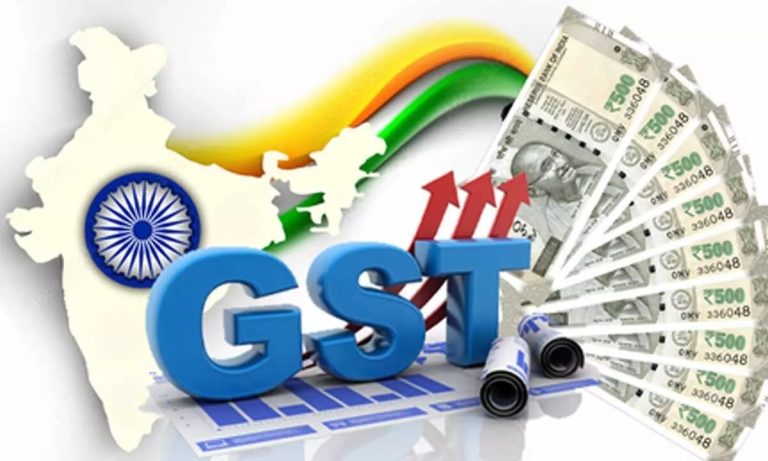
India is set to overhaul its Goods and Services Tax (GST) system, simplifying its multi-tiered structure into two main rates—5% for essentials and 18% for most goods, with a 40% rate on demerit products. The reforms focus on structural fixes, rate rationalization, and ease of compliance to boost consumption, support MSMEs, and attract global investment. Success will depend on managing Centre–state fiscal tensions and ensuring transparency. If implemented effectively, GST reforms could strengthen India’s self-reliance and secure stable, growth-driven development.


Read MoreIndia’s GST Reforms: Balancing Simplification, Growth, and Self-Reliance

The Alaska Summit: Why Trump and Putin’s Meeting Marks a Diplomatic Success

The Alaska Summit between Trump and Putin marked a subtle but meaningful diplomatic success. While no ceasefire or land swap was announced, the meeting established common ground, opened channels for future talks, and secured a commitment to reconvene. Trump’s pledge to consult Zelenskyy, NATO, and European allies underscores a process-driven approach rather than unilateralism. History shows that first meetings often set the stage for breakthroughs. By creating momentum and continuity, Anchorage became a quiet step toward potential peace.

Read MoreThe Alaska Summit: Why Trump and Putin’s Meeting Marks a Diplomatic Success

Brazil’s “Devastating Bill”

Brazil’s Congress has passed the so-called “devastation bill,” easing environmental licensing for projects in the Amazon and reducing protections for indigenous and quilombola lands. Critics warn it’s the biggest environmental rollback since the 1980s, potentially enabling large-scale deforestation and biodiversity loss. Supporters claim it will boost investment by removing bureaucratic hurdles. President Lula could veto the bill, but Congress may override. With the Amazon’s global role in climate regulation and biodiversity, the law’s passage could have worldwide environmental consequences, including for Africa.

Read MoreBrazil’s “Devastating Bill”

“The Line” Review

Saudi Arabia’s \$500 billion mega project, “The Line,” part of the NEOM initiative under Vision 2030, faces financial and ethical scrutiny amid falling oil revenues. Planned as a 100% renewable, linear city for 9 million residents, its projected 2030 population has been cut to 300,000. Critics cite massive costs, budget deficits, and alleged forced displacements of the Al-Huwaitat tribe. The project’s future remains uncertain, with global economic implications, including potential effects on Africa where Saudi investments may reach \$41 billion in the next decade.

Read More“The Line” Review

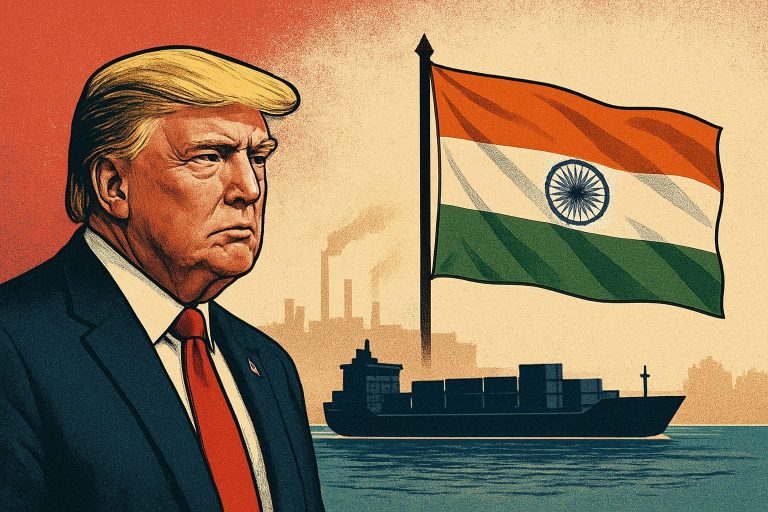
Trump’s India Tariff Is Less About Trade 

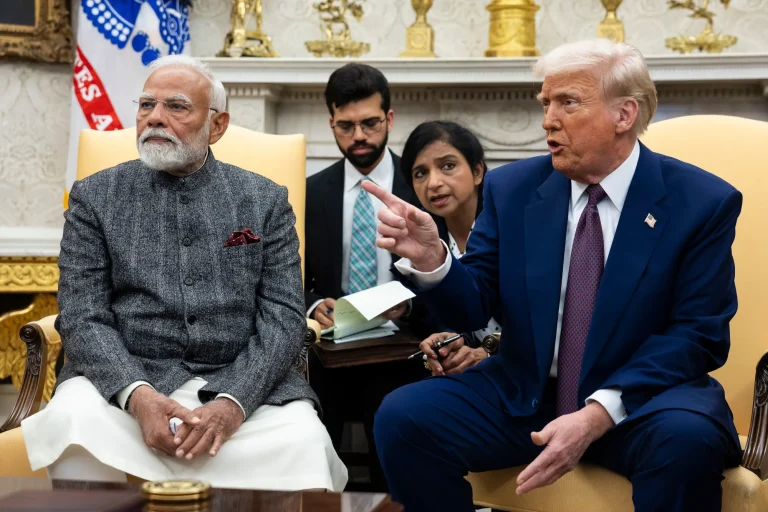
Trump’s tariff on Indian goods is less about trade and more a geopolitical ultimatum. It forces India to choose between aligning with U.S. strategic preferences or facing economic pain. The move targets key sectors like textiles, gems, and auto parts, pressuring India’s hedging strategy amid global power competition. Legal routes like the WTO offer little relief. India must respond swiftly with tactical diplomacy, market diversification, economic restructuring, and a clear narrative asserting its strategic autonomy to preserve sovereignty and growth.

Read MoreTrump’s India Tariff Is Less About Trade 

How Africa’s Infrastructure Gaps Are Holding Back Regional Value Chains

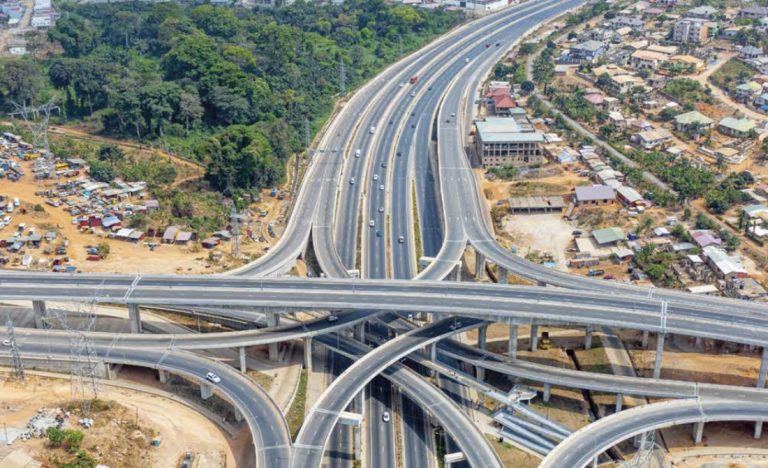
Despite the promise of AfCFTA, Africa’s regional trade remains stunted by a critical and underexamined barrier: infrastructure. This dispatch argues that fragmented, underfinanced, and nationally siloed infrastructure systems are preventing the emergence of regional value chains. From broken transport links to disconnected power grids and outdated customs systems, the lack of coordinated, production-enabling infrastructure is the single most decisive bottleneck to industrial integration. Without a radical shift in governance, finance, and planning, Africa risks missing its moment in the global value chain race.

Read MoreHow Africa’s Infrastructure Gaps Are Holding Back Regional Value Chains

India After the Tariffs: What Next in a World Where the WTO Can’t Save You?

The Trump-era tariff revival against India signals more than a trade dispute—it’s a strategic message. As the U.S. recalibrates its economic alliances, India must confront hard truths: WTO diplomacy won’t suffice. New Delhi must pivot toward resilient trade diversification, domestic manufacturing strength, and assertive bilateral diplomacy. This is not just about steel or solar panels—it’s about global positioning. In the shifting tides of protectionism, India must act not as a victim, but as a counterforce.

Read MoreIndia After the Tariffs: What Next in a World Where the WTO Can’t Save You?

Strategic Partner or Dominant Power? Rethinking U.S. Influence on NATO’s Consensus Model

For decades, intergovernmental military alliance NATO has held up its consensus-based decision-making as proof of its democratic values. A system where every member has an equal voice and consensus dictates agreement through unity. Yet, as the dominant military and financial contributor, the influence of the United States has always been apparent. In 2025, does that influence increasingly override collaborative negotiation?

Read MoreStrategic Partner or Dominant Power? Rethinking U.S. Influence on NATO’s Consensus Model

Are African Economies Prepared for a Global Trade Reordering Driven by U.S. -China Decoupling?

As the U.S.–China economic decoupling redefines global trade, Africa faces a critical inflection point. The continent must either seize emerging supply chain opportunities or risk deeper marginalisation. This dispatch lays out a strategic readiness agenda—from industrial zoning to smart trade defence—aimed at positioning Africa within the evolving global trade order.

Read MoreAre African Economies Prepared for a Global Trade Reordering Driven by U.S. -China Decoupling?

Ursula von der Leyen’s Multiannual Financial Framework Gamble

On 16 July, Ursula von der Leyen unveiled a bold EUR 2 trillion budget proposal for the EU’s 2028–2034 Multiannual Financial Framework. Aiming to shift priorities toward competitiveness, defence, and strategic investment, the plan marks a significant departure from traditional focuses like agriculture and cohesion. While it reflects her vision of a stronger, more centralised EU, the proposal has triggered internal dissent and sparked backlash from member states. The battle over Europe’s future direction is now firmly underway.

Read MoreUrsula von der Leyen’s Multiannual Financial Framework Gamble