Explore insightful analysis and diverse perspectives on critical global issues from leading academics, policymakers, and practitioners. Our expert commentary provides in-depth insights to challenge conventional thinking and inform informed decision-making.

To Intervene or not to Intervene – Consequences of a US Entry into the Iran-Israel Conflict

A U.S. intervention in the escalating Iran-Israel conflict risks igniting a broader regional war, straining ties with Gulf allies, and triggering domestic political backlash. As military assets mobilize and tensions rise, Washington stands at a crossroads: defend its strategic partner or uphold a doctrine of restraint. With public opinion divided and regional stability on the line, the costs of action may far outweigh the benefits. Diplomacy may be the only viable path forward.

Read MoreTo Intervene or not to Intervene – Consequences of a US Entry into the Iran-Israel Conflict

Trump’s High-Stakes Litmus Test: Can Peace Through Strength Survive the Israel–Iran War?

Trump’s doctrine of “peace through strength” faces a defining test in the escalating Israel–Iran war. As Tehran defies U.S. deterrence, Trump must choose between bold retaliation, risky ambiguity, or compromise—each with global consequences. The world is watching, from Beijing to Moscow. Can Trump project credible strength without losing his base or dragging America into war? This isn’t just about the Middle East—it’s a litmus test for U.S. power in a shifting world.

Read MoreTrump’s High-Stakes Litmus Test: Can Peace Through Strength Survive the Israel–Iran War?

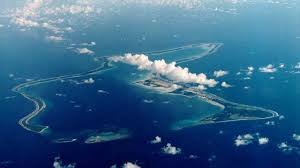
Chagos Islands: Redefining the Security and Sovereignty Dynamics of Metropole and Periphery

The UK-Mauritius deal on the Chagos Islands redefines post-colonial sovereignty and strategic military dynamics. While Diego Garcia remains vital to US operations in the Indian Ocean, Mauritius' closer ties with China and India introduce new complexities. The arrangement also marks a shift in how former colonial powers respond to international pressure. As global alliances evolve, this development may reshape Europe’s security autonomy and its relationships with ex-colonies.

Read MoreChagos Islands: Redefining the Security and Sovereignty Dynamics of Metropole and Periphery

Will Russia, Türkiye and China Back Iran?

As tensions escalate between Israel and Iran, Russia, Türkiye, and China face a critical test. Though all three condemn Israel’s strikes, none have offered military backing to Iran. Their strategic caution risks rendering their influence meaningless. A multilateral de-escalation strategy—through Astana Plus, BRICS diplomacy, and reconstruction planning—offers a peaceful path forward. The moment demands more than words; it demands coordinated action to avert a regional catastrophe.

Read MoreWill Russia, Türkiye and China Back Iran?

Africa’s Strategic Position in the Red Sea and Indian Ocean Geopolitics: What’s really at stake as African coastal countries attract the world’s biggest powers?

Africa’s coastline is emerging as a geopolitical battleground where global powers vie for influence through strategic port access and dual-use infrastructure. From Djibouti to Lamu, African states must balance investment with sovereignty, transforming maritime assets into levers of power—not vulnerabilities—in the global contest shaping the Red Sea and Indian Ocean order.

Read MoreAfrica’s Strategic Position in the Red Sea and Indian Ocean Geopolitics: What’s really at stake as African coastal countries attract the world’s biggest powers?

Israel Strikes Iran: What are the Implications for US Strategic Interests in the MENA Region?

Israel’s unprecedented strike on Iran has sparked a geopolitical crisis with far-reaching consequences for U.S. strategic interests in the Middle East. From derailing nuclear negotiations to straining relations with Gulf allies and complicating ties with Israel, this dispatch examines the volatile shifts reshaping America’s role in the region.

Read MoreIsrael Strikes Iran: What are the Implications for US Strategic Interests in the MENA Region?

A Cold Partnership- An Analysis of US-Egypt Relations Under Trump 2.0

Under Trump’s second term, U.S.-Egypt relations have cooled further due to controversial positions on the Suez Canal and Gaza diplomacy. Trump’s call for free U.S. passage through the Suez Canal and his Gaza displacement plan, both seen as affronts to Egyptian sovereignty, have strained ties. Egypt’s rejection signals a desire for autonomy and increasing openness to alternative global partners like Russia and China amid growing U.S. unpredictability.

Read MoreA Cold Partnership- An Analysis of US-Egypt Relations Under Trump 2.0

Assessing the Imminent Chinese Threat: Context Behind U.S. Defence Secretary’s Shangri-La Remarks

“There is no reason to sugarcoat it. The threat China poses is real, and it could be imminent.” The U.S. Defence Secretary, Pete Hegseth, made this remark on May 31, 2025 at the annual inter-governmental security conference Shangri-La Dialogue in Singapore. In a stark warning to the U.S.’s Asian allies, Hegseth frames China as a national security threat, not just to the U.S., but also a military threat to the Asia Pacific region, particularly Taiwan.

Read MoreAssessing the Imminent Chinese Threat: Context Behind U.S. Defence Secretary’s Shangri-La Remarks