
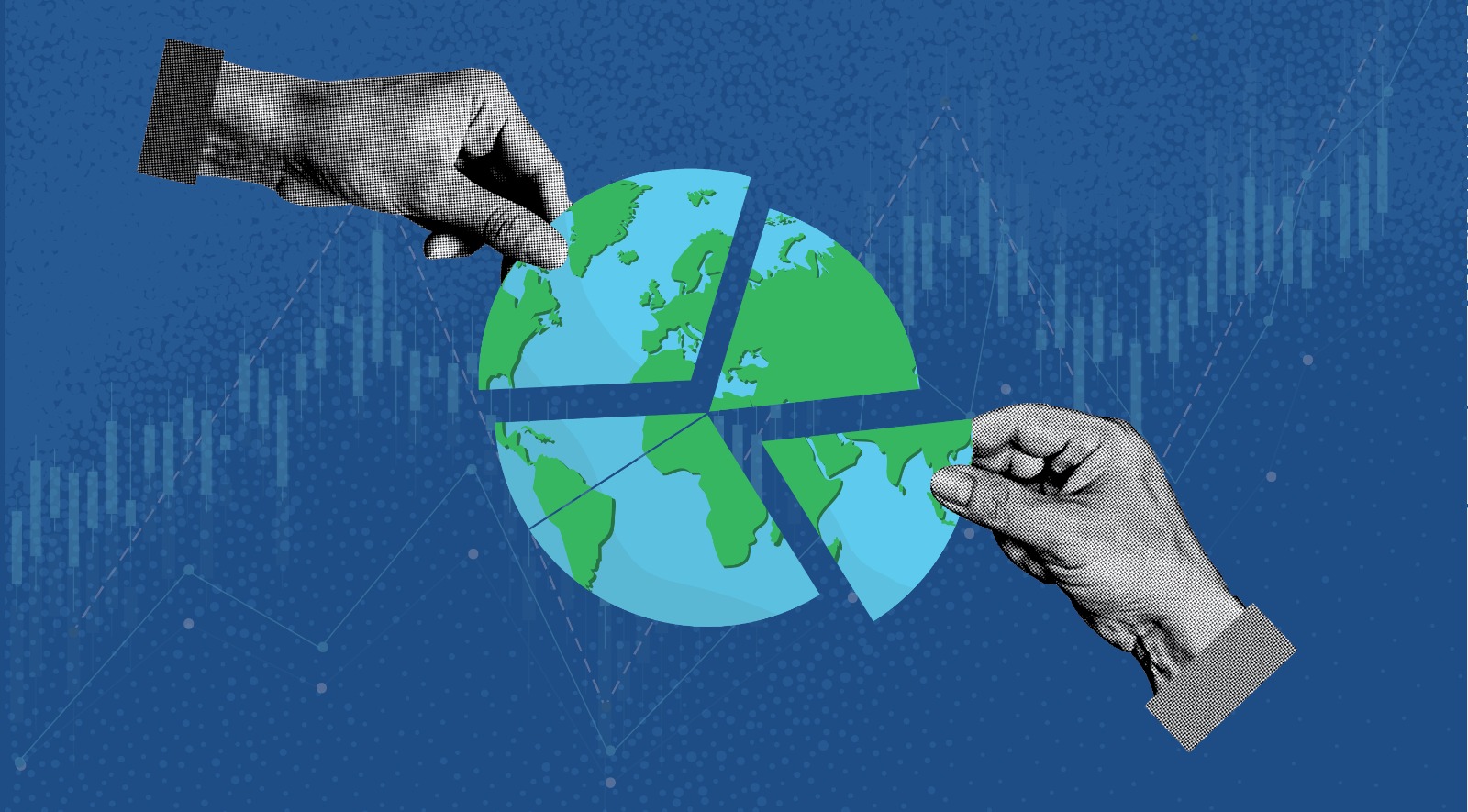
Europe Between Giants: Strategic Autonomy or Strategic Confusion?
As the U.S. recalibrates, China expands, and Russia regroups, Europe must decide whether it will be a power in its own right—or a playground for others.

Introduction: A Continent at a Crossroads
Europe stands at a crucial juncture in global affairs. Once the uncontested center of global diplomacy, commerce, and innovation, the continent now finds itself caught between shifting tectonic plates of global power. The United States, long Europe’s dependable ally, is growing increasingly inward-looking and transactional. China continues its global march with strategic precision, embedding itself in the infrastructure and politics of every continent. Meanwhile, Russia—though bruised—is not out, and still casts a long, destabilizing shadow over Europe.
In this complex environment, the European Union (EU) is grappling with an existential question: Can Europe be geopolitically autonomous—or will it forever be shaped by forces beyond its control?
1. Strategic Autonomy: Buzzword or Blueprint?
The term “strategic autonomy” is now commonplace in Brussels. But what does it truly mean? For some, it signals Europe’s desire to forge an independent foreign policy—one not dictated by Washington. For others, it reflects the need for Europe to become self-reliant in defense, energy, and critical technologies.
Yet, despite repeated declarations—from Emmanuel Macron’s speeches to EU Council communiqués—the progress remains halting. The war in Ukraine laid bare the EU’s dependence on NATO (read: the United States) for hard power. European militaries are underfunded, fragmented, and often unprepared. Procurement remains national, not pan-European. And while the EU speaks of a “European Defense Union,” real sovereignty in security still lies with Washington.
So, is “strategic autonomy” a future destination, or just diplomatic performance art?
2. Technological Sovereignty: Between Silicon Valley and Shenzhen
Europe’s tech ambition is another arena where talk runs ahead of delivery. The continent wants to secure its digital infrastructure, reduce reliance on U.S. platforms, and fend off Chinese surveillance networks. Initiatives like GAIA-X (a sovereign cloud project) and the Digital Markets Act aim to establish a distinctly European internet model based on regulation, privacy, and open competition.
But reality bites: Europe lacks tech giants of its own. While the U.S. has Google, Apple, Meta, and Microsoft, and China boasts Alibaba, Huawei, and Tencent, Europe’s digital economy remains scattered and underpowered. Critical semiconductor capabilities are outsourced. Start-ups flee to the U.S. for capital. And AI research lags behind, not due to lack of talent, but lack of scale.
Until Europe closes this innovation gap, any talk of tech sovereignty is premature.
3. Energy Transition and Climate Geopolitics
One area where Europe is genuinely leading is climate diplomacy. The EU’s Green Deal is the most ambitious climate strategy on the planet, aiming for net-zero emissions by 2050. It has inspired carbon border taxes, green subsidies, and ESG regulations worldwide.
But this leadership is not without costs. The war in Ukraine exposed Europe’s overdependence on Russian gas. The rapid transition away from fossil fuels has led to energy price spikes, industry disruptions, and political backlash—especially in countries like Germany and Poland. At the same time, Europe must navigate the geopolitical implications of importing clean technologies from China.
Green leadership is commendable—but for it to last, it must be geopolitically sustainable.
4. Cybersecurity and Digital Governance
Cybersecurity is perhaps Europe’s most urgent, yet least coordinated, frontier. Cyberattacks—whether from Russian state actors or criminal networks—pose daily threats to infrastructure, elections, and financial systems. The EU’s cybersecurity strategy emphasizes resilience, collaboration, and regulation. But implementation lags.
What’s more, Europe faces a regulatory tightrope: how to govern digital space without stifling innovation or alienating allies. The General Data Protection Regulation (GDPR) has become a global standard—but newer efforts, such as the AI Act, are already drawing criticism for being overly burdensome.
In cybersecurity, as in much else, Europe must find balance between sovereignty and openness, ambition and realism.
5. The Role of Multilateralism and Governance Reform
If Europe has a superpower, it is in its ability to shape multilateral norms and institutions. From the WTO to the Paris Agreement, Europe often plays the role of guardian of the rules-based order. But the global multilateral system is eroding—and Europe must now choose: reform it, or retreat from it.
With institutions like the United Nations and WTO struggling for relevance, Europe must push for bold governance reforms that reflect today’s realities, not 1945’s. This means giving more voice to rising powers from Africa and Asia, adapting trade rules for a digital economy, and confronting the authoritarian challenge without undermining global cooperation.
Multilateralism may still be Europe’s strength—but only if it modernizes its toolkit.
6. Europe’s Strategic Future: Pathways Ahead
So where does Europe go from here? Three futures seem possible:
The Atlanticist Future: Europe deepens its ties with the U.S., accepting its junior role in security while focusing on diplomacy and regulation.
The Autonomy Future: Europe builds a unified defense and tech capability, asserts its independence, and acts as a true third pillar of global power.
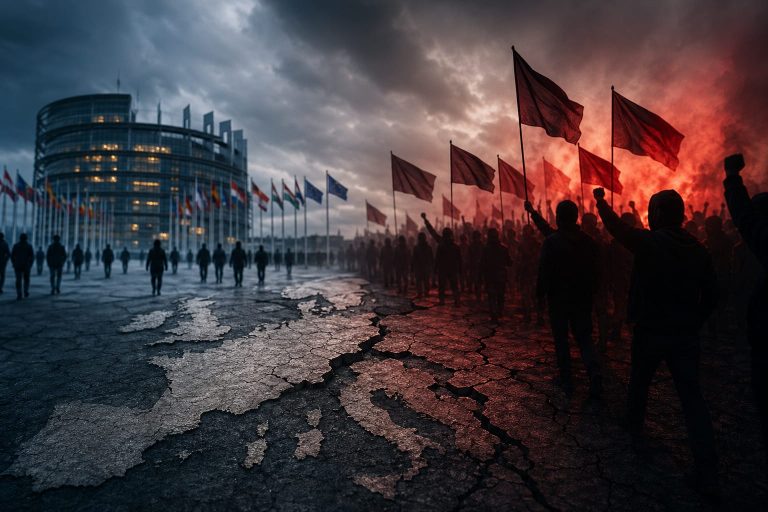
The Fragmented Future: Internal divisions widen, populism returns, and Europe becomes a strategic playground—subject to American, Chinese, or Russian maneuvering.
The choice is not inevitable. But it requires leadership, vision, and—perhaps most critical action.
Conclusion: Power or Pawn?
Europe cannot afford strategic confusion in a world of strategic clarity. The U.S. knows what it wants—contain China. China knows what it wants—reshape the global order. Russia knows what it wants—revise the post-Cold War map. What does Europe want?
If the continent remains reactive, divided, and overly regulatory, it risks irrelevance. But if it can harness its democratic values, economic scale, and institutional savvy into coherent action, it may yet surprise the world—and itself.
Dr Brian O Reuben is the Executive Chairman of the Sixteenth Council
Existing Indian Economic and Strategic Interests in Cuba: Challenges and Prospects