Trump Can’t Take Greenland – and the World Knows Why

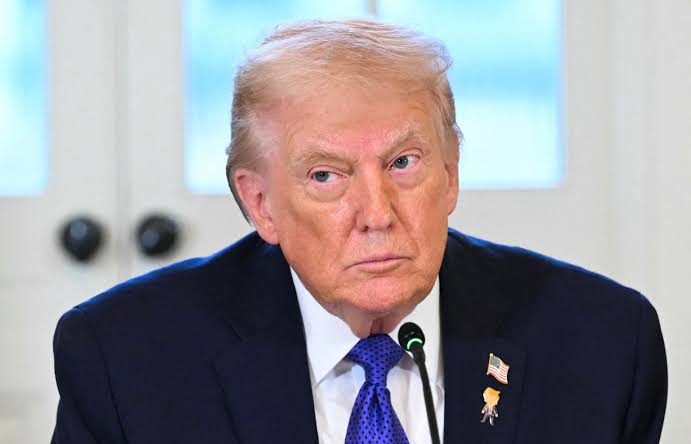
Any attempt by the United States to annex Greenland would collapse under its own contradictions. Washington cannot credibly defend Ukraine’s borders, threaten war over Taiwan’s sovereignty, and simultaneously flirt with territorial acquisition from a NATO ally. Such a move would not signal strength but moral exhaustion, eroding the very principles that give U.S. power global legitimacy. In a rules-based order the U.S. designed, restraint—not expansion—is what sustains leadership.

Read MoreTrump Can’t Take Greenland – and the World Knows Why

The Fragmentation of Western Politics 

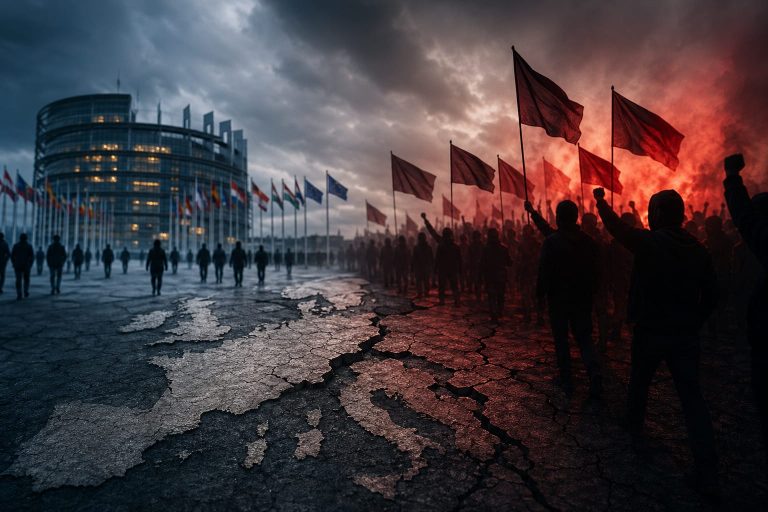
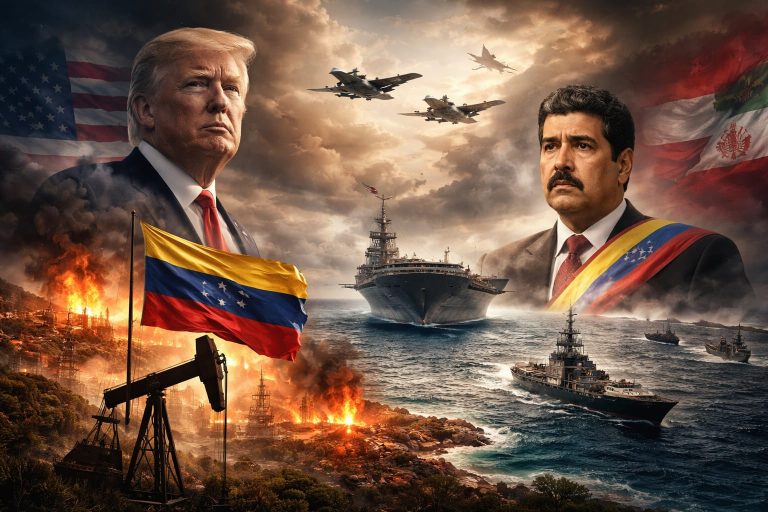
Western politics is fragmenting as unilateral power eclipses post-WWII cooperation. Assertive US interventions, from Venezuela to Greenland, expose weak international enforcement and embolden rival powers. Europe faces alliance uncertainty, rising nationalism, and economic coercion while NATO’s credibility strains. The precedent of unchecked interference risks normalising ‘might makes right,’ encouraging China and Russia to test boundaries. Without renewed collective security and democratic oversight, Western cohesion erodes, reshaping global stability and accelerating a volatile, multipolar order under growing strategic mistrust worldwide today.

Read MoreThe Fragmentation of Western Politics 

EU–Mercosur: A Win–Win Partnership in an Era of Strategic Uncertainty

After more than two decades of negotiations, the EU–Mercosur Agreement creates one of the world’s largest free trade areas, connecting over 700 million consumers. It offers Mercosur preferential access to the EU’s high-income market for agri-food and bioeconomy exports, while providing the EU improved access to Mercosur markets for industrial goods, machinery, automobiles, and services. This structural complementarity drives mutual gains rather than zero-sum competition, enhancing economic resilience, investment flows, and supply-chain diversification for both partners in a fragmenting global order.

Read MoreEU–Mercosur: A Win–Win Partnership in an Era of Strategic Uncertainty

Who Checks Trump? Who Checked the U.S.?

The U.S. capture of Nicolás Maduro marks a dangerous rupture in global governance. By openly declaring its intent to “run” Venezuela, the United States has crossed from influence into occupation, undermining the very rules-based order it once championed. For Africa and states like Ghana, the message is stark: sovereignty is now conditional, and unchecked power—not law—risks becoming the new global norm.

Read MoreWho Checks Trump? Who Checked the U.S.?

Global Trade in 2025: From Efficiency to Power

By 2025, global trade stopped pretending to be neutral. Efficiency gave way to resilience, markets to strategy, and institutions to power. Shipping routes, carbon rules, currencies, and data flows became tools of statecraft rather than technical details. Trade did not collapse; it realigned around security and political trust. The era of frictionless globalization ended quietly, replaced by a world where who you trade with now matters as much as what you trade.

Read MoreGlobal Trade in 2025: From Efficiency to Power

What Trump Really Wants in Venezuela and How it Affects India?

Trump’s Venezuela strategy is less about democracy and more about power: oil leverage, geopolitical signaling, and dismantling rival influence from Russia, China, and Iran. By framing pressure on Caracas as a war on drugs, Washington creates legal and political cover for escalation. For India, the fallout is tangible—sanctions disrupt crude supplies, stall ONGC Videsh investments, and expose the fragility of energy planning in a sanctions-driven world. Geopolitics, not markets, now dictates access.

Read MoreWhat Trump Really Wants in Venezuela and How it Affects India?

South Africa, the G20, and the Limits of Host-Nation Power: A Geopolitical Analysis

South Africa’s G20 membership is not America’s to revoke, but Trump’s attempt to bar Pretoria from the summit exposes a deeper crisis in global governance. It signals a sharp downturn in U.S.–South Africa relations, threatens the credibility of the G20, and risks pushing emerging economies closer together against unilateralism. By standing firm, South Africa defends not only its place at the table but the principle that multilateral forums cannot be controlled by any single host.

Read MoreSouth Africa, the G20, and the Limits of Host-Nation Power: A Geopolitical Analysis

India as the Anchor of a Post-Brexit Global Strategy

India’s emergence as the anchor of Britain’s post-Brexit global strategy marks a decisive turn in London’s Indo-Pacific engagement. Through the Comprehensive Economic and Trade Agreement (CETA) and the “India-UK Vision 2035,” both nations are translating diplomatic symbolism into structured, institutionalised cooperation. Anchored in trade, defence co-development, and technology, this partnership reflects a pragmatic recalibration of middle-power agency. It positions India and the UK as pivotal actors in shaping a rules-based, multipolar Indo-Pacific order grounded in connectivity, innovation, and strategic balance.

Read MoreIndia as the Anchor of a Post-Brexit Global Strategy

From Guardians to Bystanders: How the World Normalised Tragedy

The world is sinking into a dangerous numbness. Wars, famine, and mass displacement no longer shock; they scroll past as routine headlines. From Gaza to Sudan, Myanmar to Ukraine, human suffering has become background noise in global politics. Institutions once meant to guard peace now stumble under paralysis, power asymmetry, and dwindling trust. As the United Nations and others falter, humanity risks losing not just faith in global order—but empathy itself. Indifference, now, is the world’s deadliest contagion.

Read MoreFrom Guardians to Bystanders: How the World Normalised Tragedy

Navigating the Reconfiguration of the Global Order

The global order is undergoing its deepest reconfiguration since the Cold War. Power is diffusing beyond the U.S.–China axis to assertive regional powers, non-state actors, and transnational corporations. Conflicts, supply-chain shocks, and climate pressures are exposing the fragility of old institutions. De-risking strategies, digital competition, and the energy transition are redrawing economic and security maps in real time. Resilience, adaptability, and pragmatic cooperation—not outdated assumptions—will determine which nations and institutions thrive in this fluid, contested system.

Read MoreNavigating the Reconfiguration of the Global Order