Israel Attacks Qatar: Implications for US-Gulf Relations:

Israel’s airstrike on Hamas leaders in Doha has shaken US–Gulf relations, undermining Washington’s reputation as a reliable security guarantor. Gulf states now view the US as prioritizing Israel over their sovereignty, prompting calls for greater self-sufficiency and alternative security arrangements. Qatar’s suspension of mediation efforts and backlash against the Abraham Accords signal potential diplomatic fallout. Unless Washington reins in Israeli overreach, it risks losing influence, weakening regional partnerships, and ceding ground to rival powers such as China or Russia.

Read MoreIsrael Attacks Qatar: Implications for US-Gulf Relations:

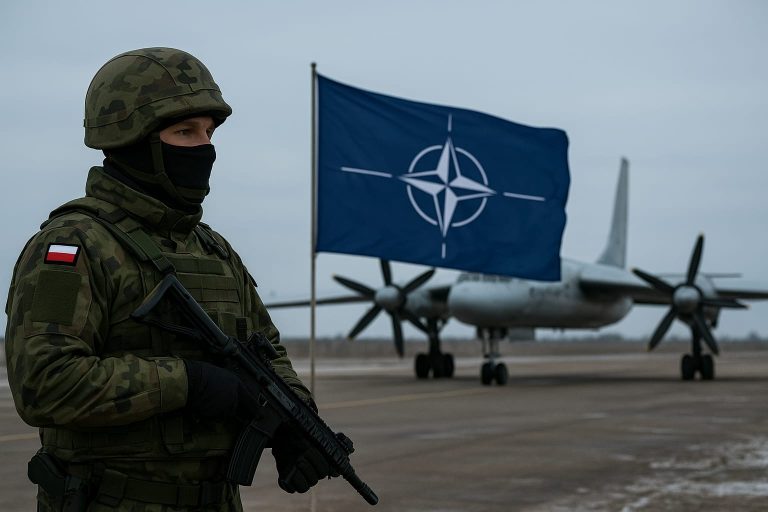
Putin Over Poland: Why Moscow Would Dare Cross NATO’s Red Line — And What the Alliance Must Do

Russia’s drone incursion into Poland underscores the fragility of NATO’s deterrence and the Kremlin’s strategy of probing allied thresholds. Poland, now NATO’s psychological tripwire, faces not just tactical provocations but existential tests of credibility. Moscow’s calibrated violations aim to erode unity, force hesitation, and broadcast weakness. NATO’s response must be decisive: integrated defences, rehearsed protocols, and unified political messaging. Poland is more than geography—it is the frontline of Europe’s collective security, where ambiguity fuels aggression and clarity sustains deterrence.

Read MorePutin Over Poland: Why Moscow Would Dare Cross NATO’s Red Line — And What the Alliance Must Do

Guarding Europe’s Eastern Horizon: How NATO and Poland Can Turn Russian Probes into Strategic Strength

As tensions mount on NATO’s eastern flank, Poland emerges as a pivotal actor in defending Europe’s security architecture. Russia’s aerial and cyber probes are not only a threat but also a test of alliance cohesion. By investing in forward defense, intelligence sharing, and rapid-reaction capabilities, Poland and NATO can transform these provocations into opportunities to harden Europe’s eastern horizon, signaling to Moscow that unity and readiness—not hesitation—define the future of European security.

Read MoreGuarding Europe’s Eastern Horizon: How NATO and Poland Can Turn Russian Probes into Strategic Strength

Is Europe About to Be Colonized?

Europe stands at an uncomfortable crossroads, squeezed between Washington and Beijing. As the U.S. reasserts its security dominance and China deepens its economic reach, the continent risks drifting into a 21st-century form of colonial dependency—ceding sovereignty over defense, technology, and supply chains. Without a coherent, purpose-driven vision of its own, the EU could end up reacting rather than leading, becoming a strategic pawn instead of a power in its own right.

Read MoreIs Europe About to Be Colonized?

Trump-Putin summit ends without material changes

The Trump–Putin summit in Alaska ended without progress on a ceasefire, underscoring the entrenched positions of both leaders. While Trump hailed the meeting as a success, little substance emerged beyond vague promises of future talks. Putin, however, gained symbolic victories—international recognition and time to advance Russia’s offensive in Ukraine. With Zelensky absent, peace remains distant and fragile. Europe now faces the task of pressuring both Washington and Moscow to sustain support for Kyiv and keep prospects for a fair settlement alive.

Read MoreTrump-Putin summit ends without material changes

India at Tianjin: Modi’s SCO Gambit in a Multipolar World

India enters the SCO summit walking a razor’s edge. Between Russia’s embrace, China’s rivalry, and America’s pressure, New Delhi’s old habit of “working with everyone” is becoming unsustainable. Modi’s meetings with Xi and Putin are more than routine diplomacy—they are tests of India’s strategic agility in a fractured world. The question is no longer whether India can remain non-aligned, but how long it can keep balancing before being forced to choose a side.

Read MoreIndia at Tianjin: Modi’s SCO Gambit in a Multipolar World

From Borders to Bridges: Europe’s New Trade Vision with the Mediterranean

Europe’s evolving trade vision with the Mediterranean goes beyond tariff cuts, focusing on regulatory convergence, digitalisation, and green value chains. The revised Pan-Euro-Mediterranean origin rules now allow flexible cumulation across 24 partners, strengthening regional supply chains in textiles, agri-food, and automotive components. Success, however, depends on overcoming capacity gaps, regulatory bottlenecks, and social adjustment pressures in Southern partners. By linking trade facilitation to investment in customs, digital systems, and green industries, the EU seeks both resilience and shared sustainable growth.

Read MoreFrom Borders to Bridges: Europe’s New Trade Vision with the Mediterranean

The Trump–Putin Summit and its implications for Sustainable Development

The Trump–Putin summit in Anchorage underscored shifting geopolitical dynamics with far-reaching consequences for sustainable development. While dominated by the Russia–Ukraine war, its implications extend to energy security, climate goals, food supply chains, and global cooperation. Agreements hinting at fossil fuel dependency, U.S. security guarantees to Ukraine, and weakened multilateralism risk slowing progress on the SDGs. With disruptions to trade, aid, and decarbonization, the summit highlights the need for vigilant international advocacy for sustainability, inclusivity, and cooperative governance.

Read MoreThe Trump–Putin Summit and its implications for Sustainable Development

The Alaska Summit: Why Trump and Putin’s Meeting Marks a Diplomatic Success

The Alaska Summit between Trump and Putin marked a subtle but meaningful diplomatic success. While no ceasefire or land swap was announced, the meeting established common ground, opened channels for future talks, and secured a commitment to reconvene. Trump’s pledge to consult Zelenskyy, NATO, and European allies underscores a process-driven approach rather than unilateralism. History shows that first meetings often set the stage for breakthroughs. By creating momentum and continuity, Anchorage became a quiet step toward potential peace.

Read MoreThe Alaska Summit: Why Trump and Putin’s Meeting Marks a Diplomatic Success

Trump’s India Tariff Is Less About Trade 

Trump’s tariff on Indian goods is less about trade and more a geopolitical ultimatum. It forces India to choose between aligning with U.S. strategic preferences or facing economic pain. The move targets key sectors like textiles, gems, and auto parts, pressuring India’s hedging strategy amid global power competition. Legal routes like the WTO offer little relief. India must respond swiftly with tactical diplomacy, market diversification, economic restructuring, and a clear narrative asserting its strategic autonomy to preserve sovereignty and growth.

Read MoreTrump’s India Tariff Is Less About Trade