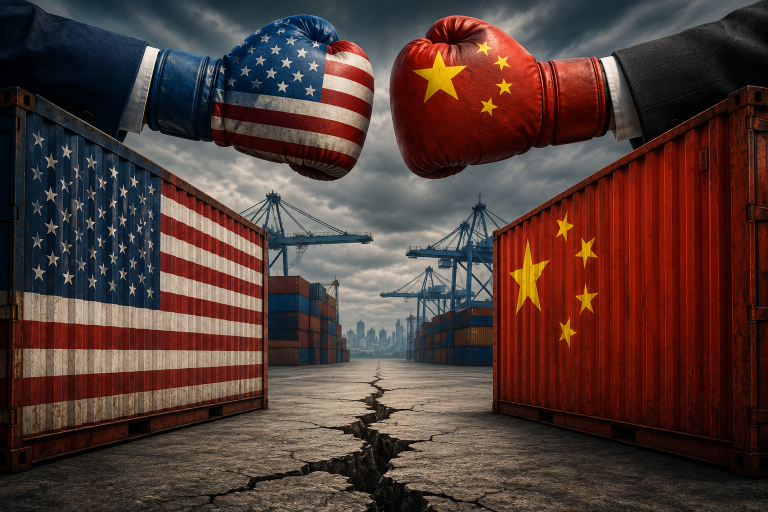
The Long Tariff War: U.S. Trade Pressure on China and Its Strategic Effectiveness

U.S. tariffs on China evolved from targeted trade measures into a central pillar of strategic competition between the world’s two largest economies. While tariffs accelerated supply-chain diversification and reshaped Washington’s approach to China, they failed to fundamentally weaken Beijing’s economic model or reverse China’s global manufacturing dominance. Instead, the trade war marked the end of the post-Cold War globalization consensus, transforming trade policy into a broader instrument of industrial strategy, technological containment, and geopolitical rivalry in an increasingly fragmented global economic order.


Read MoreThe Long Tariff War: U.S. Trade Pressure on China and Its Strategic Effectiveness

Britain’s Governance Crisis: The End of the Post-Imperial Consensus

Britain’s governance crisis is increasingly structural rather than political. Weak economic growth, rising public expectations, migration pressures, regional inequality, and declining institutional trust are converging to strain the post-war British governing model. Prime Minister Keir Starmer inherits a system facing fiscal constraints while still expected to sustain global influence, expansive public services, and domestic stability. Brexit accelerated deeper fractures around identity and sovereignty, leaving the UK in a prolonged era of political volatility where governments struggle not only to govern effectively, but to govern credibly.

Read MoreBritain’s Governance Crisis: The End of the Post-Imperial Consensus

China, Taiwan, and the Pacific Question: Influence Before Invasion

China’s long-term Pacific strategy may increasingly depend less on invading Taiwan and more on reshaping the strategic environment around it. President Trump’s recent Beijing visit underscored a growing geopolitical reality: Beijing is pursuing influence, alliance fragmentation, economic leverage, and naval expansion as alternative pathways to Pacific access. While Taiwan remains the decisive geographic prize in the First Island Chain, China appears focused on weakening resistance gradually rather than triggering a catastrophic conflict that could destabilize its economy and the wider global order.

Read MoreChina, Taiwan, and the Pacific Question: Influence Before Invasion

Energy, Food, and Power: The New Geopolitics of Global Markets

Dr. Silvana Sosa Clavijo examines how energy, artificial intelligence, food systems, and geopolitics are reshaping the global economy. As electricity replaces oil as the strategic foundation of growth, nations face new pressures linked to AI-driven energy demand, supply-chain vulnerabilities, and geopolitical instability. The article argues that energy security, food security, and technological competitiveness are now deeply interconnected. It concludes that future global influence will depend on resilient electricity systems, strategic infrastructure, agricultural stability, and control of critical supply chains.

Read MoreEnergy, Food, and Power: The New Geopolitics of Global Markets

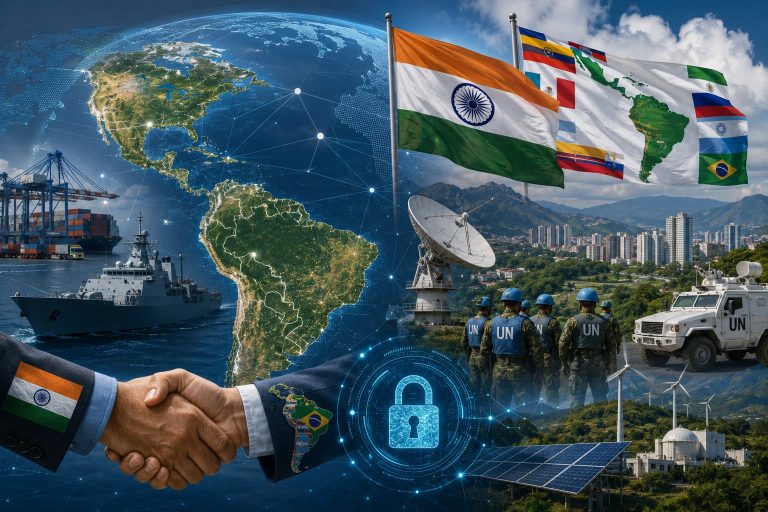
Changing Latin America’s Security Architecture: What It Means for India

Latin America’s evolving security architecture is being reshaped by geopolitical competition, organised crime, climate risks, migration, and digital threats. As regional powers seek greater autonomy in a multipolar world, India faces new strategic, economic, and diplomatic opportunities across the region. This report explores how India can strengthen defence cooperation, secure critical supply chains, expand technological partnerships, and deepen multilateral engagement with Latin America while navigating rising Chinese influence, political fragmentation, and emerging non-traditional security threats in an increasingly interconnected global order.

Read MoreChanging Latin America’s Security Architecture: What It Means for India

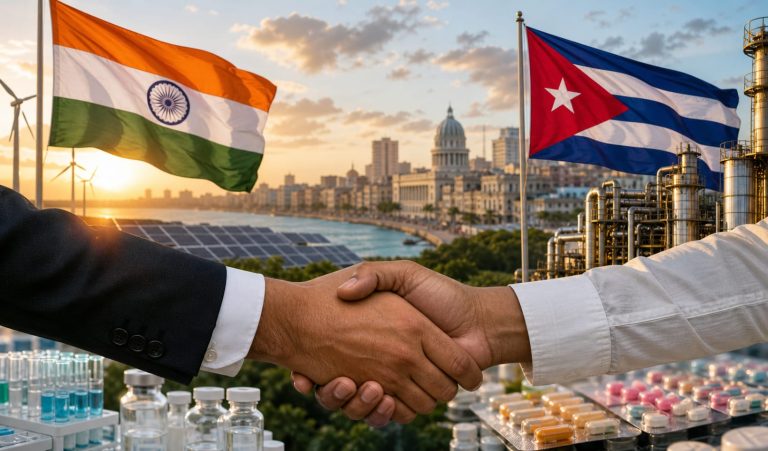
Existing Indian Economic and Strategic Interests in Cuba: Challenges and Prospects

India’s economic and strategic engagement with Cuba spans pharmaceuticals, renewable energy, digital cooperation, and development assistance, rooted in decades of South-South solidarity. Yet this relationship remains underutilised due to U.S. sanctions, Cuba’s economic fragility, and implementation gaps in key projects. With Cuba’s BRICS partner status and expanding renewable energy ambitions, India has a timely opportunity to convert commitments into tangible outcomes, deepening its role as a credible Global South partner while unlocking high-value sectors for bilateral growth.

Read MoreExisting Indian Economic and Strategic Interests in Cuba: Challenges and Prospects