Party Without a Compass: Rediscovering the Democratic Purpose

The Democratic Party has lost its strategic compass, trading purpose for performance. Once a force for working-class advancement and global leadership, it now drifts in cultural theatrics and reactive politics. While Republicans rally around power and production, Democrats offer moral outrage and identity slogans. To reclaim relevance, the party must refocus on national interest, economic strength, and institutional reform—or risk becoming politically decorative in a world demanding decisive leadership.

Read MoreParty Without a Compass: Rediscovering the Democratic Purpose

Trump’s High-Stakes Litmus Test: Can Peace Through Strength Survive the Israel–Iran War?

Trump’s doctrine of “peace through strength” faces a defining test in the escalating Israel–Iran war. As Tehran defies U.S. deterrence, Trump must choose between bold retaliation, risky ambiguity, or compromise—each with global consequences. The world is watching, from Beijing to Moscow. Can Trump project credible strength without losing his base or dragging America into war? This isn’t just about the Middle East—it’s a litmus test for U.S. power in a shifting world.

Read MoreTrump’s High-Stakes Litmus Test: Can Peace Through Strength Survive the Israel–Iran War?

Israel Strikes Iran: What are the Implications for US Strategic Interests in the MENA Region?

Israel’s unprecedented strike on Iran has sparked a geopolitical crisis with far-reaching consequences for U.S. strategic interests in the Middle East. From derailing nuclear negotiations to straining relations with Gulf allies and complicating ties with Israel, this dispatch examines the volatile shifts reshaping America’s role in the region.

Read MoreIsrael Strikes Iran: What are the Implications for US Strategic Interests in the MENA Region?

A Cold Partnership- An Analysis of US-Egypt Relations Under Trump 2.0

Under Trump’s second term, U.S.-Egypt relations have cooled further due to controversial positions on the Suez Canal and Gaza diplomacy. Trump’s call for free U.S. passage through the Suez Canal and his Gaza displacement plan, both seen as affronts to Egyptian sovereignty, have strained ties. Egypt’s rejection signals a desire for autonomy and increasing openness to alternative global partners like Russia and China amid growing U.S. unpredictability.

Read MoreA Cold Partnership- An Analysis of US-Egypt Relations Under Trump 2.0

Assessing the Imminent Chinese Threat: Context Behind U.S. Defence Secretary’s Shangri-La Remarks

“There is no reason to sugarcoat it. The threat China poses is real, and it could be imminent.” The U.S. Defence Secretary, Pete Hegseth, made this remark on May 31, 2025 at the annual inter-governmental security conference Shangri-La Dialogue in Singapore. In a stark warning to the U.S.’s Asian allies, Hegseth frames China as a national security threat, not just to the U.S., but also a military threat to the Asia Pacific region, particularly Taiwan.

Read MoreAssessing the Imminent Chinese Threat: Context Behind U.S. Defence Secretary’s Shangri-La Remarks

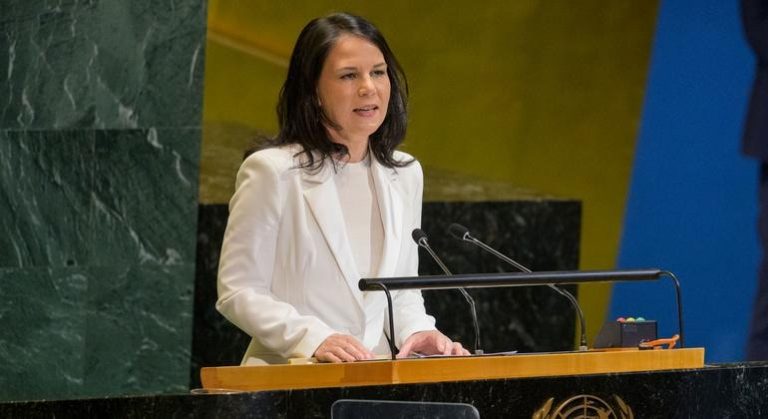
Annalena Baerbock Elected UNGA President: A Defining Moment for Global Leadership

On 2 June 2025, Annalena Baerbock, former German Federal Foreign Minister and member of Alliance 90/The Greens, was elected President of the 80th United Nations General Assembly. Her election, secured by 167 votes in a rare secret ballot, marks the first time a German and only the fifth woman has held this role in the UNGA’s 80-year history. Baerbock’s presidency begins amid global conflicts, climate emergencies, and institutional scepticism. With a bold vision prioritising multilateral renewal, SDG acceleration, peace and security, and gender inclusion, Baerbock aims to reinvigorate the General Assembly's relevance. While her past foreign policy positions, particularly on Ukraine, spark debate about her impartiality, her commitment to inclusive diplomacy and reform could help reshape the UN at a critical historical crossroads.

Read MoreAnnalena Baerbock Elected UNGA President: A Defining Moment for Global Leadership

Panic in Washington: US Lawmakers Admit They’ve Lost Strategic Control in Africa

Africa is no longer passively awaiting Western aid, it is actively reshaping global power structures. As U.S. influence recedes due to policy neglect and strategic confusion, countries like China, Russia, and Türkiye have filled the void with investments and diplomatic engagement. African leaders are rejecting paternalism, insisting on equal partnerships and sovereign respect. The United States, once a dominant presence, now watches from the sidelines, adrift while the continent forges a multipolar future on its own terms.

Read MorePanic in Washington: US Lawmakers Admit They’ve Lost Strategic Control in Africa

The Second Punch: Why Trump’s Student Visa Freeze Marks a Strategic Shift in U.S.–China Relations

President Trump’s freeze on student visa processing marks a strategic shift in U.S.–China relations. Framed as a response to campus antisemitism, the move is part of a broader effort to decouple from China. By targeting academic exchanges, the administration aims to protect America’s innovation ecosystem from foreign exploitation. This policy, following earlier tariffs, represents the second major strike in a systematic recalibration of U.S. geopolitical and economic priorities.

Read MoreThe Second Punch: Why Trump’s Student Visa Freeze Marks a Strategic Shift in U.S.–China Relations

US-Syria Relations – How the Lifting of Sanctions can Lead to Opportunities for Rapprochement

The recent U.S. decision to lift sanctions on Syria has sparked cautious hope for a new chapter in U.S.-Syria relations. With a new Syrian president in place, there's a chance to rebuild diplomatic and economic ties. While the move offers opportunities for recovery and cooperation, it comes with tough conditions. Could this be the start of lasting peace and partnership, or just a temporary shift in a complex region?

Read MoreUS-Syria Relations – How the Lifting of Sanctions can Lead to Opportunities for Rapprochement