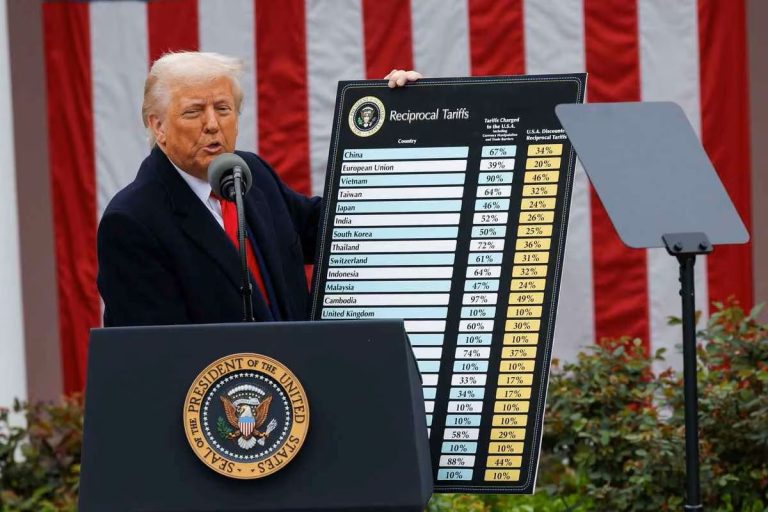
Examining global trade dynamics and tariff policies, analyzing their implications for economies and international relations.

India at Tianjin: Modi’s SCO Gambit in a Multipolar World

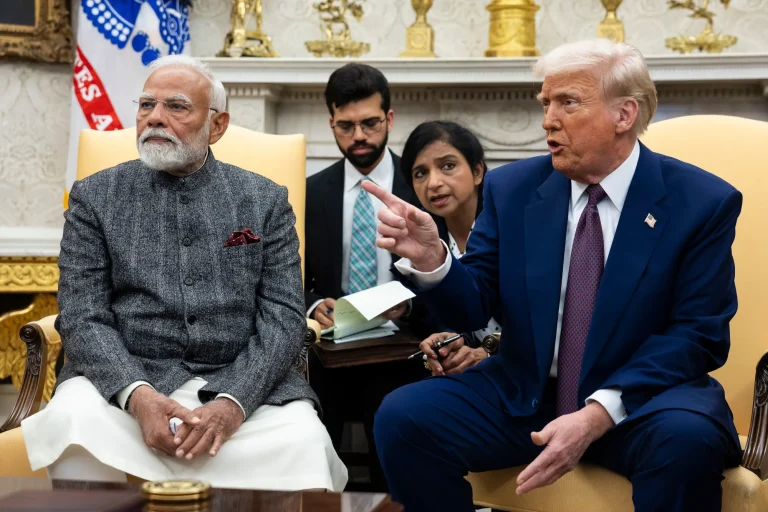
India enters the SCO summit walking a razor’s edge. Between Russia’s embrace, China’s rivalry, and America’s pressure, New Delhi’s old habit of “working with everyone” is becoming unsustainable. Modi’s meetings with Xi and Putin are more than routine diplomacy—they are tests of India’s strategic agility in a fractured world. The question is no longer whether India can remain non-aligned, but how long it can keep balancing before being forced to choose a side.
Read MoreIndia at Tianjin: Modi’s SCO Gambit in a Multipolar World

Trump’s India Tariff Is Less About Trade 

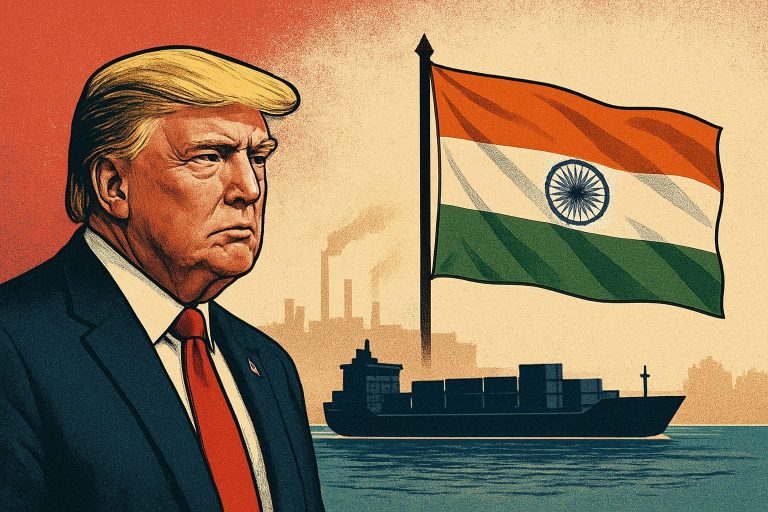
Trump’s tariff on Indian goods is less about trade and more a geopolitical ultimatum. It forces India to choose between aligning with U.S. strategic preferences or facing economic pain. The move targets key sectors like textiles, gems, and auto parts, pressuring India’s hedging strategy amid global power competition. Legal routes like the WTO offer little relief. India must respond swiftly with tactical diplomacy, market diversification, economic restructuring, and a clear narrative asserting its strategic autonomy to preserve sovereignty and growth.

Read MoreTrump’s India Tariff Is Less About Trade 

India After the Tariffs: What Next in a World Where the WTO Can’t Save You?

The Trump-era tariff revival against India signals more than a trade dispute—it’s a strategic message. As the U.S. recalibrates its economic alliances, India must confront hard truths: WTO diplomacy won’t suffice. New Delhi must pivot toward resilient trade diversification, domestic manufacturing strength, and assertive bilateral diplomacy. This is not just about steel or solar panels—it’s about global positioning. In the shifting tides of protectionism, India must act not as a victim, but as a counterforce.

Read MoreIndia After the Tariffs: What Next in a World Where the WTO Can’t Save You?

Tariffs and Trump: Reciprocity or Recklessness?

On May 21st, Donald Trump announced sweeping tariffs on EU goods and issued a sharp warning to Apple: move production to the U.S. or face penalties. It’s classic Trump; loud, provocative, and deeply strategic. But is it smart policy or reckless power play? This piece unpacks the logic behind the move, weighing its morality, fairness, and real-world impact in a tense moment for global trade and economic diplomacy.

Read MoreTariffs and Trump: Reciprocity or Recklessness?

HSBC Raises Alarm Over Trade War Impact: What It Means for Emerging Markets and Global Stability

When a global financial institution like HSBC increases its bad debt provisions, it means the bank anticipates more customers—individuals, companies, or even governments—will default on their loans. The bank is effectively saying, "We expect tougher times ahead." This isn’t guesswork. It's a move based on internal data, macroeconomic trends, and predictive modeling.

Read MoreHSBC Raises Alarm Over Trade War Impact: What It Means for Emerging Markets and Global Stability

U.S.-India COMPACT Initiative: Strengthening Strategic Ties Amid Lingering Tensions

Not restricting to a buyer-seller relationship, the shared strategic interests between the two states have carved out a partnership which has increasingly focussed on greater military integration, sharing advanced technologies, innovation, and research and development. A string of key agreements over time has made this expansion and deepening of strategic relations possible.

Read MoreU.S.-India COMPACT Initiative: Strengthening Strategic Ties Amid Lingering Tensions

The U.S.-China Trade War in 2025: A New Chapter in Economic Confrontation

After Donald Trump returned to the presidency in January 2025, he reignited his administration’s protectionist trade policies under the banner of “America First.” Central to this approach is the aggressive use of tariffs, taxes imposed on imports to curb trade deficits, promote domestic manufacturing, and punish what Trump calls “unfair trade practices,” particularly by China.

Read MoreThe U.S.-China Trade War in 2025: A New Chapter in Economic Confrontation

The Costs of America’s New Trade Strategy

At the heart of this policy is a 10% baseline tariff on imports from 185 countries, amplified by exponential penalties on selected geopolitical and economic adversaries. Chinese goods now face a total of 104% in tariffs, a staggering figure that underscores the combative mood in Washington. The European Union, India, Canada, and Mexico have also been targeted with tariffs ranging from 15% to 26%, sparking widespread retaliation and diplomatic fallout.

Read MoreThe Costs of America’s New Trade Strategy

Trade Wars and Annexation Threats: Is the US-Canada Relationship Doomed?

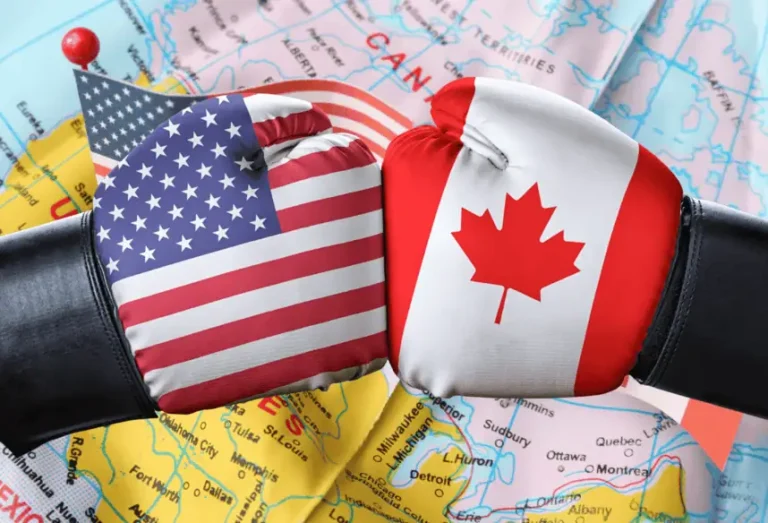
Not long after his inauguration, Trump announced a plan to place tariffs on Canada, Mexico, and China as part of his trade policy. In the case of Canada, Trump placed 10% ad valorem duties on Canadian energy and energy resources as well 25% ad valorem duties on all goods that are not energy related (Allen et.al, 2025). While some can argue tariffs can be used as a leveraging tool to compete against trade competitors such as China and as a coercion tool to force Mexico to deal with migration issues, the reasoning behind placing tariffs on Canadian goods and resources leaves room for numerous questions

Read MoreTrade Wars and Annexation Threats: Is the US-Canada Relationship Doomed?