This program deals with  the evolving geopolitical landscape of North and South America, focusing on U.S. foreign policy, regional security, economic policies, and technological leadership.

Canada’s Choice: An Analysis on the Candidates and their Policies 

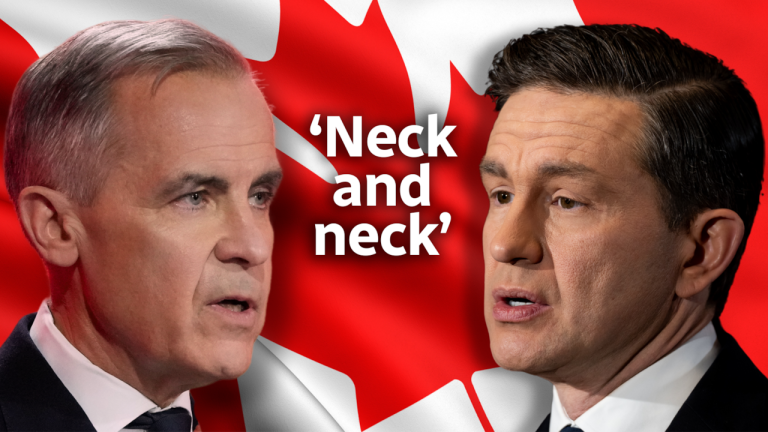
While Carney’s economic acumen and climate change advocacy makes him a formidable candidate for the Prime Minister’s seat, some may argue that his lack of experience and policies make him unfit to be the country’s next leader. This lack of experience is highlighted when McGill University Political Science Professor, Daniel Beland, claimed that Carney was untested during the Liberal Party election

Read MoreCanada’s Choice: An Analysis on the Candidates and their Policies 

Tyranny of the Majority: Is the US Heading Down the Path of Dictatorship?

One can assert the Trump administration violated this amendment of the US constitution through the detention of US green card and student visa holders as presented in the cases of Mahmoud Khalil and Rumeysa Ozturk, two students who were detained. The reasons for their forced detention were tied to their involvement in pro-Palestine protests or criticisms of the US foreign policy relating to Israel’s campaign in Gaza (Pazmino, Rose, and Roy, 2025).

Read MoreTyranny of the Majority: Is the US Heading Down the Path of Dictatorship?

U.S.-India COMPACT Initiative: Strengthening Strategic Ties Amid Lingering Tensions

Not restricting to a buyer-seller relationship, the shared strategic interests between the two states have carved out a partnership which has increasingly focussed on greater military integration, sharing advanced technologies, innovation, and research and development. A string of key agreements over time has made this expansion and deepening of strategic relations possible.

Read MoreU.S.-India COMPACT Initiative: Strengthening Strategic Ties Amid Lingering Tensions

New U.S. Defense Strategy: The Golden Dome and its Strategic Implications

The U.S. military currently has several programmes focussed on missile defense designed to intervene at different stages of a missile’s flight and missile types, ensuring coverage against a variety of aerial threats. One such example is the Terminal High Altitude Area Defense or THAAD program under the aegis of the U.S. Missile Defense Agency that is charged with the task of developing a defense system to intercept and destroy short, medium, and intermediate-range ballistic missiles during the final stage of their flight as they re-enter the atmosphere.

Read MoreNew U.S. Defense Strategy: The Golden Dome and its Strategic Implications