
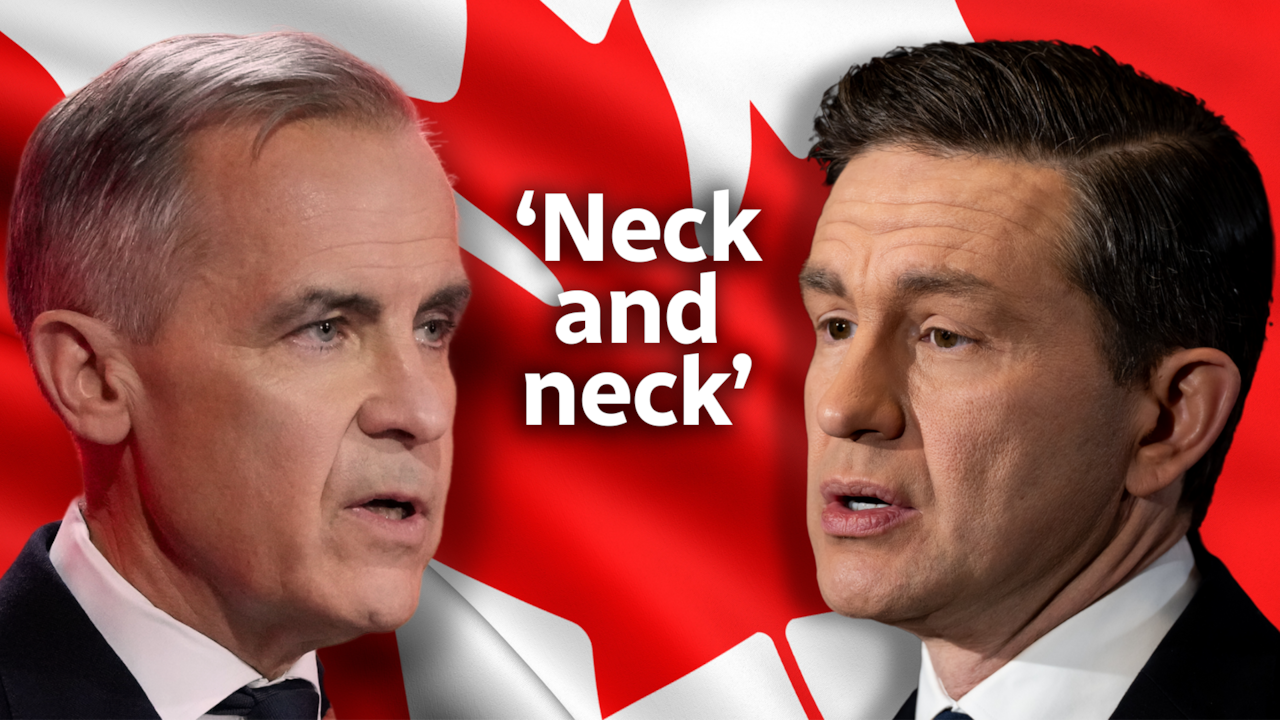
Canada’s Choice: An Analysis on the Candidates and their Policies
While Carney’s economic acumen and climate change advocacy makes him a formidable candidate for the Prime Minister’s seat, some may argue that his lack of experience and policies make him unfit to be the country’s next leader. This lack of experience is highlighted when McGill University Political Science Professor, Daniel Beland, claimed that Carney was untested during the Liberal Party election

Introduction:
On January 6th, 2025, Justin Trudeau announced his resignation as Canada’s Prime Minister vowing to leave office as soon as the Liberal Party selected a new leader. By March 2025, the Liberal Party selected former Bank of Canada Governor Mark Carney to be the new Liberal Party leader and hence the new Prime Minister of Canada. Within his first days as Prime Minister, Carney made the decision to dissolve parliament and called for a snap election, which is set to take place on the 28th of April. Now that the election cycle is in full effect with Canadians heading to the polls and the candidates making their case through debate and campaigning, it is time for the Canadian population to make their choice on who should lead their country. This analysis focuses on analysing the candidates Mark Carney and Conservative Party leader Pierre Polievre and their policies leading up to the Canadian Federal Election 2025. To understand the candidates and their policies leading up to election day, this article will be organised in the following fashion:
- Prime Minister Mark Carney and the Liberal Party
- Pierre Poilievre and the Conservative Party
- What does the Future Hold for Canada?
Prime Minister Mark Carney and the Liberal Party:
The incumbent Prime Minister Mark Carney is in a unique position entering this federal election, as he has never been elected into a political office on the provincial or federal level. Although some can perceive Carney to be lacking political capital, the argument can be made that he does have experience in high level economic roles that can be beneficial to his candidacy. This is clear as he is the former Governor of both the Bank of Canada and England, and has experience guiding Canada and the UK through volatile times such as the Great Recession as well as economic fallout from the Brexit Referendum in 2016 (King and King, 2025).
While he has experience in economic leadership roles, he also has had experience working on climate change advocacy. This is evident as he was named as UN Special Envoy for Climate Action and Finance in 2019, where “…advocated for the financial sector to invest in net-zero emissions” (Yeung, 2025). Furthermore, it can be said that he has some experiences working in government, as he was selected to be former Prime Minister Justin Trudeau’s advisor during the COVID-19 pandemic and later was made to be the chair of the Economic Growth Taskforce in 2024 (The Narwhal, 2025). Through these experiences, the case can be made that although Carney does not have much political capital, he has experiences that can make him effective in implementing economic and environmental policies.
In terms of his policy platform, Carney outlines his general plan on his campaign website as follows:
- Creating One Canadian Economy (Unite Canada under one economic umbrella as opposed to having thirteen provincial economies)
- Economic Pillars for Change (Grow the Canadian economy)
- Make Housing Affordable (Aimed at tackling the housing affordability crisis)
- Spend Less. Invest More (Aimed at cutting government spending in order to allow the government to increase investment portfolio)
- A New Climate Plan (Aimed at scrapping the carbon tax and providing greener choices)
(Carney, 2025)
It is clear that Carney’s general policy platform is focused on moving Canada to a green economy that provides incentives to businesses to be more environmentally aware while also creating an economic environment that aims to make Canada prosperous for all Canadians. The amalgamation of economic and environmental policy for a more prosperous Canada has yielded support from the Canadian public, as 43% of Canadians trust Carney to handle Canadian economic affairs, while 38% believe he will manage inflation effectively (Smith, 2025). Moreover, Carney also presents himself as a “tough on Trump” candidate who will be able to protect Canadian sovereignty and mitigate the effect of tariffs on the Canadian economy. This is clear as Carney and the Liberal Party plan to “…inject C$5 billion into a new Trade Diversification Corridor Fund”, which would allow Canada to diversify its trade relations to mitigate the impact of Trump’s tariffs (Ljunggren, 2025). Through his desire to combine economic and environmental policy to grow the Canadian economy as well as his “tough on Trump” approach, it can be argued that Carney is appealing for the Canadian public during a time where Canada is going through economic struggle and political turmoil.
While Carney’s economic acumen and climate change advocacy makes him a formidable candidate for the Prime Minister’s seat, some may argue that his lack of experience and policies make him unfit to be the country’s next leader. This lack of experience is highlighted when McGill University Political Science Professor, Daniel Beland, claimed that Carney was untested during the Liberal Party election, as Carney was running up against former Finance Minister and personal friend Chrystia Freeland, which would not prepare him to go up against seasoned political rivals such as Poilievre and Francois (Beland, 2025 cited in Kestler-D’Amours, 2025). Moreover, Kenneth P. Green, Senior Fellow at the Fraser Institute, argues that Carney’s economic and environmental plans could create hidden costs for consumers as “The plan would “tighten” (i.e. raise) the carbon tax on “large industrial emitters” (you know, the people who make the stuff you buy) who will undoubtedly pass some or all of that cost to consumers” (Green, 2025). Furthermore, Carney’s plan has also been criticised by MacDonald Laurier Institute Director of Energy,Natural Resources and Environment Heather Exner-Pirot, as being outdated due to changes in global dynamics, the predominant one being, the shift from climate change to economic security (Exner-Pirot, 2025). Therefore, it can be said that a lack of political experience and flaws in the economic plan may cause some issues for Carney’s campaign leading into the election.
Pierre Poilievre and the Conservative Party:
Unlike Carney, Pierre Poilievre is considered a seasoned politician in the conservative political sphere. This is clear as he was elected into office at the age of 25 in the 2004 Canadian elections and has served in the the Steve Harper administration as a cabinet minister (Yousif, 2025). Over time, Poilievre has become known for his sharp attacking approach to Canadian politics, which had made him popular among the Canadian electorate. According to Lisa Young, Political Science Professor at University of Calgary, Poilievre is “…described by people who are close to him as a very talented politician, and certainly, he’s described accurately as scrappy” (Young cited by Kestler-D’Amours, 2025). It is this brash and aggressive approach to politics that some may say led to his rise as leader of the Conservative Party .In regards to his policy platform leading to the upcoming elections, Poilievre’s main positions entering this elections include:
- Limiting the role of government in the personal lives of Canadians
- Cutting income tax by 15%
- Introducing a national energy corridor in order to have national resource projects approved quicker
- Introduce mandatory life sentences for violent criminals
- Negotiate with Trump relating to tariffs
(Conservative Party of Canada, 2025; Ljunggren, 2025)
One can see how Poilievre’s policy platform is focused primarily on limiting the influence big government has on the lives of the average Canadian while also cutting the bureaucratic red tape. However, it can be said that one of the biggest drivers behind the Poilievre campaign is not his promises and desire to limit the role of big government, but rather his populist approach. This is clear as Nadine Yousif of the BBC mentions how people are drawn to Poilievre due to his constant criticisms of the Liberal Party’s leadership and his desire to bring “common sense politics” back to Canada (Yousif, 2025). Moreover, Poilievre managed to reach numerous voters through his informal style through the use of social media, as his videos on social media sites have reached thousands of views (Van Dyk and Aiello, 2025). Furthermore, Poilievre’s style can be considered an influencing factor in gaining the vote of young people this election. This is clear as Brian Aguilar of CTV News reported, “According to Nanos Research polling, among 18-34 voters, 41 per cent intend to vote for Pierre Poilivere’s Conservatives, while 37 per cent plan to cast their ballot for Mark Carney’s Liberals” (Aguilar, 2025). Therefore, while Poilievre does sport a campaign promise that aims to limit the role of big government, it can be said that the driving force behind his campaign is his aggressive and informal approach to politics.
The idea that Poilievre would “roll over” for Trump is a plausible theory as one of Poilievre’s promises was to work with Trump to remove tariffs, which in light of the annexation threats, leaves Poilievre in an undesirable position in the race for the Prime Minister’s seat
While Poilievre’s approach to politics and desire to limit the role of big government can be considered an influencing factor for Canadians heading to the polls, there are some aspects of his campaign that might hinder his success come April 28th. A predominant issue facing Poilievre in the election is his constant comparison to Trump, which after the Trump tariffs went into effect, resulted in a shift towards a likely Liberal party win. This is clear as people have seen Poilievre as “…as a “Trump-inspired” figure…His base is typically Trump-friendly, even if most Canadians aren’t. Those same Canadians also see Carney’s Liberals as better suited to handle Trump, with 43% of them worried Poilievre would “roll over” to the President’s demands” (Moscrop, 2025).
The idea that Poilievre would “roll over” for Trump is a plausible theory as one of Poilievre’s promises was to work with Trump to remove tariffs, which in light of the annexation threats, leaves Poilievre in an undesirable position in the race for the Prime Minister’s seat. Moreover, this issue is also present among conservative voices in Canada who have also claimed Poilievre is too similar to Trump. According Conservative Party strategist Kory Teneycke “I think we’re just on the wrong track. And I think we need to adjust, refocus the campaign on the one big issue and soften the tone” in regards to his view of Poilievre being too “Trump-y” (Teneycke, 2025 cited by Kim, 2025). Therefore it can be said that Poilievre’s close resemblance to Trump can hinder his chances in becoming the next Prime Minister of Canada.
Conclusion-What does the Future Hold for Canada?:
As of now, the polls show the Liberal Party are slightly ahead of the Conservative Party in what can be considered one of the most consequential elections in modern Canadian history. With the Canadian economy and Trump on the ballot, it can be said that Carney has an edge over the competition due to having a campaign rooted in economic growth and climate change advocacy, while also being tough on Trump in the face of tariffs and the threat of annexation. However, his lack of political experience may be cause of concern for some voters, while the general approach of his economic plans can leave Canadians with more questions than answers.
On the other hand, Carney’s opponent Poilievre advocates for small government, which could allow Canadians to live a life free of government intervention in their private lives. Moreover, Poilievre’s aggressive approach to campaigning and creative use of social media allows him to present the image that he will be tough on big government while also making himself personable to the average Canadian. However, Poilievre’s constant comparisons to Trump, especially in the wake of tariffs and annexation threats, leaves Canadians wondering if he has what it takes to stand up to Trump and protect Canadian sovereignty while soothing the economic ailments caused by Trump’s tariffs. Overall, both candidates make a plausible case for their bid to become the next Canadian Prime Minister in spite of their flaws. All that is left is that the Canadian voters head to the polls to decide their future in an uncertain and volatile world.
Sherif Amin is a Research Fellow at the America Program of the Sixteenth Council


Critical Minerals and the Green Transition: Europe’s New Dependency Risk