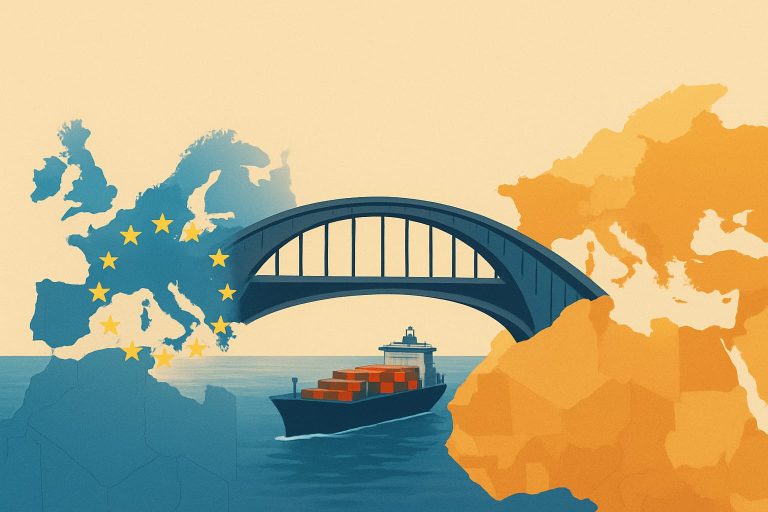
From Borders to Bridges: Europe’s New Trade Vision with the Mediterranean

Europe’s evolving trade vision with the Mediterranean goes beyond tariff cuts, focusing on regulatory convergence, digitalisation, and green value chains. The revised Pan-Euro-Mediterranean origin rules now allow flexible cumulation across 24 partners, strengthening regional supply chains in textiles, agri-food, and automotive components. Success, however, depends on overcoming capacity gaps, regulatory bottlenecks, and social adjustment pressures in Southern partners. By linking trade facilitation to investment in customs, digital systems, and green industries, the EU seeks both resilience and shared sustainable growth.

Read MoreFrom Borders to Bridges: Europe’s New Trade Vision with the Mediterranean

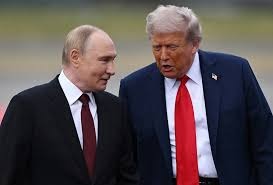
The Trump–Putin Summit and its implications for Sustainable Development

The Trump–Putin summit in Anchorage underscored shifting geopolitical dynamics with far-reaching consequences for sustainable development. While dominated by the Russia–Ukraine war, its implications extend to energy security, climate goals, food supply chains, and global cooperation. Agreements hinting at fossil fuel dependency, U.S. security guarantees to Ukraine, and weakened multilateralism risk slowing progress on the SDGs. With disruptions to trade, aid, and decarbonization, the summit highlights the need for vigilant international advocacy for sustainability, inclusivity, and cooperative governance.

Read MoreThe Trump–Putin Summit and its implications for Sustainable Development

Ursula von der Leyen’s Multiannual Financial Framework Gamble

On 16 July, Ursula von der Leyen unveiled a bold EUR 2 trillion budget proposal for the EU’s 2028–2034 Multiannual Financial Framework. Aiming to shift priorities toward competitiveness, defence, and strategic investment, the plan marks a significant departure from traditional focuses like agriculture and cohesion. While it reflects her vision of a stronger, more centralised EU, the proposal has triggered internal dissent and sparked backlash from member states. The battle over Europe’s future direction is now firmly underway.

Read MoreUrsula von der Leyen’s Multiannual Financial Framework Gamble

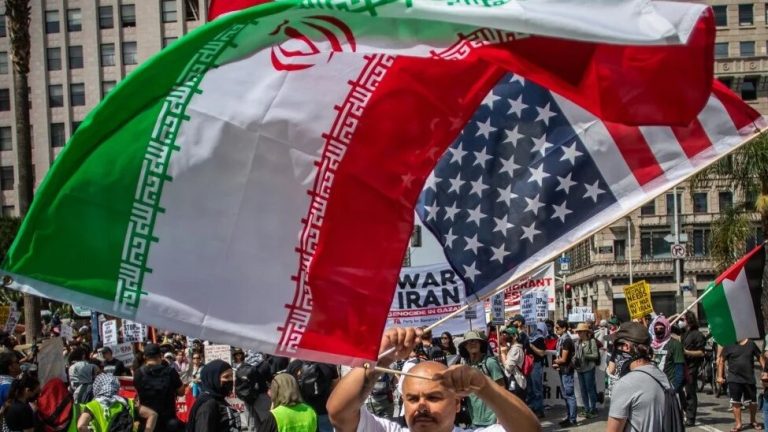
After The Strike: Why Trump’s Ceasefire Isn’t the Endgame 

President Trump’s strike on Iran’s nuclear facilities, followed by a surprise ceasefire, has jolted the global order—but it’s not the endgame. This is a high-stakes pause, not peace. The real test lies in converting military leverage into a lasting strategic framework. For Africa and the Global South, the episode signals a shift in U.S. power projection—swift, forceful, then restrained. If not followed by coherent diplomacy, it risks becoming just another spark in a volatile world.

Read MoreAfter The Strike: Why Trump’s Ceasefire Isn’t the Endgame 

Trump’s First 100 Days: What It Means for Europe’s Strategic Autonomy

As President Donald J. Trump crosses the 100-day threshold of his second term in office, a new era of transatlantic relations is taking shape. These first 100 days have not only reinforced his "America First" rhetoric, but also reignited critical debates within Europe about the future of its security, economic independence, and geopolitical alignment. For Europe, the message is increasingly clear: strategic autonomy is no longer an aspiration—it is a necessity.

Read MoreTrump’s First 100 Days: What It Means for Europe’s Strategic Autonomy