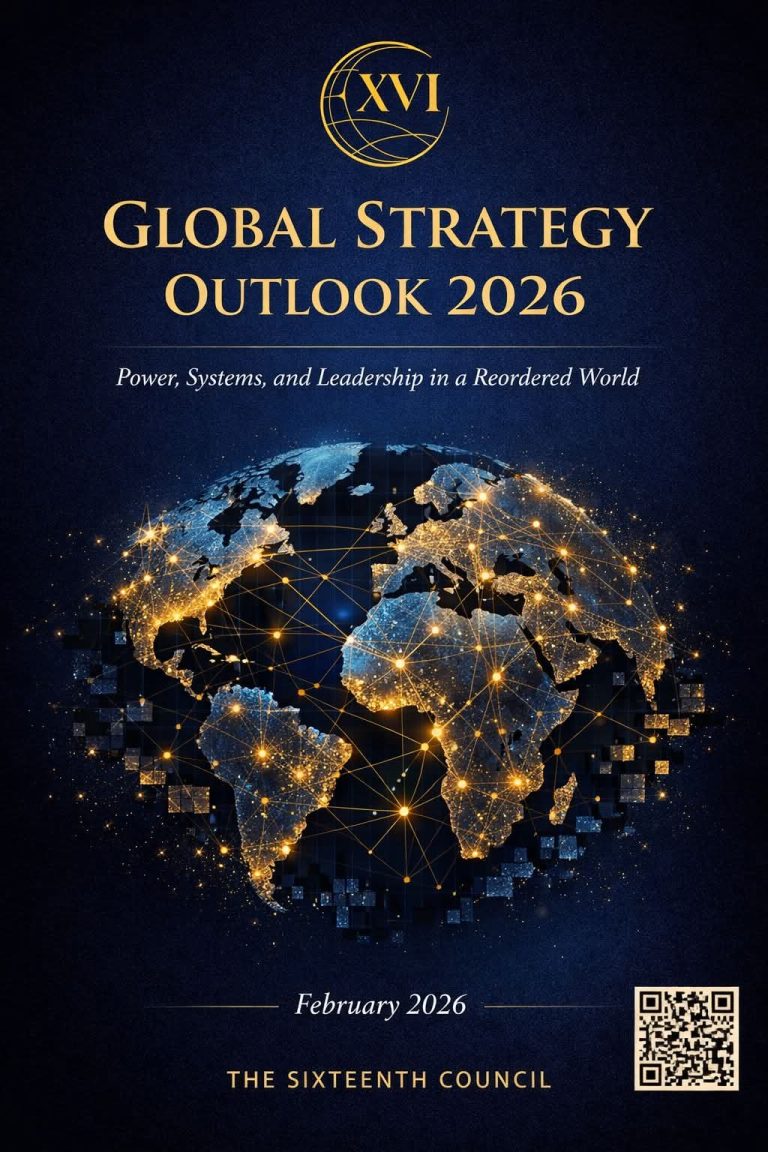
Global Strategy Outlook 2026

The year 2026 marks the beginning of a new global cycle shaped by geopolitical fragmentation, technological disruption, economic divergence, and declining institutional trust. After more than a decade of crisis management, the central challenge for leaders is shifting from responding to shocks to redesigning systems capable of operating in persistent volatility. Global Strategy Outlook 2026 outlines the major forces reshaping the world and presents a ten-point leadership agenda to help nations strengthen resilience, competitiveness, and strategic influence between 2026 and 2030.

Read MoreGlobal Strategy Outlook 2026

2026 Geopolitics: Power Without Dominance

Geopolitics in 2026 is defined by power without dominance. Major states retain significant military and economic capacity, yet lack the ability to impose durable outcomes unilaterally. Strategic competition has shifted toward chokepoints in technology, energy, and finance, while unresolved conflicts are increasingly managed rather than resolved. Fiscal constraints, alliance recalibration, and regional power assertion are reshaping global behaviour, producing a fragmented international system marked by calibrated escalation, persistent friction, and heightened strategic uncertainty.

Read More2026 Geopolitics: Power Without Dominance

Electoral Uncertainty in Latin America

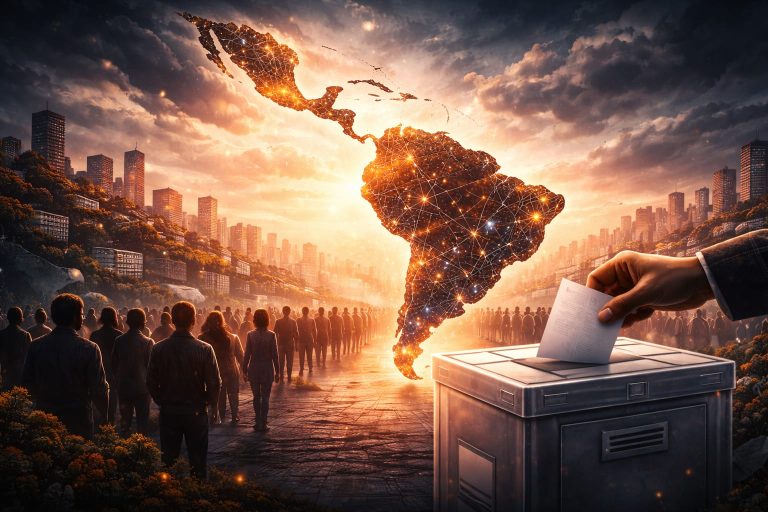
Latin America is entering a period of heightened electoral uncertainty as a dense cycle of elections from late 2025 to 2026 reshapes the region’s political trajectory. Voter fatigue, economic pressures, and dissatisfaction with inequality are fuelling a potential shift away from left-leaning governments toward more centrist or market-oriented leadership. While this transition may unlock reform and investment opportunities, it also heightens risks of policy volatility, social unrest, and intensified geopolitical competition between global powers.

Read MoreElectoral Uncertainty in Latin America

Global Order Under Strain: The Major Foreign-Policy Shocks of 2025

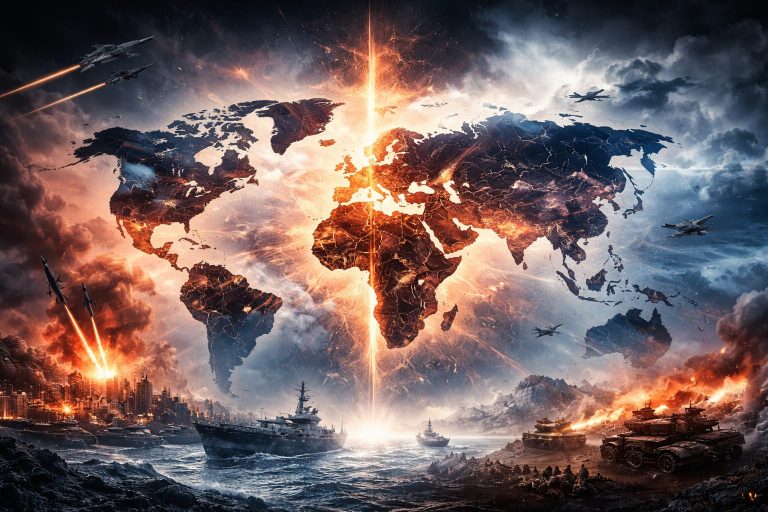
2025 exposed a global order under strain, defined less by decisive realignments than by accumulating shocks. U.S.–China economic confrontation became visibly symmetric, conflict mediation in Ukraine and the Middle East lost credibility, and regional actors assumed security roles once held by global powers. Trade routes, supply chains, and deterrence norms all proved fragile. The year underscored a central reality: major powers retain ambition, but their ability to enforce outcomes is increasingly constrained, producing a more volatile and contested international system.

Read MoreGlobal Order Under Strain: The Major Foreign-Policy Shocks of 2025

Joseph Kabila Breaks Silence: A Measured Critique of Governance and Crisis in the DRC

The Democratic Republic of the Congo (DRC) faces a deepening crisis, as former President Joseph Kabila breaks six years of silence to deliver a sweeping critique of post-2019 governance. In a rare address, Kabila defends his legacy while condemning constitutional violations, electoral fraud, economic mismanagement, and worsening insecurity. Calling for national dialogue and regional cooperation, his speech underscores the urgent need for institutional reform and inclusive solutions to restore peace and stability.

Read MoreJoseph Kabila Breaks Silence: A Measured Critique of Governance and Crisis in the DRC

Kabila on Trial: How the Senate Shattered Immunity and Shook a Nation

The Democratic Republic of the Congo (DRC), on 22 May 2025, lifted the parliamentary immunity of Joseph Kabila Kabangé, former President and senator for life, challenging entrenched norms around immunity and accountability. While some see it as long-overdue justice, others warn it could deepen political rifts. Either way, the message is clear: the era of untouchable leaders may be coming to an end.

Read MoreKabila on Trial: How the Senate Shattered Immunity and Shook a Nation

The Aftermath of the Canadian Federal Elections: Who are the Winners and Losers?

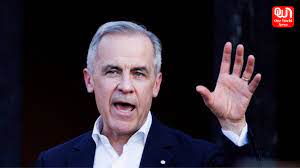
Although Carney and the Liberal Party were able to gain enough seats to form a government, they do not have enough to form a majority government. This is clear as the Liberals managed to win 169 seats in the House of Commons, which is three shy of the 172 needed to have a supermajority (Faguy, 2025). As a result, the Liberals will have to negotiate and build ties with the other opposition parties in order to form an effective government and produce policy

Read MoreThe Aftermath of the Canadian Federal Elections: Who are the Winners and Losers?