
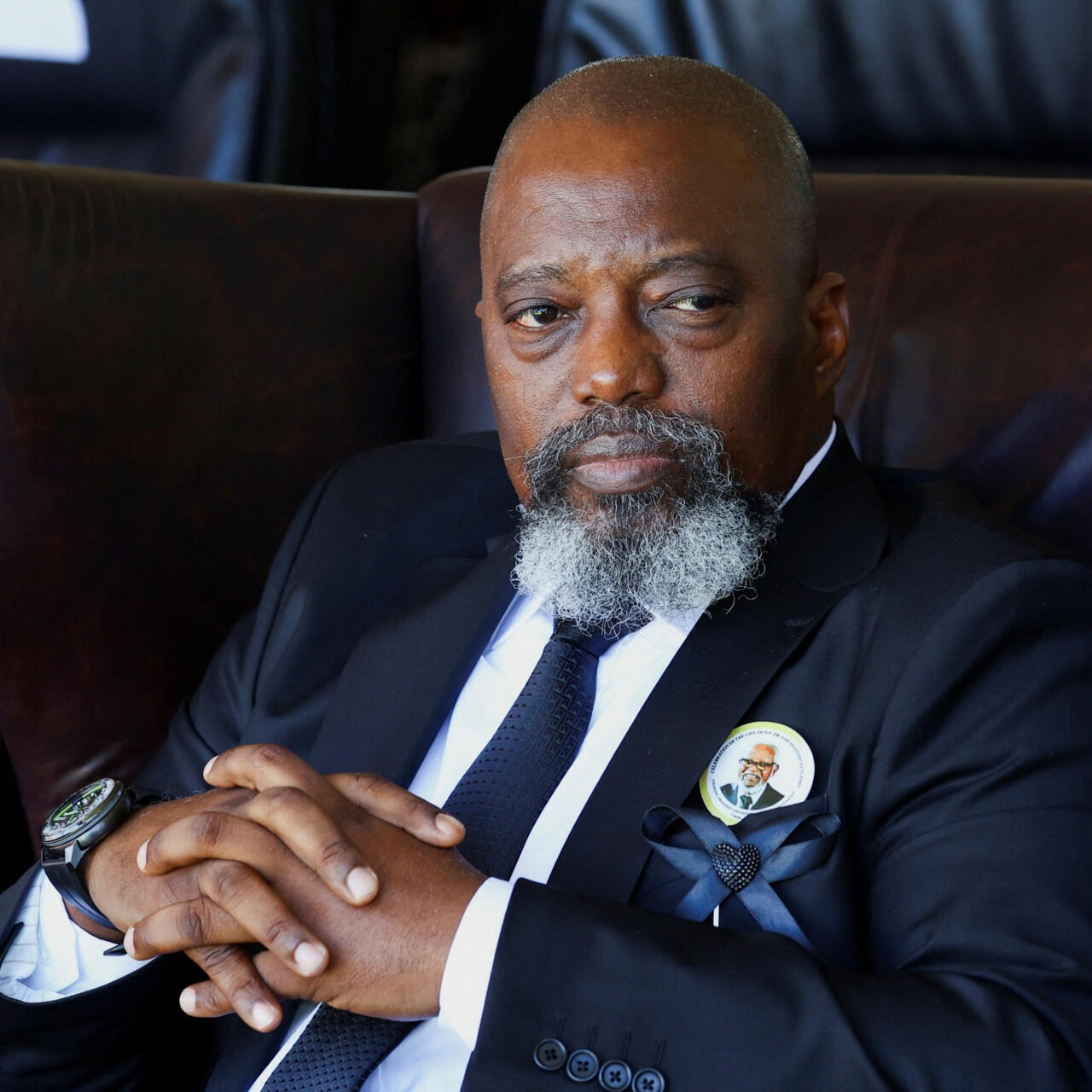
Joseph Kabila Breaks Silence: A Measured Critique of Governance and Crisis in the DRC
The Democratic Republic of the Congo (DRC) faces a deepening crisis, as former President Joseph Kabila breaks six years of silence to deliver a sweeping critique of post-2019 governance. In a rare address, Kabila defends his legacy while condemning constitutional violations, electoral fraud, economic mismanagement, and worsening insecurity. Calling for national dialogue and regional cooperation, his speech underscores the urgent need for institutional reform and inclusive solutions to restore peace and stability.

On 23 May 2025, former Congolese President Joseph Kabila ended a six-year silence with a comprehensive address to the Congolese people, reflecting on the state of the Democratic Republic of the Congo (DRC) since his departure from power. His speech, both a defence of his legacy and a sharp critique of the current regime, offers a rare insider’s perspective on the country’s political, economic, social and security challenges.
A Historic Peaceful Transition
Kabila opened by recalling the unprecedented peaceful transfer of power in 2019, marking the first such democratic transition in nearly six decades of Congolese independence. He reminded his audience that in January 2019, he voluntarily handed over leadership to President Félix Tshisekedi after concluding an agreement intended to ensure political stability through coalition governance. This agreement, according to Kabila, was designed to enable the new president to exercise effective power despite his party’s limited parliamentary representation, and to prevent the political crises that had previously destabilised the country.
His account of this peaceful handover challenges narratives that portray his exit as reluctant or contentious. This transfer, he emphasised, should be seen as a positive milestone for the DRC’s fragile democracy.
The State of the Nation in 2019: A Legacy of Relative Stability
Kabila painted a stark contrast between the state of the nation at his accession in 2001 and its condition in 2019 when he left office. He highlighted several key achievements during his tenure:
• Territorial integrity restored: The DRC’s borders corresponded exactly to those defined at independence in 1960, reversing the fragmentation caused by years of conflict.
• Political reconciliation: The nation had been reconstituted and reconciled after decades of war and dictatorship.
• Strong institutions: A progressive constitution was in place, with functioning democratic institutions.
• Economic reforms: Structural reforms had been implemented to reduce the debt inherited from previous regimes, and economic resilience had improved.
• Professional army: The military had become more professional and capable of defending national sovereignty.
• Electoral progress: The country had conducted its third electoral cycle independently.
This portrayal aligns with independent reports from the time, which acknowledged relative progress in political stabilisation, although challenges remained.
Rapid Decline: Dilapidation of National Gains
Kabila’s speech lamented the rapid and dramatic deterioration of the country’s political, economic, and social conditions since 2019. He attributed this decline principally to the concentration and abuse of power by the current leadership. Key elements of his critique included:
• Violation of the Constitution: Kabila accused President Tshisekedi of undermining the constitutional order, notably through the controversial reorganisation of the Constitutional Court, which many legal experts perceived as politically motivated. The independence of this judicial body is essential for upholding the rule of law.
• Institutional coup d’état (2020): He referenced the December 2020 political crisis, during which the parliamentary majority was overturned mid-term and the government replaced. Kabila described this as a “coup d’état institutionnel”, claiming it weakened democratic processes and parliamentary autonomy.
• Electoral fraud (2023): The December 2023 elections were marred by widespread allegations of fraud and irregularities, as reported by multiple international observers. This undermined the legitimacy of elected institutions.
• Constitutional revision plans: Announced plans to amend the Constitution threatened to erode national consensus and democratic gains. Attempts to extend presidential mandates have been a recurrent source of conflict in the DRC.
These developments, Kabila argued, reduced the country to a “space of lawlessness”, where the will of one man superseded constitutional norms.
Governance Characterised by Populism, Division, and Corruption
Kabila depicted the current administration as one marked by:
• Populism and demagogy: Policies driven by short-term political gain rather than sustainable development.
• Ethnic discrimination and nepotism: The institutionalisation of tribalism and the marginalisation of certain groups.
• Political violence and impunity: The rise of hate speech and injustice has destroyed national cohesion.
• Economic mismanagement: Despite rising public revenues due to reforms initiated before 2019, the government failed to invest in critical infrastructure, while inflation and currency depreciation have re-emerged.
• Corruption: An unprecedented increase in embezzlement and a growing national debt, now exceeding $10 billion, have raised serious concerns about fiscal sustainability.
Reports from international bodies such as the International Monetary Fund (IMF) and the World Bank have similarly noted deteriorating economic governance and rising debt vulnerabilities in the DRC since 2019.
Social Crisis: Youth Disillusionment and Humanitarian Emergencies
Kabila highlighted the social consequences of the governance crisis:
• High unemployment: Particularly affecting the youth, leading to social unrest and increased crime.
• Salary arrears for public servants: Undermining the functionality of the state.
• Famine and displacement: Worsening conditions in multiple provinces due to insecurity and poor governance.
He described the youth as a “resigned victim” of unfulfilled promises, vulnerable to manipulation by conflict entrepreneurs and false hopes.
Security Situation: A Country in Peril
Perhaps most starkly, Kabila addressed the country’s deepening security crisis, noting persistent violence in several provinces:
• North and South Kivu, Ituri, Tanganyika, Katanga, and Maï-Ndombe: These regions remain rife with armed groups, militias, and ethnic violence.
• State repression and abuses: He cited the killing of hundreds of detainees at Makala Prison in September 2024 as a crime against humanity that remains unpunished, along with abuses against religious groups and political opponents.
• Degradation of the army: Military training and recruitment were allegedly ethnicised and insufficient. Morale and discipline, he claimed, have deteriorated compared to the professional force he had built.
• Loss of state monopoly on violence: Armed groups and foreign mercenaries now operate with impunity, while security forces and intelligence services have been politicised and turned into instruments of repression.
This assessment echoes findings by international humanitarian and human rights organisations, which have repeatedly condemned abuses committed by security forces and militias in eastern DRC.
Regional Implications and Diplomatic Failures
Kabila warned that the government’s failure to uphold key regional peace and security agreements has exacerbated conflict. Notably, he criticised the administration’s distancing from the Pact on Security, Stability and Development in the Great Lakes Region, as well as the Framework Agreement on Peace and Security Cooperation, which had previously underpinned regional stability.
Furthermore, by allegedly treating former armed groups such as the FDLR (Democratic Forces for the Liberation of Rwanda) and various militia factions as proxies, the government risked further regionalising the conflict and threatening peace across the wider Great Lakes region.
The Call for National Dialogue and Peaceful Resolution
Kabila’s speech culminated in an urgent call for a comprehensive, inclusive political solution to the country’s multifaceted crisis. He stressed that:
• The DRC’s crisis is deep and multidimensional, requiring a holistic approach.
• The country belongs to all Congolese, not to any regime or leader.
• Dictatorship must end, and democracy and good governance must be restored.
• Security solutions alone are insufficient without genuine political dialogue.
He welcomed ongoing regional and international peace initiatives in Luanda, Nairobi, the East African Community, the African Union, and beyond, urging them to place the Congolese people at the heart of peace efforts.
Kabila also praised a church-led initiative involving Catholic and Protestant churches, lauding its inclusiveness and potential as a national forum, while subtly criticising the government’s reluctance to engage in direct talks with the opposition or armed groups.
Conclusion: A Candid Reflection from a Former President
Joseph Kabila’s May 2025 speech is a significant moment in the DRC’s political discourse. It offers a rare, detailed critique of the post-2019 governance landscape by the country’s second-longest-serving president, who also took care to defend his own legacy.
His testimony aligns in many respects with external assessments by international organisations, NGOs, and independent experts regarding the DRC’s political instability, governance failures, economic difficulties, and worsening security.
His call for a broad-based, inclusive political solution highlights the necessity of dialogue, constitutional respect, and national reconciliation as prerequisites to peace and development in one of Africa’s most resource-rich yet conflict-prone countries.
As the DRC approaches critical political and electoral milestones, Kabila’s reflections underscore the urgency of restoring institutional integrity and meeting the aspirations of its diverse population, especially its youth, to break the cycle of crisis and instability.
Aric Jabari is the Editorial Director of the Sixteenth Council.


Energy, Food, and Power: The New Geopolitics of Global Markets