Global Strategy Nexus – Africa Summit 2025 – Strengthening African Governance Through Strategic Reform
Africa stands at a critical crossroads of opportunity and challenge. At GSN 2025, the focus was on unlocking private sector potential to drive governance, economic resilience, and inclusive growth. The speech emphasized policy reforms, regional collaboration, and strategic innovation as essential tools for transforming volatility into progress across the continent.

Being Special Remarks Delivered By H.E Kashim Shettima GCON, The Vice President of Nigeria at the Global Strategy Nexus 2025 Summit. Lagos, Nigeria. 8th May 2025
1. Protocols
2. Welcome
It gives me great pleasure to be represented at the Global Strategy Nexus 2025 Summit, an international affair which brings together some of the great minds, private-sector players, public sector administrators and economic gurus from the African continent and beyond.
3. Tackling the Big Issues of Our Time
As we look forward to high-level panels that will engage in critical discourse pertaining to governance in Africa and beyond, as well as brainstorm about economic transformation and private sector-led growth, and as we ruminate in the course of today over the burning questions of digital transformation, climate resilience and inclusivity, we wish to state that these are great concerns for the times. And we hope that beyond repeating these concerns today, tangible steps will start to be taken to begin to move the needle on these issues that concern humanity in an increasingly complex world.
4. Navigating a VUCA and BANI World
We are all by now familiar with the concepts of VUCA and BANI. Scholars have drilled into many of us, and we also can observe the reality that we live in an increasingly Volatile, Uncertain, Complex and Ambiguous world. Some say the world is Brittle, Anxious, Nonlinear and Incomprehensible. Whatever model we adopt, the lesson is clear. Our work as private sector afficionados and captains of industry, or as public sector operatives and public servants has never been tougher. How do we achieve those lofty ideals stated earlier – economic transformation, private sector-led growth, digital transformation, climate resilience and inclusivity and many more that for want of time cannot be reckoned today in the face of pervasive volatility, unpredictability, complexity, ambiguity brittleness, anxiety, nonlinearity and incomprehensibility?
5. Global Crises and Economic Volatility
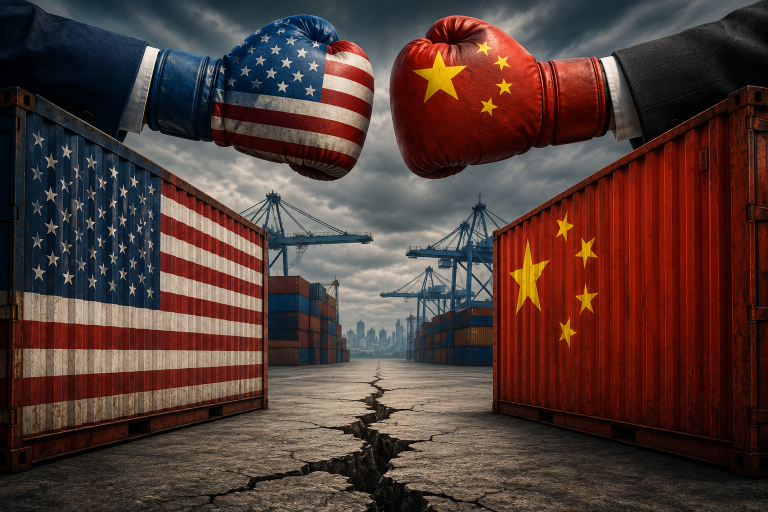
We have seen the level of economic volatility in recent times, precipitated by tariff wars, which have set commodity prices – the mainstay of many an African nation – hurtling in ways that gives many of us sleepless nights and dread for what next is to come. We all lived through a Black Swan event – COVID 19 – the type which comes once in several lifetimes – which still reverberates in many economies in the world today especially because the world needs to recover from shutdowns of factories, and financial sector lockdowns that happened five years ago. One of the effects of that era is the mass movement to e-commerce but also a widening of the income gap all over the world as uber capitalists and tech bros cashed out and doubled or tripled that net-worths even as most citizens of the world scramble, scrimped and scraped for dear life. We didn’t have time to recover from COVID19 when the Russia-Ukraine war started, distorting commodity prices, and in many parts of Africa, new anxieties around staple foods like wheat. Before Covid 19, we had had to go through the effects of global financial meltdowns, in what is known today as the Great Recession which spanned 2008 to 2011. In that era, we saw an unprecedented collapse of mortgage markets. Indeed, the history of the world could be woven around different types of crisis and volatility.
6. Africa’s Standing in Global Affairs
Distinguished Ladies and Gentlemen, the theme of this summit, UNLOCKING PRIVATE SECTOR POTENTIAL FOR GOVERNANCE AND ECONOMIC RESILIENCE IN AFRICA, is apt for the times. When we consider the interaction of forces and variables in the global economy today, it’s hard not to panic. And where is the state and position of Africa in the scheme of events? Are the countries in Africa being taken more serious than before or have we been further decimated in the comity of nations? Are African nations coming together to show more strength and grit, or splintering to smaller pieces as everyone heads in their own direction? Are African nations still being led by the nose to destinations that they cannot fathom, made to live the dreams of other peoples but their own, still suffering under some form of neocolonialism or the other? These are questions that we hope will be answered at this summit.
7. Confronting the Governance Challenge in Africa
The challenges of governance in Africa are well-known, and many bear roots in the distant past. Only an unbiased and truthful acknowledgement and analysis will take African nations out of these otherwise intimidating challenges. African nations continue to have issues with political instability, lack of accountability, disease and malnutrition, weak institutions, corruption, resource dependence, suboptimal human capital, brain drain, strife, tribal and religious upheavals, disconnection from the global economy, underperforming economies which don’t really deliver for the majority vulnerable and poor folks, inequality, and many more. The point is not in the ability to reel out the problem. The point is to solve them. As Karl Marx had once quipped “The philosophers have hitherto only interpreted the world, in various ways. The point, however, is to change it.”
8. Africa: The Continent of the Future
For the same African continent has everything it takes and that is why the most exciting place for anyone to live is on this continent at this moment when we can be impactful. Many nations across the world have plateaued – with little going on in terms of marginal productivity, with declining or ageing populations, with fewer and fewer job opportunities or even engagement for the masses. We have countries that could be said to be ‘set’, with a lack of dynamism that could in itself be depressing. But not in dear Africa. Africa is that continent shouting and beckoning for her resources to be explored, developed and valued appropriately. It is that continent where there is vast opportunities and areas of interventions. It is that continent that is poised to provide the human capital required to pivot the world in decades to come. It is that continent, where those who have the knowledge can make profound impact in the lives of millions by sheer dedication today.
9. Nigeria’s Bold Economic Reforms
As it pertains to Nigeria, it was as if by premonition that Mr President signed up for two of the most difficult reforms, which though very grating on some of our vulnerable people, are beginning to yield results in terms of stability in the oil sector and the national currency, the Naira. No one could have seen that the world will be in a tariff quagmire and trade war today, akin to the events that precipitated the Great Depression of the 1930s and by extension, World War 2 that started circa 1939. Mr President acknowledges that life is tough for many Nigerians and that the cost-of-living crisis which is a global phenomenon but also a Nigerian problem as we adjust to reforms, is real. However, Mr President believes that going forward, the unease that people are feeling will reduce and incidences of poverty will also be positively impacted. Two years is good enough time to strategize, but Nigerians will see that the economy will begin to open up in a matter of months.
10. Fiscal Progress and Local Development
One of the impacts of the reforms of the current administration is that the states and local governments are doing a lot better in terms of revenue. Federal Allocations shared down to states has tripled in some instances. Most states have not had cause to borrow in the last two years and indeed they decreased their quantum global borrowing by 32%, with some states’ borrowing falling by as much as 80%. This creates room for an explosion of local infrastructure going forward as the Balance Sheets of the states have been freed up and are looking attractive to investors and lenders alike. Many of the states are awash with liquidity by the way. The encouragement of local government autonomy is also worthy of consideration as the intent is for government spending and resources to get to the very grassroots. When we add the new pronouncement around prioritizing local contractors and producers, Nigerian is indeed unto a new era where we can use local resources and liquidity to boost the economy organically. Again, we want to assure Nigerians to look out for the good times as these policies begin to trickle down. For now, we can see great improvements in the macroeconomy; Nigeria’s Balance of Payment posted surpluses of $6.8 billion in 2024, our trade surplus was a whopping $16 billion, and even the ratings agencies like Fitch has had to upgrade our position based on these performances. Suffice to say that our unencumbered foreign reserves notched up from $3 billion in May 2023, to $23 billion in December 2024, a remarkable improvement and just recently, we saw information on IMF Website that Nigeria has cleared all of her legacy loans, to zero.
11. A Continental Call to Action
Ladies and gentlemen, the times are tough and tricky globally. Africa remains in dire need of a shift of narrative from that of underperformance, disease, poverty and strife. We are calling our private sector to redouble their efforts in this noble cause. No matter what the case may be, we urge that the continent of Africa, and its 54 nation states stand firm, and seize our opportunity for improvement and greatness. We look forward to the deliberations today and urge that they be salutary and impactful, with decision prompts for implementation, so that Africa will turn the corner, for good.
Thank you very much for listening.