Syria’s Tartous Gamble: UAE’s $800 Million Bet on a Port in the Eye of the Storm

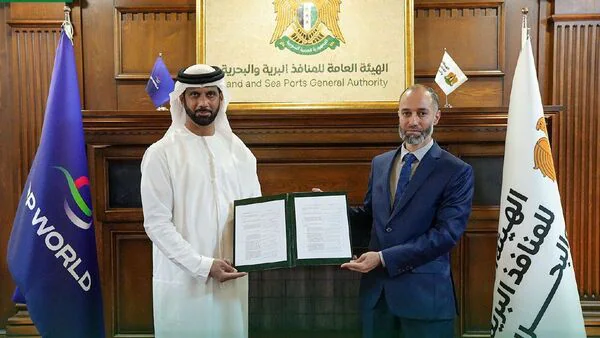
The $800 million UAE–Syria deal to redevelop Tartous port positions the site as a potential East Mediterranean logistics hub linking Asia, Europe, and Africa. Operated by DP World, the project could revitalise Syria’s economy and integrate it into regional trade. Yet deep instability, sanctions, and the port’s dual role as a Russian naval base complicate execution. Without security and political breakthroughs, Tartous risks becoming another unrealised infrastructure vision — rich in promise, poor in delivery.

Read MoreSyria’s Tartous Gamble: UAE’s $800 Million Bet on a Port in the Eye of the Storm

Baghdad–Erbil Oil Accord: Tactical Convergence Under Strategic Uncertainty

The Baghdad–Erbil oil accord marks a tentative step toward stabilising Iraq’s fractious energy politics. Under the deal, the Kurdistan Regional Government will channel all crude exports through SOMO, receiving $16 per barrel, while a joint audit team reviews revenues and federal entitlements. The KRG has also transferred salary lists and 120 billion dinars to Baghdad. Yet, unresolved issues over future oil contracts and delayed public salary payments underscore that implementation, not signature, will determine whether this agreement becomes a durable framework or another fragile truce.

Read MoreBaghdad–Erbil Oil Accord: Tactical Convergence Under Strategic Uncertainty

Brazil’s “Devastating Bill”

Brazil’s Congress has passed the so-called “devastation bill,” easing environmental licensing for projects in the Amazon and reducing protections for indigenous and quilombola lands. Critics warn it’s the biggest environmental rollback since the 1980s, potentially enabling large-scale deforestation and biodiversity loss. Supporters claim it will boost investment by removing bureaucratic hurdles. President Lula could veto the bill, but Congress may override. With the Amazon’s global role in climate regulation and biodiversity, the law’s passage could have worldwide environmental consequences, including for Africa.

Read MoreBrazil’s “Devastating Bill”

“The Line” Review

Saudi Arabia’s \$500 billion mega project, “The Line,” part of the NEOM initiative under Vision 2030, faces financial and ethical scrutiny amid falling oil revenues. Planned as a 100% renewable, linear city for 9 million residents, its projected 2030 population has been cut to 300,000. Critics cite massive costs, budget deficits, and alleged forced displacements of the Al-Huwaitat tribe. The project’s future remains uncertain, with global economic implications, including potential effects on Africa where Saudi investments may reach \$41 billion in the next decade.

Read More“The Line” Review

Italy’s Migration Crossroads: Redefining Europe’s Southern Frontier

Italy is recalibrating its migration strategy through a dual track: expanding legal work visas to offset a shrinking workforce while tightening maritime deterrence along the central Mediterranean. Offshore asylum centres in Albania aim to separate arrival from entry rights, though EU divisions and Libya’s fragmented politics strain coordination. If courts uphold the model, it could redefine Europe’s southern frontier; if not, Italy risks renewed arrival surges, humanitarian strain, and deepened fractures in EU solidarity on migration policy

Read MoreItaly’s Migration Crossroads: Redefining Europe’s Southern Frontier

Trump’s India Tariff Is Less About Trade 

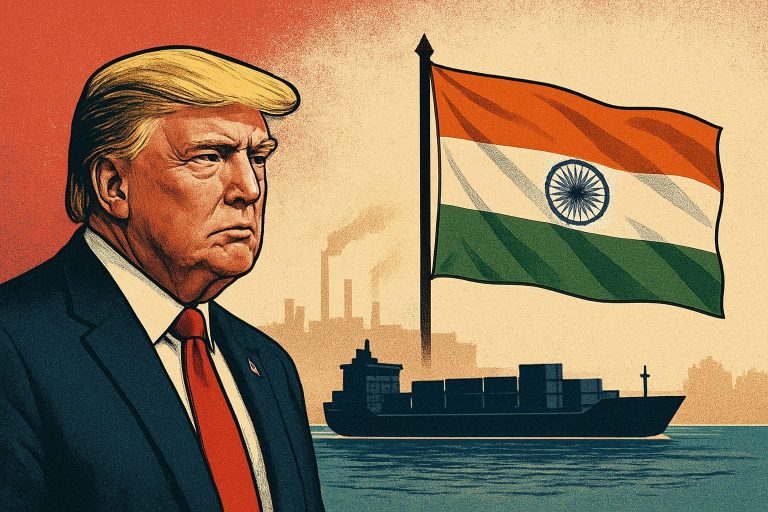
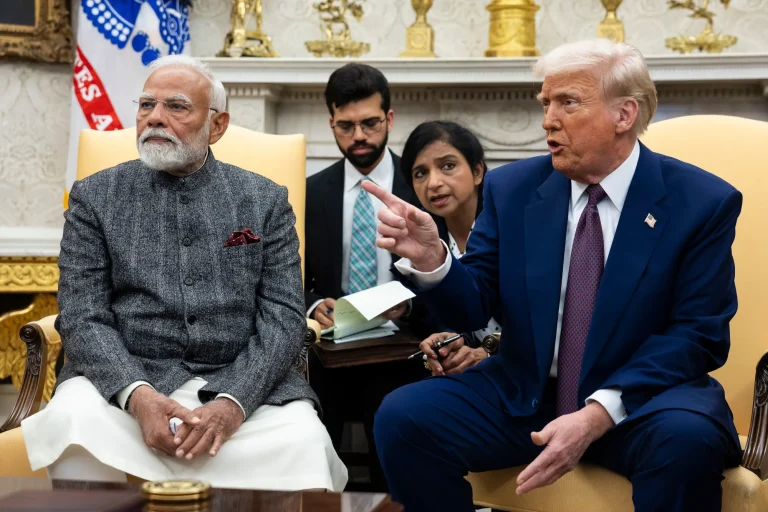
Trump’s tariff on Indian goods is less about trade and more a geopolitical ultimatum. It forces India to choose between aligning with U.S. strategic preferences or facing economic pain. The move targets key sectors like textiles, gems, and auto parts, pressuring India’s hedging strategy amid global power competition. Legal routes like the WTO offer little relief. India must respond swiftly with tactical diplomacy, market diversification, economic restructuring, and a clear narrative asserting its strategic autonomy to preserve sovereignty and growth.

Read MoreTrump’s India Tariff Is Less About Trade 

How Africa’s Infrastructure Gaps Are Holding Back Regional Value Chains

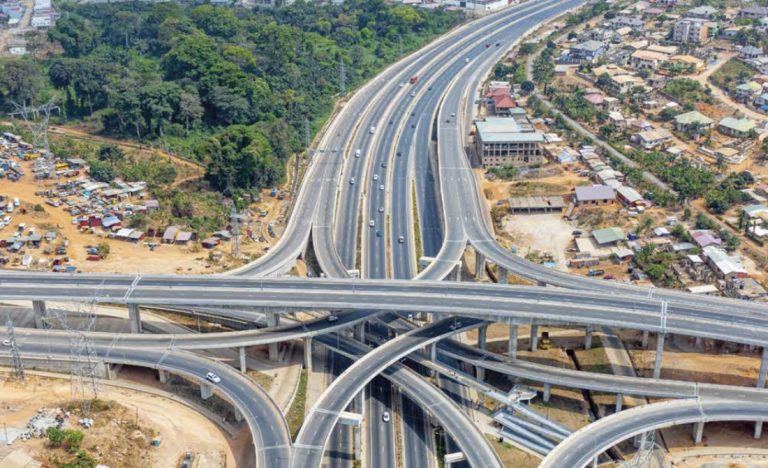
Despite the promise of AfCFTA, Africa’s regional trade remains stunted by a critical and underexamined barrier: infrastructure. This dispatch argues that fragmented, underfinanced, and nationally siloed infrastructure systems are preventing the emergence of regional value chains. From broken transport links to disconnected power grids and outdated customs systems, the lack of coordinated, production-enabling infrastructure is the single most decisive bottleneck to industrial integration. Without a radical shift in governance, finance, and planning, Africa risks missing its moment in the global value chain race.

Read MoreHow Africa’s Infrastructure Gaps Are Holding Back Regional Value Chains

Ethiopia’s Regional Influence and Nile Politics

As global power dynamics shift, infrastructure sovereignty is emerging as a decisive frontier of national strategy. From AI regulation to data localization and critical supply chains, states are reasserting control over foundational systems. This Strategic Dispatch explores how these developments are redefining geopolitics and what they mean for long-term competitiveness, security, and influence. For policymakers and corporate leaders alike, navigating this terrain requires a strategic recalibration—one grounded in foresight, coordination, and a sober understanding of evolving global realities.

Read MoreEthiopia’s Regional Influence and Nile Politics

Burundi’s Strategic Withdrawal: Domestic Pressures and the Great Lakes Security Ripple 

Burundi’s planned withdrawal from the African Union mission in Somalia marks a turning point for its military and political landscape. For nearly two decades, AU deployments provided cohesion, professional development, and strategic leverage. Ending this role risks weakening internal discipline, reducing diplomatic influence, and complicating regional security coordination. With tensions in eastern DRC and uneasy relations with Rwanda, the transition could reverberate beyond Burundi’s borders, shaping the stability of the Great Lakes region in the months ahead.

Read MoreBurundi’s Strategic Withdrawal: Domestic Pressures and the Great Lakes Security Ripple 

India After the Tariffs: What Next in a World Where the WTO Can’t Save You?

The Trump-era tariff revival against India signals more than a trade dispute—it’s a strategic message. As the U.S. recalibrates its economic alliances, India must confront hard truths: WTO diplomacy won’t suffice. New Delhi must pivot toward resilient trade diversification, domestic manufacturing strength, and assertive bilateral diplomacy. This is not just about steel or solar panels—it’s about global positioning. In the shifting tides of protectionism, India must act not as a victim, but as a counterforce.

Read MoreIndia After the Tariffs: What Next in a World Where the WTO Can’t Save You?