The Big Beautiful Bill: Domestic Vision, Global Ripples

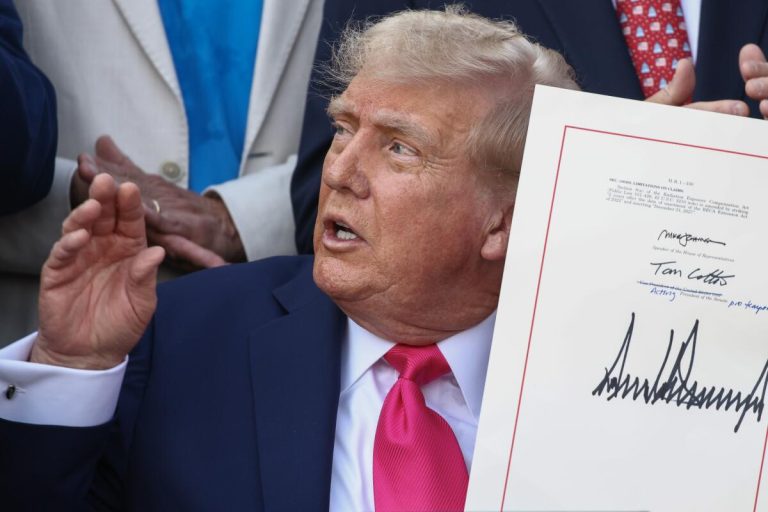
Donald Trump’s “Big Beautiful Bill,” passed on July 4, 2025, delivers sweeping tax cuts and boosts defense and immigration enforcement, but faces sharp criticism over its impact on debt and social safety nets. While the administration touts economic benefits, the bill reallocates Medicaid and SNAP funding to states and imposes new work requirements. Internationally, Trump’s tariff strategy—especially on countries like South Africa—raises economic uncertainty. The bill marks a bold, polarising vision with far-reaching domestic and global implications.

Read MoreThe Big Beautiful Bill: Domestic Vision, Global Ripples

Precarious Pact: Unpacking the DRC-Rwanda Peace Deal

Signed on 27 June 2025 in Washington, the DRC-Rwanda peace agreement marks a high-stakes attempt to end decades of violence in the Great Lakes. Brokered by the U.S. and Qatar, the accord intertwines territorial assurances, militia disarmament, and a minerals-for-security agenda. Yet, deep-rooted mistrust, the M23’s absence, and fragile state institutions raise urgent questions about the deal’s durability.

Read MorePrecarious Pact: Unpacking the DRC-Rwanda Peace Deal

Party Without a Compass: Rediscovering the Democratic Purpose

The Democratic Party has lost its strategic compass, trading purpose for performance. Once a force for working-class advancement and global leadership, it now drifts in cultural theatrics and reactive politics. While Republicans rally around power and production, Democrats offer moral outrage and identity slogans. To reclaim relevance, the party must refocus on national interest, economic strength, and institutional reform—or risk becoming politically decorative in a world demanding decisive leadership.

Read MoreParty Without a Compass: Rediscovering the Democratic Purpose

After The Strike: Why Trump’s Ceasefire Isn’t the Endgame 

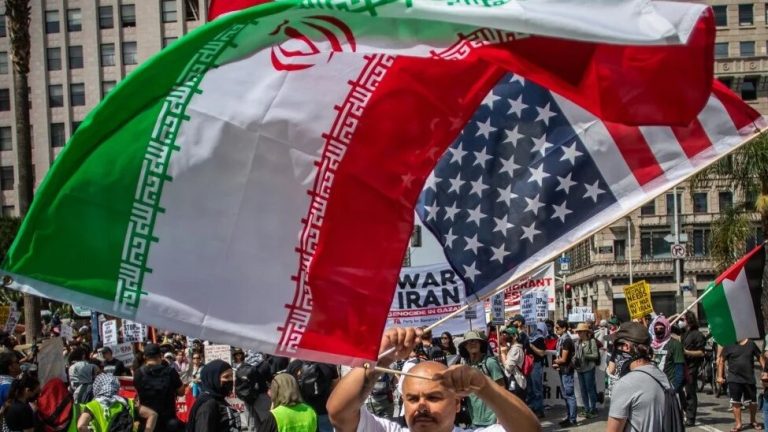
President Trump’s strike on Iran’s nuclear facilities, followed by a surprise ceasefire, has jolted the global order—but it’s not the endgame. This is a high-stakes pause, not peace. The real test lies in converting military leverage into a lasting strategic framework. For Africa and the Global South, the episode signals a shift in U.S. power projection—swift, forceful, then restrained. If not followed by coherent diplomacy, it risks becoming just another spark in a volatile world.

Read MoreAfter The Strike: Why Trump’s Ceasefire Isn’t the Endgame 

To Intervene or not to Intervene – Consequences of a US Entry into the Iran-Israel Conflict

A U.S. intervention in the escalating Iran-Israel conflict risks igniting a broader regional war, straining ties with Gulf allies, and triggering domestic political backlash. As military assets mobilize and tensions rise, Washington stands at a crossroads: defend its strategic partner or uphold a doctrine of restraint. With public opinion divided and regional stability on the line, the costs of action may far outweigh the benefits. Diplomacy may be the only viable path forward.

Read MoreTo Intervene or not to Intervene – Consequences of a US Entry into the Iran-Israel Conflict

Trump’s High-Stakes Litmus Test: Can Peace Through Strength Survive the Israel–Iran War?

Trump’s doctrine of “peace through strength” faces a defining test in the escalating Israel–Iran war. As Tehran defies U.S. deterrence, Trump must choose between bold retaliation, risky ambiguity, or compromise—each with global consequences. The world is watching, from Beijing to Moscow. Can Trump project credible strength without losing his base or dragging America into war? This isn’t just about the Middle East—it’s a litmus test for U.S. power in a shifting world.

Read MoreTrump’s High-Stakes Litmus Test: Can Peace Through Strength Survive the Israel–Iran War?

Will Russia, Türkiye and China Back Iran?

As tensions escalate between Israel and Iran, Russia, Türkiye, and China face a critical test. Though all three condemn Israel’s strikes, none have offered military backing to Iran. Their strategic caution risks rendering their influence meaningless. A multilateral de-escalation strategy—through Astana Plus, BRICS diplomacy, and reconstruction planning—offers a peaceful path forward. The moment demands more than words; it demands coordinated action to avert a regional catastrophe.

Read MoreWill Russia, Türkiye and China Back Iran?