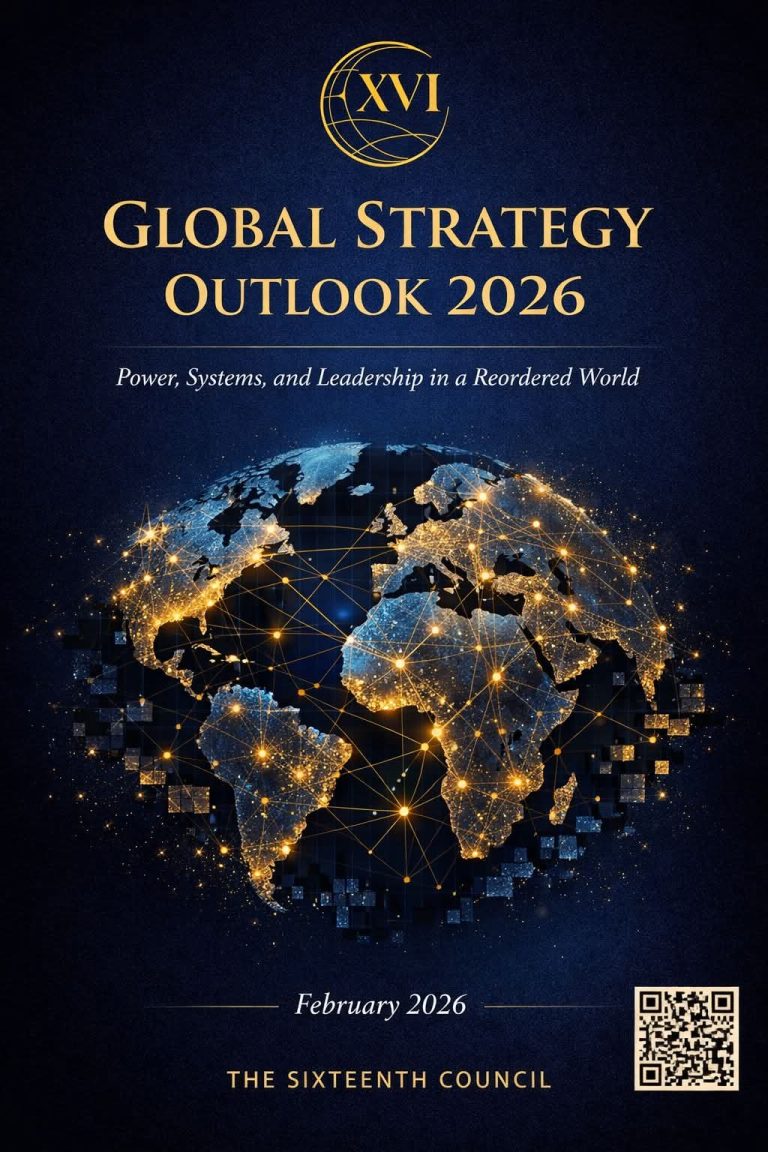
Global Strategy Outlook 2026

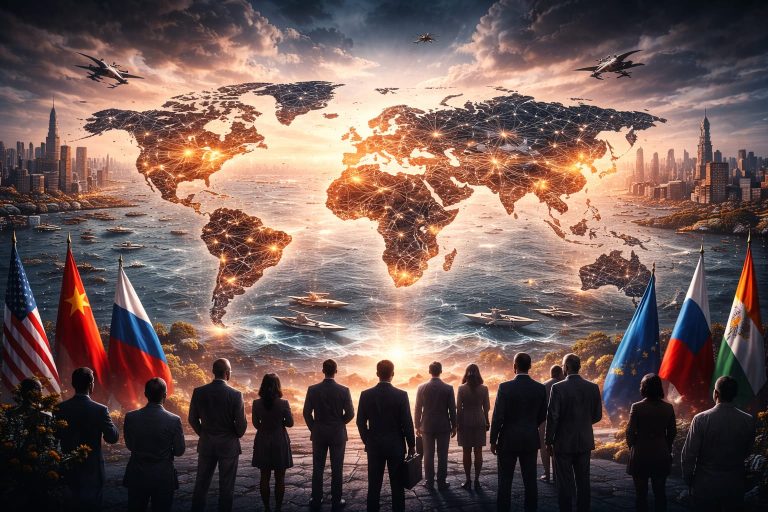
The year 2026 marks the beginning of a new global cycle shaped by geopolitical fragmentation, technological disruption, economic divergence, and declining institutional trust. After more than a decade of crisis management, the central challenge for leaders is shifting from responding to shocks to redesigning systems capable of operating in persistent volatility. Global Strategy Outlook 2026 outlines the major forces reshaping the world and presents a ten-point leadership agenda to help nations strengthen resilience, competitiveness, and strategic influence between 2026 and 2030.

Read MoreGlobal Strategy Outlook 2026

Hedging or Heading Away? The Quiet Drift of US Allies Toward China

US allies are quietly recalibrating their relationships with China, exploring economic and technological partnerships while maintaining security commitments to Washington. This hedging reflects pragmatic flexibility rather than outright abandonment, but signals a growing multipolar reality. Europe and Asia are diversifying trade, infrastructure, and tech ties with Beijing, testing limits of US influence. The trend highlights a critical choice for Washington: adapt to conditional loyalty and shared influence, or risk incremental erosion of its global primacy as allies hedge for security and opportunity

Read MoreHedging or Heading Away? The Quiet Drift of US Allies Toward China

Negotiations and Tariff Threat of Ongoing US-Europe Territory Dispute

The US-Europe dispute over Greenland reflects a new era of geopolitically driven trade policy. President Trump’s threats of escalating tariffs aim to force European acquiescence, prompting discussions on Europe’s anti-coercion measures. NATO deployments to Greenland, debates over US missile defence, and concerns from Russia and China underscore the stakes. Failure to reach agreement risks severe economic disruption for Europe, particularly Germany, while US-EU trade faces uncertainty. The crisis signals that tariffs are increasingly a tool of strategic coercion rather than revenue generation.

Read MoreNegotiations and Tariff Threat of Ongoing US-Europe Territory Dispute

AI in 2025: The Good, the Bad, and the Ugly

By 2025, artificial intelligence has shifted from disruptive innovation to strategic infrastructure. It is boosting productivity, accelerating scientific discovery, and expanding access to knowledge, while simultaneously intensifying labour disruption, market concentration, and governance gaps. More troublingly, AI is eroding trust in information, enabling surveillance, and compressing decision-making in ways that strain democratic and security systems. AI is no longer a neutral tool; it is a force multiplier whose impact depends less on capability and more on the strength of institutions that govern it.

Read MoreAI in 2025: The Good, the Bad, and the Ugly

2026 Geopolitics: Power Without Dominance

Geopolitics in 2026 is defined by power without dominance. Major states retain significant military and economic capacity, yet lack the ability to impose durable outcomes unilaterally. Strategic competition has shifted toward chokepoints in technology, energy, and finance, while unresolved conflicts are increasingly managed rather than resolved. Fiscal constraints, alliance recalibration, and regional power assertion are reshaping global behaviour, producing a fragmented international system marked by calibrated escalation, persistent friction, and heightened strategic uncertainty.

Read More2026 Geopolitics: Power Without Dominance

Global Trade in 2025: From Efficiency to Power

By 2025, global trade stopped pretending to be neutral. Efficiency gave way to resilience, markets to strategy, and institutions to power. Shipping routes, carbon rules, currencies, and data flows became tools of statecraft rather than technical details. Trade did not collapse; it realigned around security and political trust. The era of frictionless globalization ended quietly, replaced by a world where who you trade with now matters as much as what you trade.

Read MoreGlobal Trade in 2025: From Efficiency to Power

Global Order Under Strain: The Major Foreign-Policy Shocks of 2025

2025 exposed a global order under strain, defined less by decisive realignments than by accumulating shocks. U.S.–China economic confrontation became visibly symmetric, conflict mediation in Ukraine and the Middle East lost credibility, and regional actors assumed security roles once held by global powers. Trade routes, supply chains, and deterrence norms all proved fragile. The year underscored a central reality: major powers retain ambition, but their ability to enforce outcomes is increasingly constrained, producing a more volatile and contested international system.

Read MoreGlobal Order Under Strain: The Major Foreign-Policy Shocks of 2025

India as the Anchor of a Post-Brexit Global Strategy

India’s emergence as the anchor of Britain’s post-Brexit global strategy marks a decisive turn in London’s Indo-Pacific engagement. Through the Comprehensive Economic and Trade Agreement (CETA) and the “India-UK Vision 2035,” both nations are translating diplomatic symbolism into structured, institutionalised cooperation. Anchored in trade, defence co-development, and technology, this partnership reflects a pragmatic recalibration of middle-power agency. It positions India and the UK as pivotal actors in shaping a rules-based, multipolar Indo-Pacific order grounded in connectivity, innovation, and strategic balance.

Read MoreIndia as the Anchor of a Post-Brexit Global Strategy

From Guardians to Bystanders: How the World Normalised Tragedy

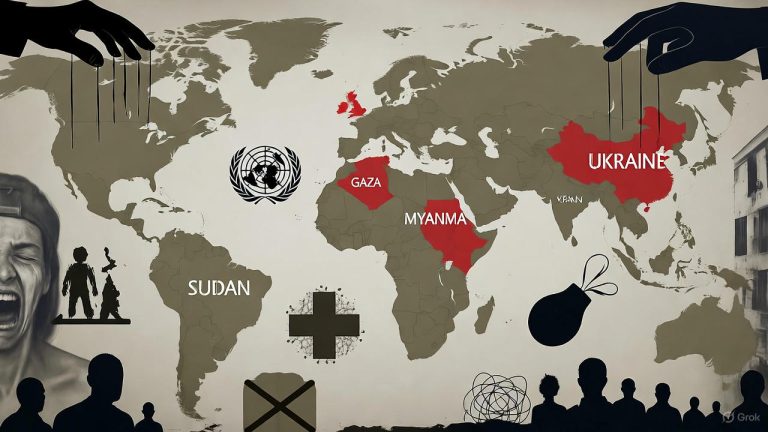
The world is sinking into a dangerous numbness. Wars, famine, and mass displacement no longer shock; they scroll past as routine headlines. From Gaza to Sudan, Myanmar to Ukraine, human suffering has become background noise in global politics. Institutions once meant to guard peace now stumble under paralysis, power asymmetry, and dwindling trust. As the United Nations and others falter, humanity risks losing not just faith in global order—but empathy itself. Indifference, now, is the world’s deadliest contagion.

Read MoreFrom Guardians to Bystanders: How the World Normalised Tragedy

Navigating the Reconfiguration of the Global Order

The global order is undergoing its deepest reconfiguration since the Cold War. Power is diffusing beyond the U.S.–China axis to assertive regional powers, non-state actors, and transnational corporations. Conflicts, supply-chain shocks, and climate pressures are exposing the fragility of old institutions. De-risking strategies, digital competition, and the energy transition are redrawing economic and security maps in real time. Resilience, adaptability, and pragmatic cooperation—not outdated assumptions—will determine which nations and institutions thrive in this fluid, contested system.

Read MoreNavigating the Reconfiguration of the Global Order