Strategic Alignment in a Fragmented World: Japan-Vietnam Economic Cooperation and the Shifting Balance of Power in Asia

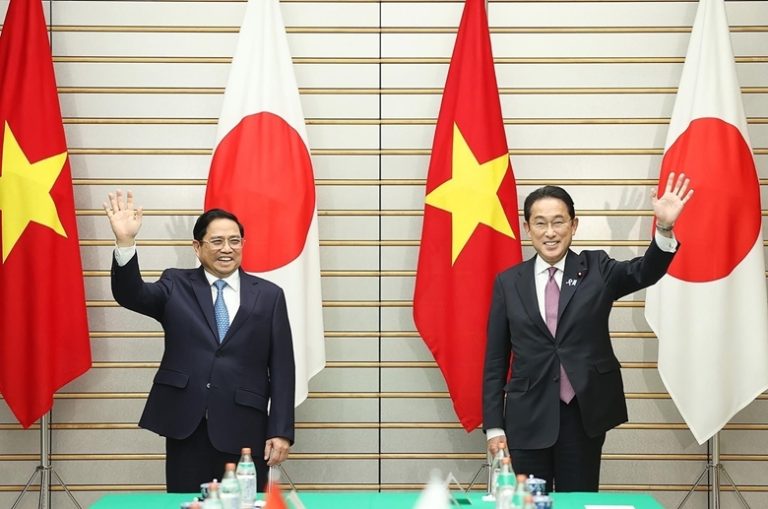
In a world increasingly marked by fragmentation, protectionism, and economic uncertainty, Japan and Vietnam have emerged as proactive leaders seeking to reinforce stability and prosperity through a new bilateral trade pledge. In April 2025, both countries committed to boosting trade and investment flows, while upholding global rules and ensuring the free flow of goods

Read MoreStrategic Alignment in a Fragmented World: Japan-Vietnam Economic Cooperation and the Shifting Balance of Power in Asia

The U.S.-China Trade War in 2025: A New Chapter in Economic Confrontation

After Donald Trump returned to the presidency in January 2025, he reignited his administration’s protectionist trade policies under the banner of “America First.” Central to this approach is the aggressive use of tariffs, taxes imposed on imports to curb trade deficits, promote domestic manufacturing, and punish what Trump calls “unfair trade practices,” particularly by China.

Read MoreThe U.S.-China Trade War in 2025: A New Chapter in Economic Confrontation

Trade Wars and Annexation Threats: Is the US-Canada Relationship Doomed?

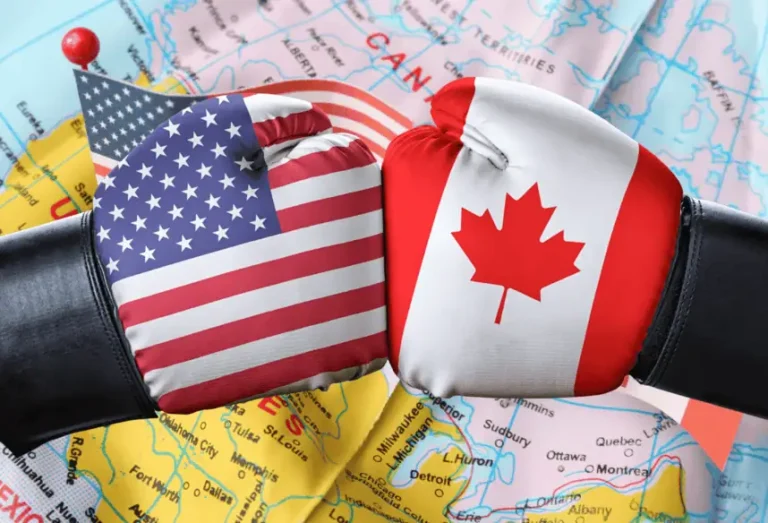
Not long after his inauguration, Trump announced a plan to place tariffs on Canada, Mexico, and China as part of his trade policy. In the case of Canada, Trump placed 10% ad valorem duties on Canadian energy and energy resources as well 25% ad valorem duties on all goods that are not energy related (Allen et.al, 2025). While some can argue tariffs can be used as a leveraging tool to compete against trade competitors such as China and as a coercion tool to force Mexico to deal with migration issues, the reasoning behind placing tariffs on Canadian goods and resources leaves room for numerous questions

Read MoreTrade Wars and Annexation Threats: Is the US-Canada Relationship Doomed?

Are We Witnessing the End of the Neoliberal World Order?

President Trump’s “Liberation Day” on April 2, 2025 will be remembered as a day that shook the financial world. American stock markets shed nearly $5.4 trillion within 48 hours of the tariff announcements, causing panic among investors worldwide. Despite receiving multiple calls and messages from people predicting complete financial meltdown and watching the media frenzy

Read MoreAre We Witnessing the End of the Neoliberal World Order?

China’s Competitive Strategy and Why It’s Difficult to Contain

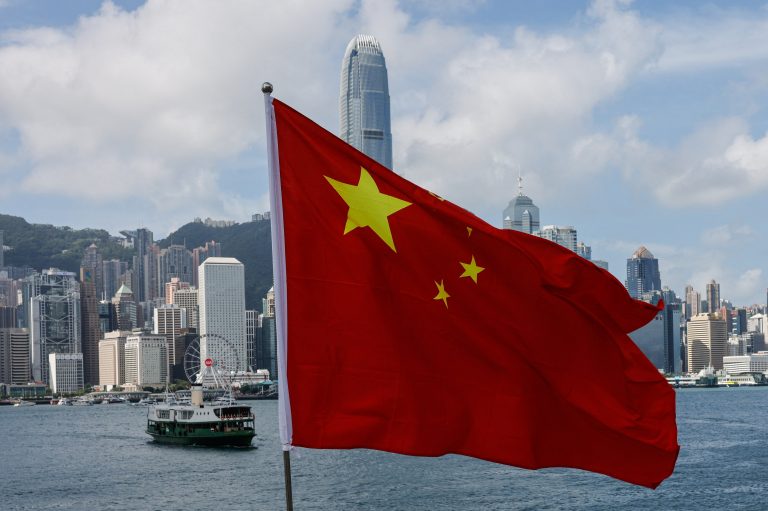
Western countries, particularly the United States, have attempted to counter China through trade wars, technology restrictions, and strategic alliances, yet these measures have largely failed. Instead, China has continued to expand its influence across critical industries, finance, and international infrastructure. The reason for this resilience lies in how China has structured its economic and geopolitical strategy.

Read MoreChina’s Competitive Strategy and Why It’s Difficult to Contain

Can Europe Defend Itself Without America?

The notion of a self-sufficient European defense raises significant strategic, political, and economic concerns. While European nations possess advanced militaries, robust economies, and a sophisticated defense industry, their ability to deter major threats—particularly from Russia—remains uncertain. This article examines the current state of European defense, its historical reliance on the U.S., and the critical steps the continent would need to take to achieve true strategic autonomy.

Read MoreCan Europe Defend Itself Without America?