Fortress America Returns: What Allies Must Understand About Trump’s Signature Domestic Policy Push

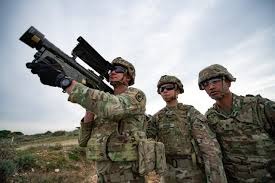
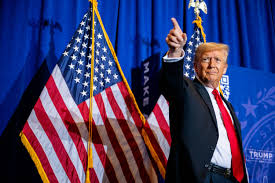
As President Trump’s second term advances, his signature domestic agenda, the America First Reindustrialization Act, signals a sweeping shift in U.S. economic and strategic policy. Blending nationalism, industrial revival, and security, the act redefines global alliances, challenges trade norms, and aims for economic disentanglement from China. For allies, understanding and adapting to this new U.S. posture is not optional, it’s imperative for navigating a more transactional and strategically assertive America.

Read MoreFortress America Returns: What Allies Must Understand About Trump’s Signature Domestic Policy Push

Assessing the Imminent Chinese Threat: Context Behind U.S. Defence Secretary’s Shangri-La Remarks

“There is no reason to sugarcoat it. The threat China poses is real, and it could be imminent.” The U.S. Defence Secretary, Pete Hegseth, made this remark on May 31, 2025 at the annual inter-governmental security conference Shangri-La Dialogue in Singapore. In a stark warning to the U.S.’s Asian allies, Hegseth frames China as a national security threat, not just to the U.S., but also a military threat to the Asia Pacific region, particularly Taiwan.

Read MoreAssessing the Imminent Chinese Threat: Context Behind U.S. Defence Secretary’s Shangri-La Remarks

A New Iran Nuclear Deal – Can an Agreement be Reached or Will a Conflict be Born?

As US-Iran nuclear negotiations stall, rising tensions risk igniting conflict. While interim deals and Omani-mediated proposals offer hope, like a regional consortium enriching uranium under IAEA oversight, key issues remain unresolved. President Trump’s threats of airstrikes and Israel’s potential unilateral action underscore the stakes. A peaceful resolution via the Omani framework may avert regional destabilization and ensure Iran’s nuclear program remains civilian-focused under multilateral scrutiny.

Read MoreA New Iran Nuclear Deal – Can an Agreement be Reached or Will a Conflict be Born?

Britain Re-Arms: What the UK’s 2025 Strategic Defence Review Really Signals

Britain’s 2025 Strategic Defence Review marks a profound shift from post-Cold War complacency to strategic realism. With increased defence spending, revived industrial capacity, nuclear modernization, and a global military posture, the UK is preparing for long-term global disorder. From missile stockpiles to cyber resilience and AI-driven warfare, the review signals that Britain is rearming not for the last war, but for a future of great-power rivalry and enduring geopolitical turbulence.

Read MoreBritain Re-Arms: What the UK’s 2025 Strategic Defence Review Really Signals

Botswana’s President Unleashes Fury: Ministers Exposed for Fatal Incompetence

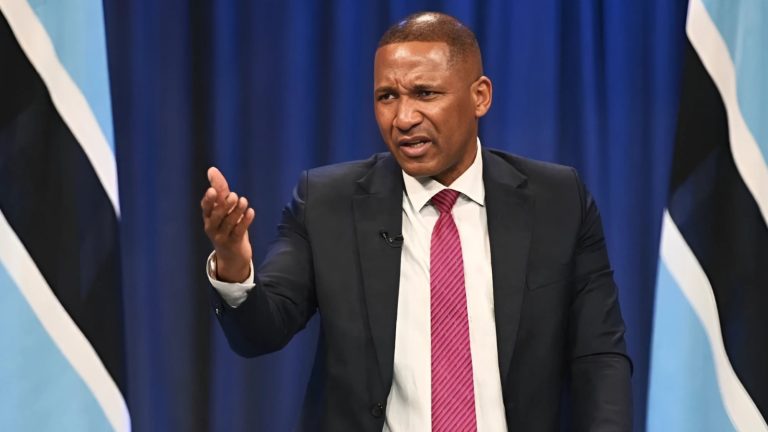
President Duma Boko delivered a fiery address condemning systemic failures in Botswana’s governance, education, energy, and procurement sectors. Highlighting the paradox of vast mineral wealth amid economic underperformance, he called for radical reform, including digitalisation, public accountability, and state-led development. Rejecting neoliberal policies, Boko urged foundational change through a sovereign wealth fund, education overhaul, and energy restructuring. His speech was a bold call to action for ethical, transformative leadership.

Read MoreBotswana’s President Unleashes Fury: Ministers Exposed for Fatal Incompetence

Five Nations Elected to the United Nations Security Council for 2026–2027

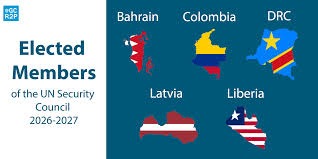
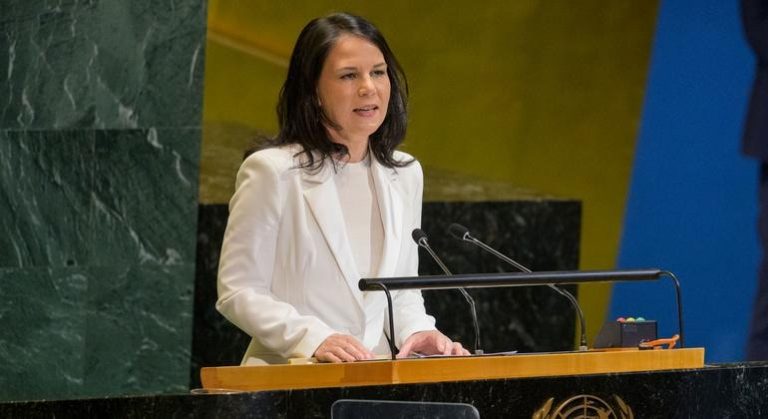
On June 2, 2025, Annalena Baerbock was elected President of the 80th UN General Assembly, becoming the first German and fifth woman in the role. The following day, Bahrain, Colombia, the DRC, Latvia, and Liberia were elected as non-permanent members of the UN Security Council for 2026–2027. Each secured the required two-thirds majority in uncontested elections, reflecting a commitment to diverse and representative global leadership.

Read MoreFive Nations Elected to the United Nations Security Council for 2026–2027

Annalena Baerbock Elected UNGA President: A Defining Moment for Global Leadership

On 2 June 2025, Annalena Baerbock, former German Federal Foreign Minister and member of Alliance 90/The Greens, was elected President of the 80th United Nations General Assembly. Her election, secured by 167 votes in a rare secret ballot, marks the first time a German and only the fifth woman has held this role in the UNGA’s 80-year history. Baerbock’s presidency begins amid global conflicts, climate emergencies, and institutional scepticism. With a bold vision prioritising multilateral renewal, SDG acceleration, peace and security, and gender inclusion, Baerbock aims to reinvigorate the General Assembly's relevance. While her past foreign policy positions, particularly on Ukraine, spark debate about her impartiality, her commitment to inclusive diplomacy and reform could help reshape the UN at a critical historical crossroads.

Read MoreAnnalena Baerbock Elected UNGA President: A Defining Moment for Global Leadership

Crippling Neglect! Over 2,000 South African Children Born with Clubfoot Each Year – And the System Still Fails Them!

Each year, more than 2,000 children in South Africa are born with clubfoot, a condition that is entirely treatable, yet remains a hidden disability due to diagnostic failures and systemic neglect. The Ponseti method, a proven, low-cost treatment with a 90% success rate, is not reaching the children who need it most. Geographic isolation, transport barriers, stigma, and the absence of a national birth defects registry compound the problem. As grassroots organisations step in, South Africa faces a pivotal choice: scale up equitable care or allow preventable disability to persist.

Read MoreCrippling Neglect! Over 2,000 South African Children Born with Clubfoot Each Year – And the System Still Fails Them!

Panic in Washington: US Lawmakers Admit They’ve Lost Strategic Control in Africa

Africa is no longer passively awaiting Western aid, it is actively reshaping global power structures. As U.S. influence recedes due to policy neglect and strategic confusion, countries like China, Russia, and Türkiye have filled the void with investments and diplomatic engagement. African leaders are rejecting paternalism, insisting on equal partnerships and sovereign respect. The United States, once a dominant presence, now watches from the sidelines, adrift while the continent forges a multipolar future on its own terms.

Read MorePanic in Washington: US Lawmakers Admit They’ve Lost Strategic Control in Africa