
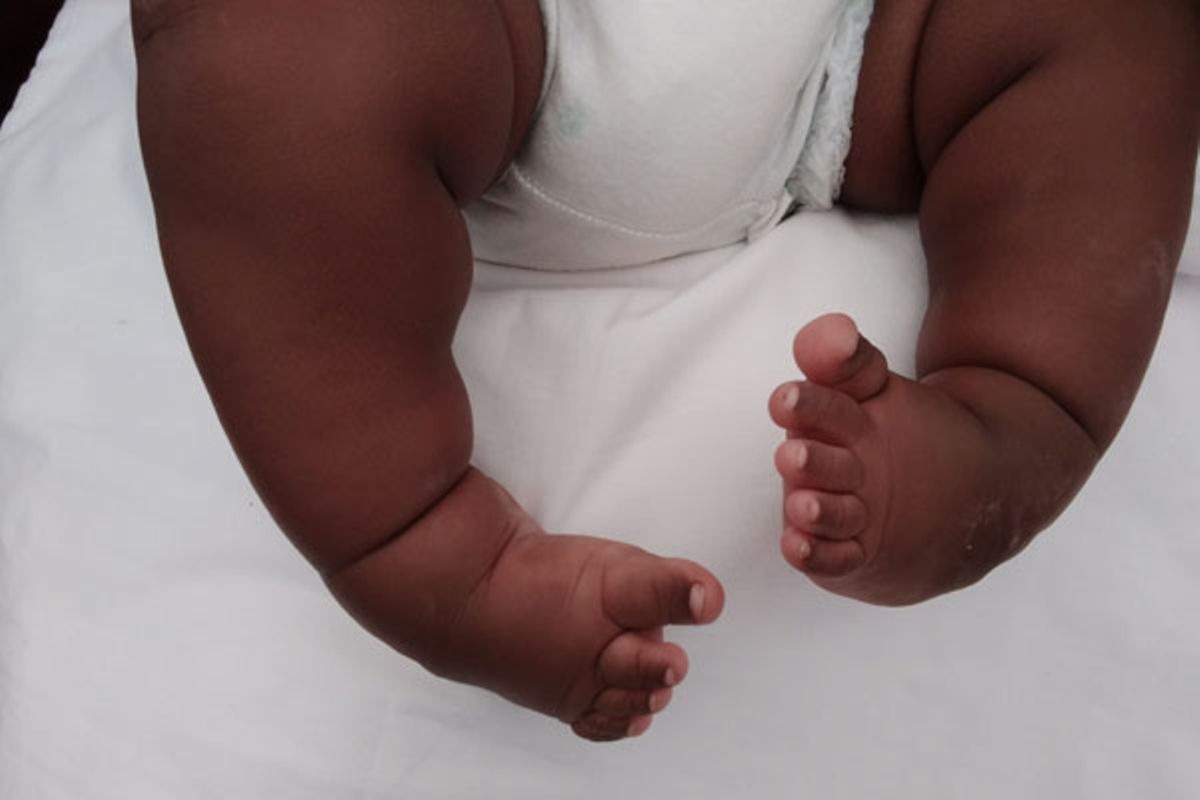
Crippling Neglect! Over 2,000 South African Children Born with Clubfoot Each Year – And the System Still Fails Them!
Each year, more than 2,000 children in South Africa are born with clubfoot, a condition that is entirely treatable, yet remains a hidden disability due to diagnostic failures and systemic neglect. The Ponseti method, a proven, low-cost treatment with a 90% success rate, is not reaching the children who need it most. Geographic isolation, transport barriers, stigma, and the absence of a national birth defects registry compound the problem. As grassroots organisations step in, South Africa faces a pivotal choice: scale up equitable care or allow preventable disability to persist.

Each year, more than 2,000 South African children are born with clubfoot, a congenital deformity that, if left untreated, can result in a lifetime of disability. While global health efforts have made significant strides in addressing infectious diseases and maternal mortality, conditions like clubfoot remain underdiagnosed and inadequately addressed, particularly in low-resource and rural communities. Karen Moss, founder of STEPS, a South African non-profit dedicated to clubfoot awareness and care, is at the forefront of a growing movement to bring visibility, access, and hope to affected children and their families.
What makes clubfoot both alarming and hopeful is this: it is entirely treatable. Yet far too many South African children remain disabled simply because they are never diagnosed or referred for proper treatment. Barriers include poverty, geographic isolation, misinformation, and systemic fragmentation within the public healthcare system. These are avoidable. This article examines the facts behind the statistics, the success of modern treatments, and the structural failures that continue to deny thousands of children the ability to walk upright and be pain-free.
Understanding Clubfoot: Facts Behind the Deformity
1. What is clubfoot?
Medically referred to as congenital talipes equinovarus, clubfoot is a birth defect in which a baby’s foot, or both feet, is twisted inward and downward. The condition is rigid, meaning the foot cannot be corrected manually. Left untreated, children may walk on the side or top of the foot, leading to lifelong pain, limited mobility, and social marginalisation.
According to the World Health Organization (WHO) and the Global Clubfoot Initiative (GCI), clubfoot occurs in approximately 1 in 750 births globally, though incidence rates can vary between 1 in 500 and 1 in 1,000 depending on geography and ethnic population groups.
2. What causes it?
The exact cause of clubfoot remains unknown. Although both genetic and environmental factors are suspected to play a role, no single definitive cause has been identified. Crucially, nothing that a mother does, or fails to do, during pregnancy causes clubfoot. This critical fact debunks dangerous myths that continue to circulate, especially in rural and underserved communities.
3. Clubfoot in South Africa: A disproportionate burden
Karen Moss points to findings indicating that South Africa’s Black population may have one of the highest global incidences of clubfoot, estimated at around 1 in 500 live births. Although the country lacks a centralised congenital defects registry, a 2005 study published in Clinical Orthopaedics and Related Research supports a higher prevalence among African populations. Moreover, the University of Cape Town’s Faculty of Health Sciences has reported that congenital musculoskeletal anomalies, including clubfoot, are vastly underreported and likely underestimated.
Diagnosis and Detection: A System in Urgent Need of Reform
1. Prenatal detection remains inconsistent
In some cases, clubfoot can be detected via prenatal ultrasound from as early as 20 weeks gestation. However, Moss explains that detection depends heavily on foetal positioning, scan quality, and the sonographer’s expertise. Many state hospitals and clinics, especially in rural provinces like Limpopo, Mpumalanga, and the Eastern Cape, lack adequate scanning equipment or trained staff, meaning early diagnoses are often missed entirely.
2. Postnatal diagnosis should be straightforward but often isn’t
Even though clubfoot is physically obvious at birth, it is not always diagnosed immediately. In settings where birth attendants or nurses are unfamiliar with the condition or overwhelmed by caseloads, infants may not be referred for specialist evaluation. Some are only diagnosed years later, after they begin to walk abnormally, at which point treatment is more complicated, expensive, and often less successful.
Treatment: The Ponseti Method and Its Transformative Power
1. A revolutionary and affordable method
Historically, treatment involved multiple surgeries that were both painful and often ineffective. Today, the Ponseti method, developed by Spanish orthopaedic surgeon Dr Ignacio Ponseti, is considered the gold standard for treating clubfoot worldwide. It is minimally invasive, involving gentle weekly manipulations of the foot, casting, a small Achilles tendon release (tenotomy), and a brace worn during sleep until around age four.
According to The Journal of Bone and Joint Surgery, the Ponseti method has a success rate of over 90 percent when administered early and properly. Moss’s own son underwent this treatment successfully, which inspired her to establish STEPS in 2005 to expand access across the country.
2. Task-shifting improves reach in low-resource settings
An important innovation in Africa has been the use of trained physiotherapists and clinical officers to deliver the Ponseti method rather than relying solely on orthopaedic surgeons. This approach, endorsed by the GCI and piloted in Kenya and Uganda, has proven effective in extending care to underserved areas.
3. The STEPS model: A blueprint for community-based care
Since launching its Clubfoot Care Programme in 2013, STEPS has grown from a handful of clinics to more than 48 government facilities across all nine provinces. It provides training, supplies, data tools, and patient tracking systems. A major focus has been expanding access in rural and peri-urban areas, ensuring that geography does not determine a child’s ability to walk.
Barriers to Care: Geography, Poverty, and Stigma
1. Transport and affordability: Hidden obstacles
The Ponseti method requires weekly visits over six to eight weeks, followed by brace fittings and long-term follow-up. For families in rural areas, the cost of travelling to clinics, often several hours away, can be prohibitive. The Health Systems Trust reports that over 30 percent of missed follow-up visits for paediatric patients are due to transport difficulties.
While STEPS provides support and referrals to decentralised centres, the public health system still lacks robust mechanisms to assist families financially. Children living in deep rural settings are at greatest risk of dropout and delayed care.
2. Cultural myths and stigma
Clubfoot is still poorly understood in many communities, where it is sometimes seen as a curse, punishment, or supernatural consequence. Mothers may be blamed, isolated, or discouraged from seeking care. Moss stresses that combating misinformation is as vital as treatment itself. STEPS runs public awareness campaigns, produces clinic-based educational materials, and trains community health workers to serve as advocates for early intervention.
The Missing Puzzle Piece: A National Birth Defects Registry
South Africa does not currently have a national registry for congenital anomalies, making it nearly impossible to track the true prevalence, outcomes, or geographic distribution of clubfoot. This lack of data impedes policy planning, funding decisions, and long-term strategy development.
The Department of Health’s 2021–2025 Strategic Plan acknowledged this shortfall, calling for better birth defect surveillance. However, implementation remains limited, and civil society organisations like STEPS continue to fill the gap. A functioning registry would enable the health department to:
• Identify hotspots and allocate resources strategically
• Monitor treatment outcomes and success rates
• Facilitate national research and international collaboration
• Improve equity in service delivery
Conclusion: No Child Should Walk Alone
Every statistic represents a child, often born into disadvantage, whose future can be transformed with a simple, low-cost intervention. The Ponseti method offers a blueprint for universal clubfoot care. The work of Karen Moss and STEPS has already proven what is possible. But true impact requires a national response, not just isolated passion.
It is time to act. South Africa must invest in:
• Establishing a national congenital conditions registry
• Expanding rural outreach and transport support
• Training maternity and community health workers
• Launching nationwide education campaigns
The injustice is not that clubfoot exists. The injustice is that we know how to treat it and still fail to reach every child. There is no excuse. There is only the will to make care equitable and universal. No child should be left behind because of where they were born.
Aric Jabari is the Editorial Director of the Sixteenth Council.


Trump Can’t Take Greenland – and the World Knows Why