U.S.-India COMPACT Initiative: Strengthening Strategic Ties Amid Lingering Tensions

Not restricting to a buyer-seller relationship, the shared strategic interests between the two states have carved out a partnership which has increasingly focussed on greater military integration, sharing advanced technologies, innovation, and research and development. A string of key agreements over time has made this expansion and deepening of strategic relations possible.

Read MoreU.S.-India COMPACT Initiative: Strengthening Strategic Ties Amid Lingering Tensions

AU: No Civic Education In The Continental Education Strategy For Africa 2016–2025

In its 44-page Continental Education Strategy for Africa 2016–2025 (CESA 16–25), the African Union outlines 12 Strategic Objectives, 7 guiding principles, and dozens of proposed actions—from strengthening STEM to expanding TVET (Technical and Vocational Education and Training). Nowhere does the document explicitly mandate civic education as a core priority.

Read MoreAU: No Civic Education In The Continental Education Strategy For Africa 2016–2025

The U.S.-China Trade War in 2025: A New Chapter in Economic Confrontation

After Donald Trump returned to the presidency in January 2025, he reignited his administration’s protectionist trade policies under the banner of “America First.” Central to this approach is the aggressive use of tariffs, taxes imposed on imports to curb trade deficits, promote domestic manufacturing, and punish what Trump calls “unfair trade practices,” particularly by China.

Read MoreThe U.S.-China Trade War in 2025: A New Chapter in Economic Confrontation

The Costs of America’s New Trade Strategy

At the heart of this policy is a 10% baseline tariff on imports from 185 countries, amplified by exponential penalties on selected geopolitical and economic adversaries. Chinese goods now face a total of 104% in tariffs, a staggering figure that underscores the combative mood in Washington. The European Union, India, Canada, and Mexico have also been targeted with tariffs ranging from 15% to 26%, sparking widespread retaliation and diplomatic fallout.

Read MoreThe Costs of America’s New Trade Strategy

New U.S. Defense Strategy: The Golden Dome and its Strategic Implications

The U.S. military currently has several programmes focussed on missile defense designed to intervene at different stages of a missile’s flight and missile types, ensuring coverage against a variety of aerial threats. One such example is the Terminal High Altitude Area Defense or THAAD program under the aegis of the U.S. Missile Defense Agency that is charged with the task of developing a defense system to intercept and destroy short, medium, and intermediate-range ballistic missiles during the final stage of their flight as they re-enter the atmosphere.

Read MoreNew U.S. Defense Strategy: The Golden Dome and its Strategic Implications

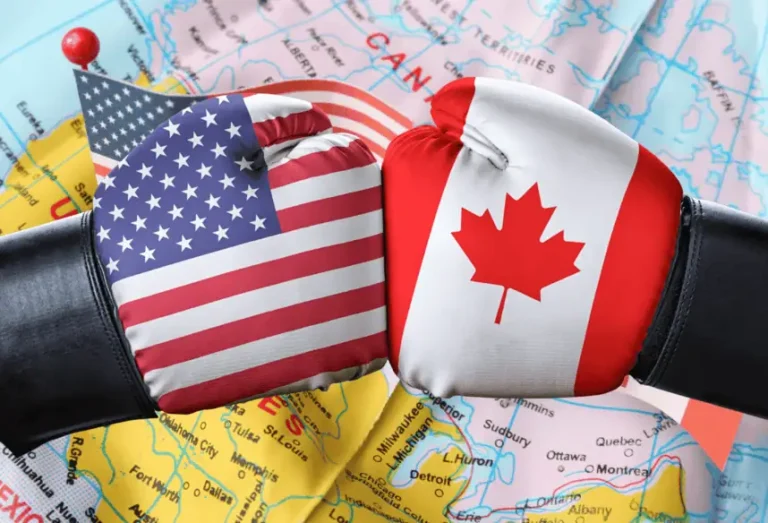
Trade Wars and Annexation Threats: Is the US-Canada Relationship Doomed?

Not long after his inauguration, Trump announced a plan to place tariffs on Canada, Mexico, and China as part of his trade policy. In the case of Canada, Trump placed 10% ad valorem duties on Canadian energy and energy resources as well 25% ad valorem duties on all goods that are not energy related (Allen et.al, 2025). While some can argue tariffs can be used as a leveraging tool to compete against trade competitors such as China and as a coercion tool to force Mexico to deal with migration issues, the reasoning behind placing tariffs on Canadian goods and resources leaves room for numerous questions

Read MoreTrade Wars and Annexation Threats: Is the US-Canada Relationship Doomed?