Global Order Under Strain: The Major Foreign-Policy Shocks of 2025

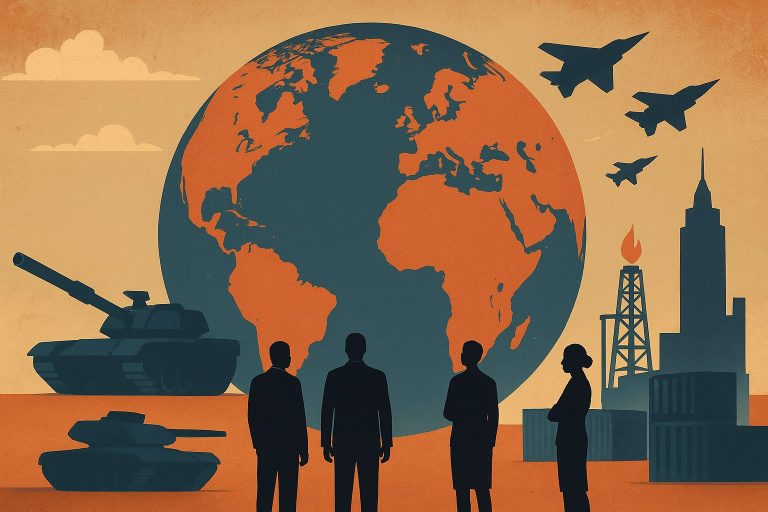
2025 exposed a global order under strain, defined less by decisive realignments than by accumulating shocks. U.S.–China economic confrontation became visibly symmetric, conflict mediation in Ukraine and the Middle East lost credibility, and regional actors assumed security roles once held by global powers. Trade routes, supply chains, and deterrence norms all proved fragile. The year underscored a central reality: major powers retain ambition, but their ability to enforce outcomes is increasingly constrained, producing a more volatile and contested international system.
Read MoreGlobal Order Under Strain: The Major Foreign-Policy Shocks of 2025

Prioritising Safety and Accountability: Addressing the Drug Cartel Threat in the US

Over the past ten months, some political debates have centred on complex issues: opposition to a comprehensive audit of federal government operations, decisions around the deportation of certain undocumented immigrants, and questions about the inclusion of biological males in women’s sports. Among these, the matter of drug trafficking has drawn particular attention.

Read MorePrioritising Safety and Accountability: Addressing the Drug Cartel Threat in the US

Navigating the Reconfiguration of the Global Order

The global order is undergoing its deepest reconfiguration since the Cold War. Power is diffusing beyond the U.S.–China axis to assertive regional powers, non-state actors, and transnational corporations. Conflicts, supply-chain shocks, and climate pressures are exposing the fragility of old institutions. De-risking strategies, digital competition, and the energy transition are redrawing economic and security maps in real time. Resilience, adaptability, and pragmatic cooperation—not outdated assumptions—will determine which nations and institutions thrive in this fluid, contested system.

Read MoreNavigating the Reconfiguration of the Global Order

Israel Attacks Qatar: Implications for US-Gulf Relations:

Israel’s airstrike on Hamas leaders in Doha has shaken US–Gulf relations, undermining Washington’s reputation as a reliable security guarantor. Gulf states now view the US as prioritizing Israel over their sovereignty, prompting calls for greater self-sufficiency and alternative security arrangements. Qatar’s suspension of mediation efforts and backlash against the Abraham Accords signal potential diplomatic fallout. Unless Washington reins in Israeli overreach, it risks losing influence, weakening regional partnerships, and ceding ground to rival powers such as China or Russia.

Read MoreIsrael Attacks Qatar: Implications for US-Gulf Relations:

Putin Over Poland: Why Moscow Would Dare Cross NATO’s Red Line — And What the Alliance Must Do

Russia’s drone incursion into Poland underscores the fragility of NATO’s deterrence and the Kremlin’s strategy of probing allied thresholds. Poland, now NATO’s psychological tripwire, faces not just tactical provocations but existential tests of credibility. Moscow’s calibrated violations aim to erode unity, force hesitation, and broadcast weakness. NATO’s response must be decisive: integrated defences, rehearsed protocols, and unified political messaging. Poland is more than geography—it is the frontline of Europe’s collective security, where ambiguity fuels aggression and clarity sustains deterrence.

Read MorePutin Over Poland: Why Moscow Would Dare Cross NATO’s Red Line — And What the Alliance Must Do

Trump-Putin summit ends without material changes

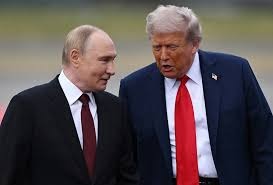
The Trump–Putin summit in Alaska ended without progress on a ceasefire, underscoring the entrenched positions of both leaders. While Trump hailed the meeting as a success, little substance emerged beyond vague promises of future talks. Putin, however, gained symbolic victories—international recognition and time to advance Russia’s offensive in Ukraine. With Zelensky absent, peace remains distant and fragile. Europe now faces the task of pressuring both Washington and Moscow to sustain support for Kyiv and keep prospects for a fair settlement alive.

Read MoreTrump-Putin summit ends without material changes

India at Tianjin: Modi’s SCO Gambit in a Multipolar World

India enters the SCO summit walking a razor’s edge. Between Russia’s embrace, China’s rivalry, and America’s pressure, New Delhi’s old habit of “working with everyone” is becoming unsustainable. Modi’s meetings with Xi and Putin are more than routine diplomacy—they are tests of India’s strategic agility in a fractured world. The question is no longer whether India can remain non-aligned, but how long it can keep balancing before being forced to choose a side.

Read MoreIndia at Tianjin: Modi’s SCO Gambit in a Multipolar World

Forced Relocation and Civil Commitment: Trumps’ Executive Order to Ban Rough Sleeping 

President Trump’s executive order banning rough sleeping marks a sharp policy shift from the housing-first approach toward punitive enforcement. Backed by the Supreme Court’s Grants Pass v. Johnson ruling, the order deploys federal agents in Washington, DC to forcibly relocate and civilly commit homeless individuals. While framed as restoring public order, the policy risks worsening homelessness by criminalising poverty, straining shelters, and displacing individuals without alternatives. Critics warn it deepens marginalisation, fuels migration to other cities, and undermines long-term solutions.

Read MoreForced Relocation and Civil Commitment: Trumps’ Executive Order to Ban Rough Sleeping 

The Trump–Putin Summit and its implications for Sustainable Development

The Trump–Putin summit in Anchorage underscored shifting geopolitical dynamics with far-reaching consequences for sustainable development. While dominated by the Russia–Ukraine war, its implications extend to energy security, climate goals, food supply chains, and global cooperation. Agreements hinting at fossil fuel dependency, U.S. security guarantees to Ukraine, and weakened multilateralism risk slowing progress on the SDGs. With disruptions to trade, aid, and decarbonization, the summit highlights the need for vigilant international advocacy for sustainability, inclusivity, and cooperative governance.

Read MoreThe Trump–Putin Summit and its implications for Sustainable Development

Tariffs Up, Treasury Down: Why Washington’s Red Ink Matter

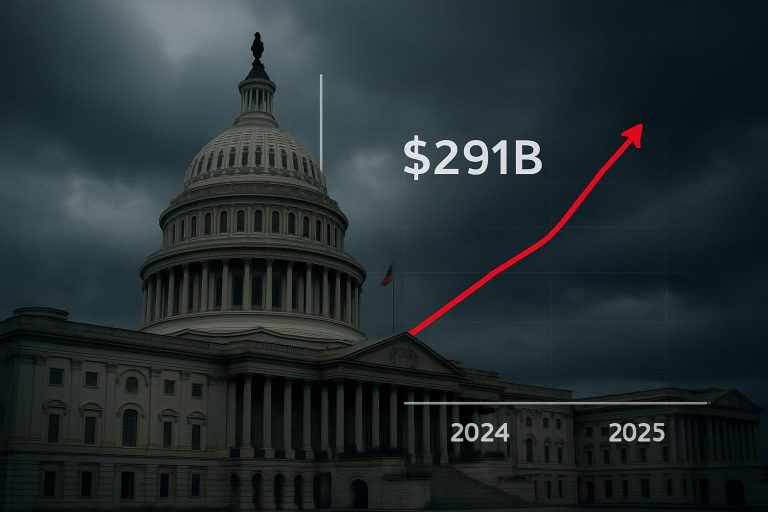
The U.S. federal deficit widened to $291 billion in July, a 19% year-on-year rise, despite tariff revenues tripling under Trump’s trade regime. Customs duties reached $21 billion, but were eclipsed by surging healthcare, Social Security, and debt service costs. With the year-to-date shortfall at $1.63 trillion, Washington faces a structural imbalance that tariff windfalls cannot offset. Fiscal sustainability now collides with strategic ambition, reshaping America’s capacity to fund defense, sustain alliances, and project power abroad.

Read MoreTariffs Up, Treasury Down: Why Washington’s Red Ink Matter