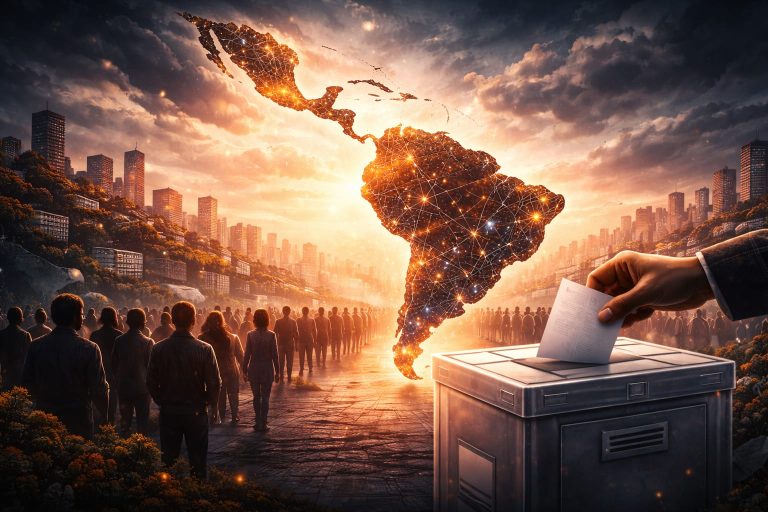
Electoral Uncertainty in Latin America

Latin America is entering a period of heightened electoral uncertainty as a dense cycle of elections from late 2025 to 2026 reshapes the region’s political trajectory. Voter fatigue, economic pressures, and dissatisfaction with inequality are fuelling a potential shift away from left-leaning governments toward more centrist or market-oriented leadership. While this transition may unlock reform and investment opportunities, it also heightens risks of policy volatility, social unrest, and intensified geopolitical competition between global powers.
Read MoreElectoral Uncertainty in Latin America

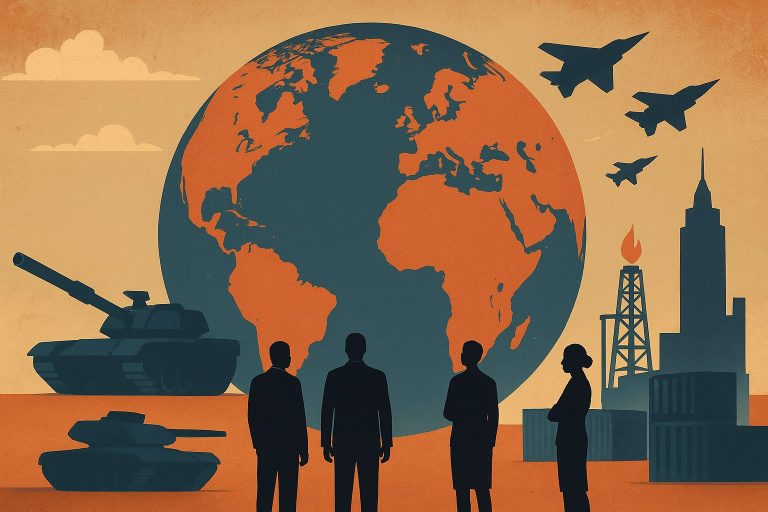
Global Order Under Strain: The Major Foreign-Policy Shocks of 2025

2025 exposed a global order under strain, defined less by decisive realignments than by accumulating shocks. U.S.–China economic confrontation became visibly symmetric, conflict mediation in Ukraine and the Middle East lost credibility, and regional actors assumed security roles once held by global powers. Trade routes, supply chains, and deterrence norms all proved fragile. The year underscored a central reality: major powers retain ambition, but their ability to enforce outcomes is increasingly constrained, producing a more volatile and contested international system.

Read MoreGlobal Order Under Strain: The Major Foreign-Policy Shocks of 2025

Economies to Watch in 2026

The global economy entering 2026 is no longer governed primarily by growth cycles, but by strategic stress. Fiscal exhaustion in advanced economies, geopolitical fragmentation, energy realism, and uneven technological diffusion are reshaping economic outcomes. The most consequential economies in 2026 will not be those expanding fastest, but those sitting at critical inflection points—capable of transmitting shock, absorbing volatility, or redefining alignment. Economics has become an instrument of power, constraint, and contest.

Read MoreEconomies to Watch in 2026

India as the Anchor of a Post-Brexit Global Strategy

India’s emergence as the anchor of Britain’s post-Brexit global strategy marks a decisive turn in London’s Indo-Pacific engagement. Through the Comprehensive Economic and Trade Agreement (CETA) and the “India-UK Vision 2035,” both nations are translating diplomatic symbolism into structured, institutionalised cooperation. Anchored in trade, defence co-development, and technology, this partnership reflects a pragmatic recalibration of middle-power agency. It positions India and the UK as pivotal actors in shaping a rules-based, multipolar Indo-Pacific order grounded in connectivity, innovation, and strategic balance.

Read MoreIndia as the Anchor of a Post-Brexit Global Strategy

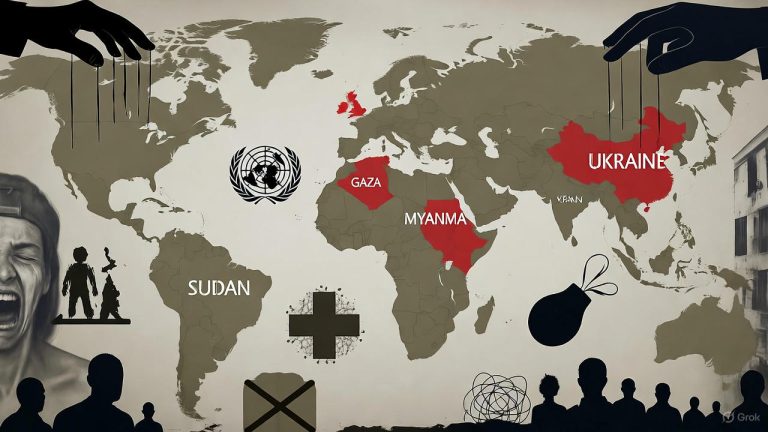
From Guardians to Bystanders: How the World Normalised Tragedy

The world is sinking into a dangerous numbness. Wars, famine, and mass displacement no longer shock; they scroll past as routine headlines. From Gaza to Sudan, Myanmar to Ukraine, human suffering has become background noise in global politics. Institutions once meant to guard peace now stumble under paralysis, power asymmetry, and dwindling trust. As the United Nations and others falter, humanity risks losing not just faith in global order—but empathy itself. Indifference, now, is the world’s deadliest contagion.

Read MoreFrom Guardians to Bystanders: How the World Normalised Tragedy

Navigating the Reconfiguration of the Global Order

The global order is undergoing its deepest reconfiguration since the Cold War. Power is diffusing beyond the U.S.–China axis to assertive regional powers, non-state actors, and transnational corporations. Conflicts, supply-chain shocks, and climate pressures are exposing the fragility of old institutions. De-risking strategies, digital competition, and the energy transition are redrawing economic and security maps in real time. Resilience, adaptability, and pragmatic cooperation—not outdated assumptions—will determine which nations and institutions thrive in this fluid, contested system.

Read MoreNavigating the Reconfiguration of the Global Order

Trump-Putin summit ends without material changes

The Trump–Putin summit in Alaska ended without progress on a ceasefire, underscoring the entrenched positions of both leaders. While Trump hailed the meeting as a success, little substance emerged beyond vague promises of future talks. Putin, however, gained symbolic victories—international recognition and time to advance Russia’s offensive in Ukraine. With Zelensky absent, peace remains distant and fragile. Europe now faces the task of pressuring both Washington and Moscow to sustain support for Kyiv and keep prospects for a fair settlement alive.

Read MoreTrump-Putin summit ends without material changes

The Trump–Putin Summit and its implications for Sustainable Development

The Trump–Putin summit in Anchorage underscored shifting geopolitical dynamics with far-reaching consequences for sustainable development. While dominated by the Russia–Ukraine war, its implications extend to energy security, climate goals, food supply chains, and global cooperation. Agreements hinting at fossil fuel dependency, U.S. security guarantees to Ukraine, and weakened multilateralism risk slowing progress on the SDGs. With disruptions to trade, aid, and decarbonization, the summit highlights the need for vigilant international advocacy for sustainability, inclusivity, and cooperative governance.

Read MoreThe Trump–Putin Summit and its implications for Sustainable Development

The Alaska Summit: Why Trump and Putin’s Meeting Marks a Diplomatic Success

The Alaska Summit between Trump and Putin marked a subtle but meaningful diplomatic success. While no ceasefire or land swap was announced, the meeting established common ground, opened channels for future talks, and secured a commitment to reconvene. Trump’s pledge to consult Zelenskyy, NATO, and European allies underscores a process-driven approach rather than unilateralism. History shows that first meetings often set the stage for breakthroughs. By creating momentum and continuity, Anchorage became a quiet step toward potential peace.

Read MoreThe Alaska Summit: Why Trump and Putin’s Meeting Marks a Diplomatic Success

Strategic Partner or Dominant Power? Rethinking U.S. Influence on NATO’s Consensus Model

For decades, intergovernmental military alliance NATO has held up its consensus-based decision-making as proof of its democratic values. A system where every member has an equal voice and consensus dictates agreement through unity. Yet, as the dominant military and financial contributor, the influence of the United States has always been apparent. In 2025, does that influence increasingly override collaborative negotiation?

Read MoreStrategic Partner or Dominant Power? Rethinking U.S. Influence on NATO’s Consensus Model