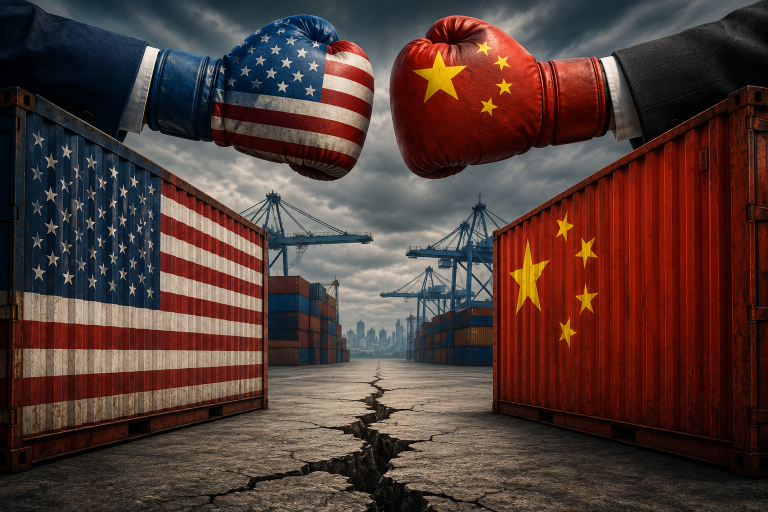
The Long Tariff War: U.S. Trade Pressure on China and Its Strategic Effectiveness

U.S. tariffs on China evolved from targeted trade measures into a central pillar of strategic competition between the world’s two largest economies. While tariffs accelerated supply-chain diversification and reshaped Washington’s approach to China, they failed to fundamentally weaken Beijing’s economic model or reverse China’s global manufacturing dominance. Instead, the trade war marked the end of the post-Cold War globalization consensus, transforming trade policy into a broader instrument of industrial strategy, technological containment, and geopolitical rivalry in an increasingly fragmented global economic order.


Read MoreThe Long Tariff War: U.S. Trade Pressure on China and Its Strategic Effectiveness

China, Taiwan, and the Pacific Question: Influence Before Invasion

China’s long-term Pacific strategy may increasingly depend less on invading Taiwan and more on reshaping the strategic environment around it. President Trump’s recent Beijing visit underscored a growing geopolitical reality: Beijing is pursuing influence, alliance fragmentation, economic leverage, and naval expansion as alternative pathways to Pacific access. While Taiwan remains the decisive geographic prize in the First Island Chain, China appears focused on weakening resistance gradually rather than triggering a catastrophic conflict that could destabilize its economy and the wider global order.

Read MoreChina, Taiwan, and the Pacific Question: Influence Before Invasion

Energy, Food, and Power: The New Geopolitics of Global Markets

Dr. Silvana Sosa Clavijo examines how energy, artificial intelligence, food systems, and geopolitics are reshaping the global economy. As electricity replaces oil as the strategic foundation of growth, nations face new pressures linked to AI-driven energy demand, supply-chain vulnerabilities, and geopolitical instability. The article argues that energy security, food security, and technological competitiveness are now deeply interconnected. It concludes that future global influence will depend on resilient electricity systems, strategic infrastructure, agricultural stability, and control of critical supply chains.

Read MoreEnergy, Food, and Power: The New Geopolitics of Global Markets

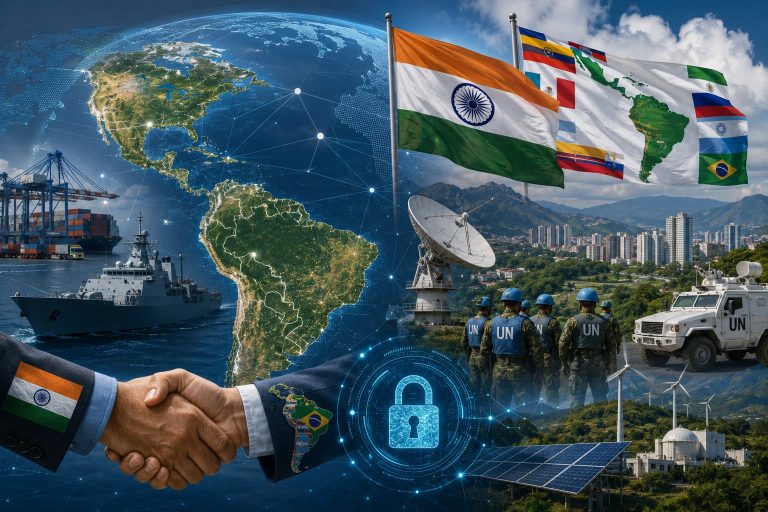
Changing Latin America’s Security Architecture: What It Means for India

Latin America’s evolving security architecture is being reshaped by geopolitical competition, organised crime, climate risks, migration, and digital threats. As regional powers seek greater autonomy in a multipolar world, India faces new strategic, economic, and diplomatic opportunities across the region. This report explores how India can strengthen defence cooperation, secure critical supply chains, expand technological partnerships, and deepen multilateral engagement with Latin America while navigating rising Chinese influence, political fragmentation, and emerging non-traditional security threats in an increasingly interconnected global order.

Read MoreChanging Latin America’s Security Architecture: What It Means for India

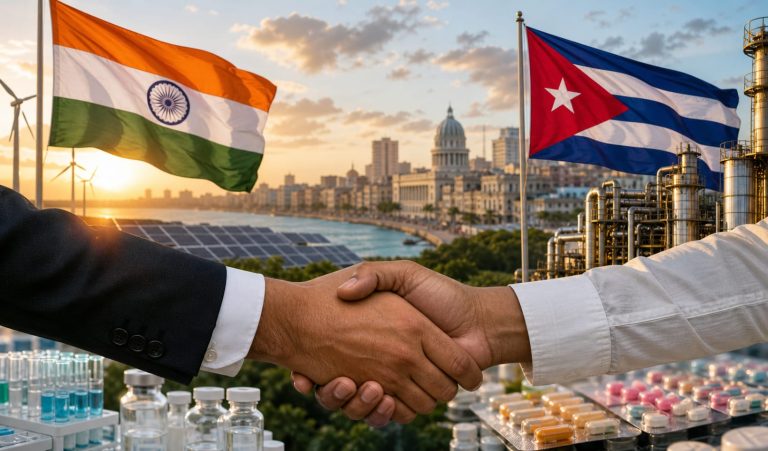
Existing Indian Economic and Strategic Interests in Cuba: Challenges and Prospects

India’s economic and strategic engagement with Cuba spans pharmaceuticals, renewable energy, digital cooperation, and development assistance, rooted in decades of South-South solidarity. Yet this relationship remains underutilised due to U.S. sanctions, Cuba’s economic fragility, and implementation gaps in key projects. With Cuba’s BRICS partner status and expanding renewable energy ambitions, India has a timely opportunity to convert commitments into tangible outcomes, deepening its role as a credible Global South partner while unlocking high-value sectors for bilateral growth.

Read MoreExisting Indian Economic and Strategic Interests in Cuba: Challenges and Prospects

Global Strategy Outlook 2026

The year 2026 marks the beginning of a new global cycle shaped by geopolitical fragmentation, technological disruption, economic divergence, and declining institutional trust. After more than a decade of crisis management, the central challenge for leaders is shifting from responding to shocks to redesigning systems capable of operating in persistent volatility. Global Strategy Outlook 2026 outlines the major forces reshaping the world and presents a ten-point leadership agenda to help nations strengthen resilience, competitiveness, and strategic influence between 2026 and 2030.

Read MoreGlobal Strategy Outlook 2026

Critical Minerals and the Green Transition: Europe’s New Dependency Risk

The European Green Deal is one of the most ambitious climate and industrial strategies toward a decarbonized energy system, industrial leadership, and climate resilience. However, while Europe seeks energy independence from fossil fuels, it faces an important vulnerability: dependence on critical minerals. Lithium, cobalt, nickel, rare earth elements, and graphite are indispensable for electric vehicles, renewable infrastructure, and advanced technologies — but their supply is heavily concentrated in a few countries, creating potential strategic bottlenecks.

Read MoreCritical Minerals and the Green Transition: Europe’s New Dependency Risk

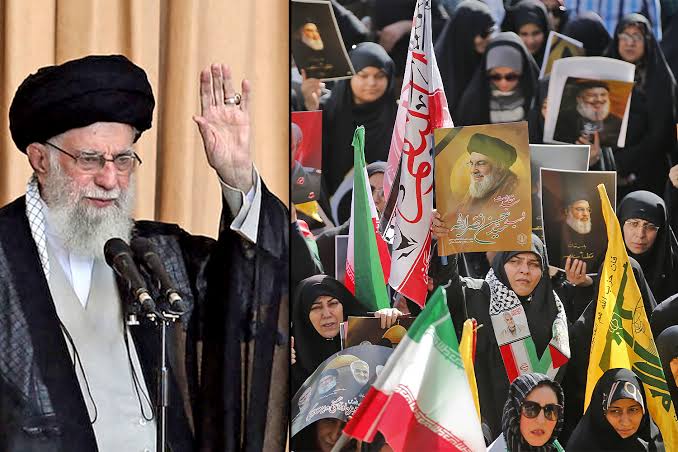
The Iran Strike: Regional Conflagration and Global Strategic Implications

The U.S.–Israel strikes on Iran represent now a decisive shift in regional security dynamics. By targeting strategic military infrastructure, the attacks have elevated the Gulf from a zone of tension to an active theatre of risk. Iran’s capacity for asymmetric retaliation through maritime disruption and proxy escalation remains intact. Energy markets, trade corridors, and alliance structures now face renewed volatility, while major powers recalibrate shifting positions in anticipation of a prolonged period of instability and competitive deterrence ahead globally today.

Read MoreThe Iran Strike: Regional Conflagration and Global Strategic Implications

Hedging or Heading Away? The Quiet Drift of US Allies Toward China

US allies are quietly recalibrating their relationships with China, exploring economic and technological partnerships while maintaining security commitments to Washington. This hedging reflects pragmatic flexibility rather than outright abandonment, but signals a growing multipolar reality. Europe and Asia are diversifying trade, infrastructure, and tech ties with Beijing, testing limits of US influence. The trend highlights a critical choice for Washington: adapt to conditional loyalty and shared influence, or risk incremental erosion of its global primacy as allies hedge for security and opportunity

Read MoreHedging or Heading Away? The Quiet Drift of US Allies Toward China

The Fragmentation of Western Politics 

Western politics is fragmenting as unilateral power eclipses post-WWII cooperation. Assertive US interventions, from Venezuela to Greenland, expose weak international enforcement and embolden rival powers. Europe faces alliance uncertainty, rising nationalism, and economic coercion while NATO’s credibility strains. The precedent of unchecked interference risks normalising ‘might makes right,’ encouraging China and Russia to test boundaries. Without renewed collective security and democratic oversight, Western cohesion erodes, reshaping global stability and accelerating a volatile, multipolar order under growing strategic mistrust worldwide today.

Read MoreThe Fragmentation of Western Politics