Fortress America Returns: What Allies Must Understand About Trump’s Signature Domestic Policy Push

As President Trump’s second term advances, his signature domestic agenda, the America First Reindustrialization Act, signals a sweeping shift in U.S. economic and strategic policy. Blending nationalism, industrial revival, and security, the act redefines global alliances, challenges trade norms, and aims for economic disentanglement from China. For allies, understanding and adapting to this new U.S. posture is not optional, it’s imperative for navigating a more transactional and strategically assertive America.

Read MoreFortress America Returns: What Allies Must Understand About Trump’s Signature Domestic Policy Push

Assessing the Imminent Chinese Threat: Context Behind U.S. Defence Secretary’s Shangri-La Remarks

“There is no reason to sugarcoat it. The threat China poses is real, and it could be imminent.” The U.S. Defence Secretary, Pete Hegseth, made this remark on May 31, 2025 at the annual inter-governmental security conference Shangri-La Dialogue in Singapore. In a stark warning to the U.S.’s Asian allies, Hegseth frames China as a national security threat, not just to the U.S., but also a military threat to the Asia Pacific region, particularly Taiwan.

Read MoreAssessing the Imminent Chinese Threat: Context Behind U.S. Defence Secretary’s Shangri-La Remarks

Panic in Washington: US Lawmakers Admit They’ve Lost Strategic Control in Africa

Africa is no longer passively awaiting Western aid, it is actively reshaping global power structures. As U.S. influence recedes due to policy neglect and strategic confusion, countries like China, Russia, and Türkiye have filled the void with investments and diplomatic engagement. African leaders are rejecting paternalism, insisting on equal partnerships and sovereign respect. The United States, once a dominant presence, now watches from the sidelines, adrift while the continent forges a multipolar future on its own terms.

Read MorePanic in Washington: US Lawmakers Admit They’ve Lost Strategic Control in Africa

How America Powered the Rise of China—Willingly

America's engagement with China was built on the belief that economic integration would lead to political liberalization. Instead, the U.S. facilitated China's rise by granting trade privileges, offshoring industries, and sharing technology. This strategy, driven by profit motives and strategic naivety, empowered a rival that now challenges U.S. dominance. Recognizing this, America faces the task of realigning its policies to safeguard national interests and technological sovereignty.

Read MoreHow America Powered the Rise of China—Willingly

The Second Punch: Why Trump’s Student Visa Freeze Marks a Strategic Shift in U.S.–China Relations

President Trump’s freeze on student visa processing marks a strategic shift in U.S.–China relations. Framed as a response to campus antisemitism, the move is part of a broader effort to decouple from China. By targeting academic exchanges, the administration aims to protect America’s innovation ecosystem from foreign exploitation. This policy, following earlier tariffs, represents the second major strike in a systematic recalibration of U.S. geopolitical and economic priorities.

Read MoreThe Second Punch: Why Trump’s Student Visa Freeze Marks a Strategic Shift in U.S.–China Relations

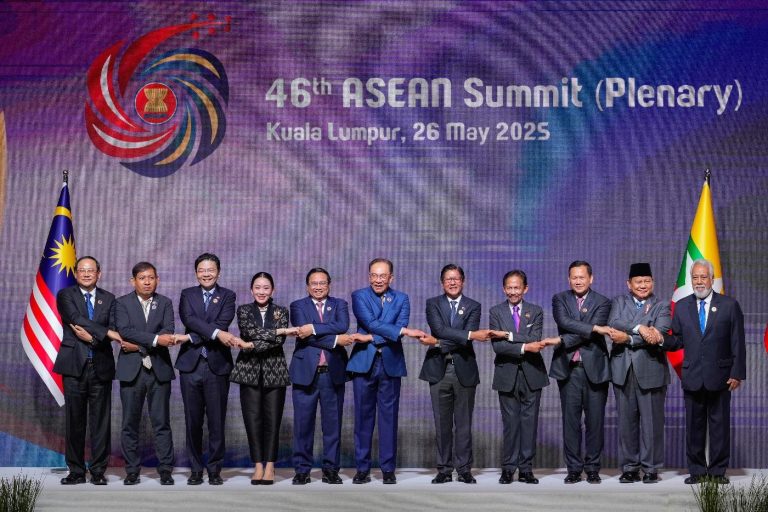
ASEAN Summit in Malaysia: Defying Trump’s Tariffs. Will the Region Break Free or Bow Down?

At the ASEAN Summit in Kuala Lumpur, leaders faced tough choices as Trump’s tariff threats loomed and China expanded its influence. With pressure mounting from both sides, ASEAN pushed for unity and new partnerships, including with the Gulf states. But internal divisions and the unresolved crisis in Myanmar cast a shadow. The summit was a clear reminder: if ASEAN wants to shape its own future, it needs to stand together, now more than ever.

Read MoreASEAN Summit in Malaysia: Defying Trump’s Tariffs. Will the Region Break Free or Bow Down?

Trade Rivalry in the Americas: China Courts Latin America and the Caribbean

At a time when the U.S. and China are cautiously working towards stabilising trade relations following their recent tariff war, Beijing is revitalising economic relations with Latin American and Caribbean states through the China-CELAC (Community of Latin American and Caribbean States) cooperation forum by offering them billions of dollars in funding.

Read MoreTrade Rivalry in the Americas: China Courts Latin America and the Caribbean

Growing Pains of BRICS: Expansion Tests Unity and Purpose

The recently convened BRICS foreign ministers' meeting in April 2025 failed to issue a joint statement on the bloc’s response to the United States’ protectionist trade policies under President Donald Trump. While the grouping has lofty ambitions to credibly represent the Global South, there are lingering doubts whether the organisation is wavering in establishing a unified direction and purpose with an expanded membership.

Read MoreGrowing Pains of BRICS: Expansion Tests Unity and Purpose

HSBC Raises Alarm Over Trade War Impact: What It Means for Emerging Markets and Global Stability

When a global financial institution like HSBC increases its bad debt provisions, it means the bank anticipates more customers—individuals, companies, or even governments—will default on their loans. The bank is effectively saying, "We expect tougher times ahead." This isn’t guesswork. It's a move based on internal data, macroeconomic trends, and predictive modeling.

Read MoreHSBC Raises Alarm Over Trade War Impact: What It Means for Emerging Markets and Global Stability

The U.S.-China Trade War in 2025: A New Chapter in Economic Confrontation

After Donald Trump returned to the presidency in January 2025, he reignited his administration’s protectionist trade policies under the banner of “America First.” Central to this approach is the aggressive use of tariffs, taxes imposed on imports to curb trade deficits, promote domestic manufacturing, and punish what Trump calls “unfair trade practices,” particularly by China.

Read MoreThe U.S.-China Trade War in 2025: A New Chapter in Economic Confrontation