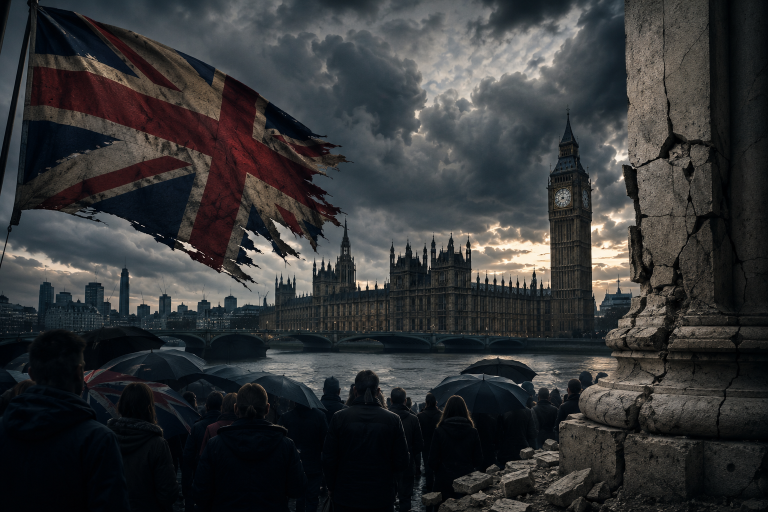
Britain’s Governance Crisis: The End of the Post-Imperial Consensus

Britain’s governance crisis is increasingly structural rather than political. Weak economic growth, rising public expectations, migration pressures, regional inequality, and declining institutional trust are converging to strain the post-war British governing model. Prime Minister Keir Starmer inherits a system facing fiscal constraints while still expected to sustain global influence, expansive public services, and domestic stability. Brexit accelerated deeper fractures around identity and sovereignty, leaving the UK in a prolonged era of political volatility where governments struggle not only to govern effectively, but to govern credibly.

Read MoreBritain’s Governance Crisis: The End of the Post-Imperial Consensus

Going Gold 

The time of land-taxing Liberals has long gone. The Liberal Democrats are on the side of the farmers who gathered in Westminster last week to protest against the Government’s changes to Agricultural Property Relief in the Autumn Budget – mandating that estates valued at over £1m – previously…

Read MoreGoing Gold 

Care-less Budget

I wrote last week that the Chancellor Reeves’ Autumn Budget offered little in the way of the reform much needed in our education sector. Well, it seems that what is “thin gruel” for education is not much better for our health and social care sector.  The Impact of…

Read MoreCare-less Budget

Labour Party: Go Hard or Go Home 

Britain has a role to play on the world stage, especially since Britain has usually been the villain in whatever great drama is playing out. Opinium’s latest poll gives Labour a 20-point lead over the Conservatives, and sentiment across the UK is that Starmer should start picking out curtain fabric for Number 10.

Read MoreLabour Party: Go Hard or Go Home