Hedging or Heading Away? The Quiet Drift of US Allies Toward China

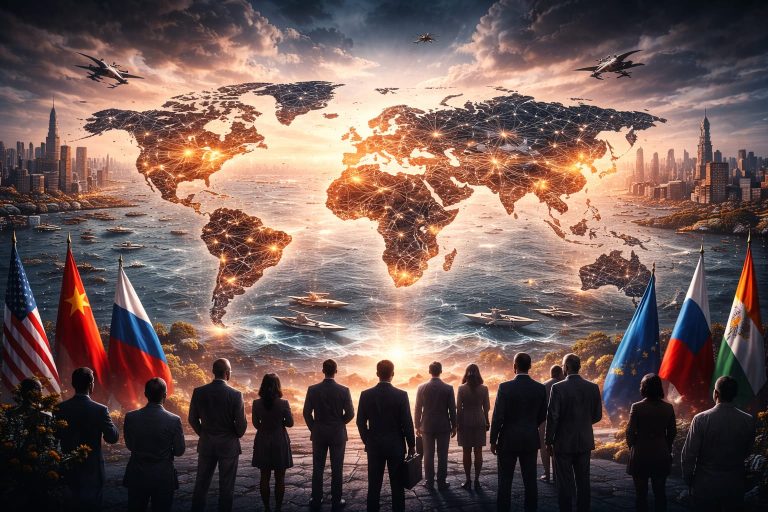
US allies are quietly recalibrating their relationships with China, exploring economic and technological partnerships while maintaining security commitments to Washington. This hedging reflects pragmatic flexibility rather than outright abandonment, but signals a growing multipolar reality. Europe and Asia are diversifying trade, infrastructure, and tech ties with Beijing, testing limits of US influence. The trend highlights a critical choice for Washington: adapt to conditional loyalty and shared influence, or risk incremental erosion of its global primacy as allies hedge for security and opportunity

Read MoreHedging or Heading Away? The Quiet Drift of US Allies Toward China

The Fragmentation of Western Politics 

Western politics is fragmenting as unilateral power eclipses post-WWII cooperation. Assertive US interventions, from Venezuela to Greenland, expose weak international enforcement and embolden rival powers. Europe faces alliance uncertainty, rising nationalism, and economic coercion while NATO’s credibility strains. The precedent of unchecked interference risks normalising ‘might makes right,’ encouraging China and Russia to test boundaries. Without renewed collective security and democratic oversight, Western cohesion erodes, reshaping global stability and accelerating a volatile, multipolar order under growing strategic mistrust worldwide today.

Read MoreThe Fragmentation of Western Politics 

Who Checks Trump? Who Checked the U.S.?

The U.S. capture of Nicolás Maduro marks a dangerous rupture in global governance. By openly declaring its intent to “run” Venezuela, the United States has crossed from influence into occupation, undermining the very rules-based order it once championed. For Africa and states like Ghana, the message is stark: sovereignty is now conditional, and unchecked power—not law—risks becoming the new global norm.

Read MoreWho Checks Trump? Who Checked the U.S.?

U.S. Capture of Nicolás Maduro and the Inception of a New, Volatile Foreign Policy Doctrine

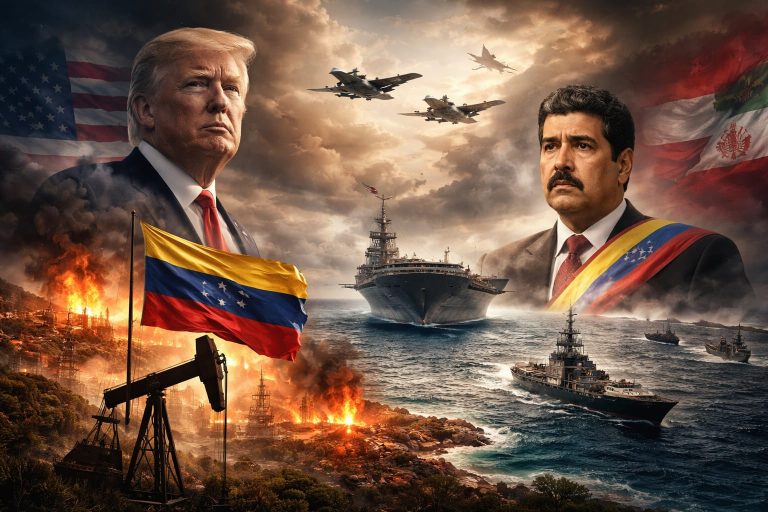
The U.S. capture of Nicolás Maduro marks a watershed in global politics: a shift from rules to raw power. Framed as law enforcement by United States under Donald Trump, the operation signals a new doctrine of unilateral regime removal tied to strategic resources. The immediate prize is Venezuelan oil; the long-term cost is a destabilized international order, where sovereignty becomes conditional and retaliation increasingly likely.

Read MoreU.S. Capture of Nicolás Maduro and the Inception of a New, Volatile Foreign Policy Doctrine

AI in 2025: The Good, the Bad, and the Ugly

By 2025, artificial intelligence has shifted from disruptive innovation to strategic infrastructure. It is boosting productivity, accelerating scientific discovery, and expanding access to knowledge, while simultaneously intensifying labour disruption, market concentration, and governance gaps. More troublingly, AI is eroding trust in information, enabling surveillance, and compressing decision-making in ways that strain democratic and security systems. AI is no longer a neutral tool; it is a force multiplier whose impact depends less on capability and more on the strength of institutions that govern it.

Read MoreAI in 2025: The Good, the Bad, and the Ugly

2026 Geopolitics: Power Without Dominance

Geopolitics in 2026 is defined by power without dominance. Major states retain significant military and economic capacity, yet lack the ability to impose durable outcomes unilaterally. Strategic competition has shifted toward chokepoints in technology, energy, and finance, while unresolved conflicts are increasingly managed rather than resolved. Fiscal constraints, alliance recalibration, and regional power assertion are reshaping global behaviour, producing a fragmented international system marked by calibrated escalation, persistent friction, and heightened strategic uncertainty.

Read More2026 Geopolitics: Power Without Dominance

What Trump Really Wants in Venezuela and How it Affects India?

Trump’s Venezuela strategy is less about democracy and more about power: oil leverage, geopolitical signaling, and dismantling rival influence from Russia, China, and Iran. By framing pressure on Caracas as a war on drugs, Washington creates legal and political cover for escalation. For India, the fallout is tangible—sanctions disrupt crude supplies, stall ONGC Videsh investments, and expose the fragility of energy planning in a sanctions-driven world. Geopolitics, not markets, now dictates access.

Read MoreWhat Trump Really Wants in Venezuela and How it Affects India?

Electoral Uncertainty in Latin America

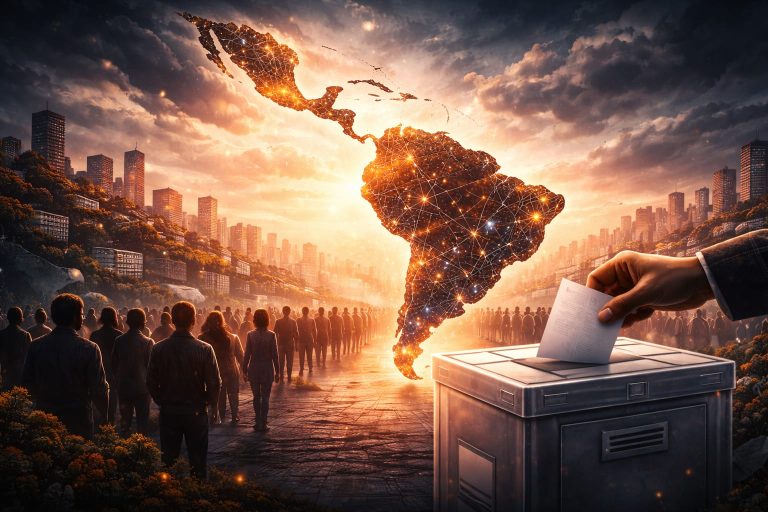
Latin America is entering a period of heightened electoral uncertainty as a dense cycle of elections from late 2025 to 2026 reshapes the region’s political trajectory. Voter fatigue, economic pressures, and dissatisfaction with inequality are fuelling a potential shift away from left-leaning governments toward more centrist or market-oriented leadership. While this transition may unlock reform and investment opportunities, it also heightens risks of policy volatility, social unrest, and intensified geopolitical competition between global powers.

Read MoreElectoral Uncertainty in Latin America

Global Order Under Strain: The Major Foreign-Policy Shocks of 2025

2025 exposed a global order under strain, defined less by decisive realignments than by accumulating shocks. U.S.–China economic confrontation became visibly symmetric, conflict mediation in Ukraine and the Middle East lost credibility, and regional actors assumed security roles once held by global powers. Trade routes, supply chains, and deterrence norms all proved fragile. The year underscored a central reality: major powers retain ambition, but their ability to enforce outcomes is increasingly constrained, producing a more volatile and contested international system.

Read MoreGlobal Order Under Strain: The Major Foreign-Policy Shocks of 2025

Economies to Watch in 2026

The global economy entering 2026 is no longer governed primarily by growth cycles, but by strategic stress. Fiscal exhaustion in advanced economies, geopolitical fragmentation, energy realism, and uneven technological diffusion are reshaping economic outcomes. The most consequential economies in 2026 will not be those expanding fastest, but those sitting at critical inflection points—capable of transmitting shock, absorbing volatility, or redefining alignment. Economics has become an instrument of power, constraint, and contest.

Read MoreEconomies to Watch in 2026