Global Strategy Outlook 2026

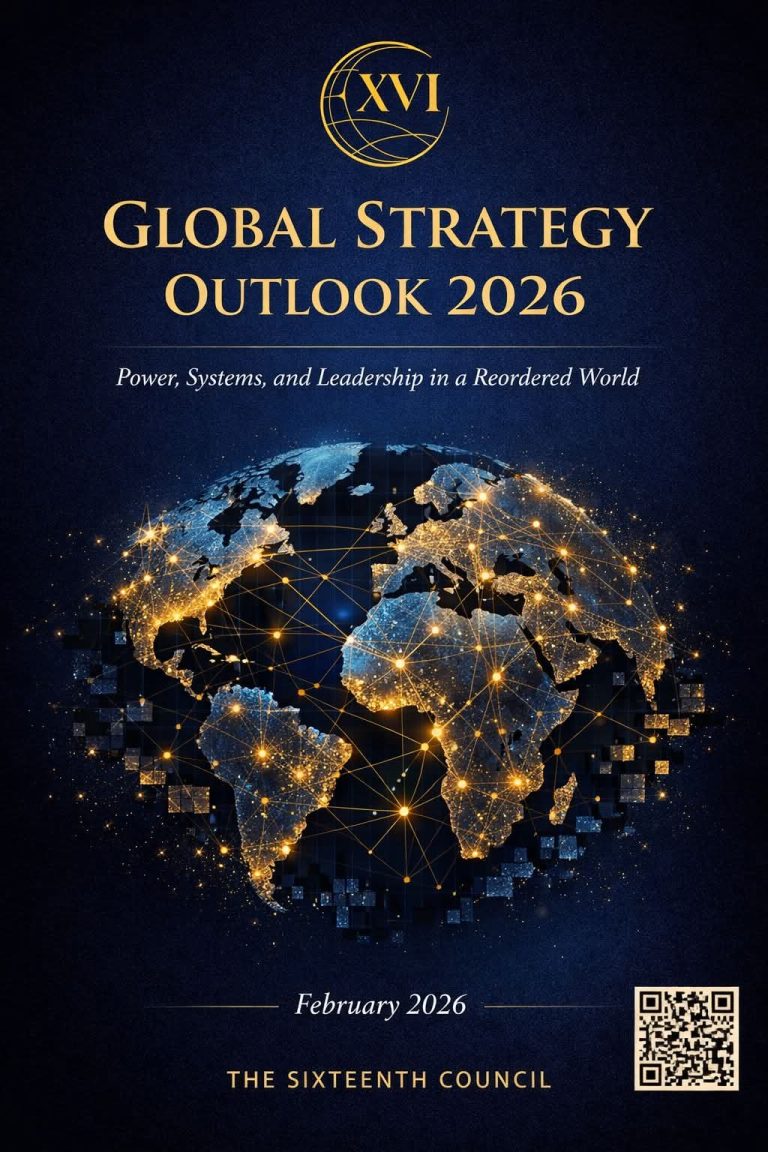
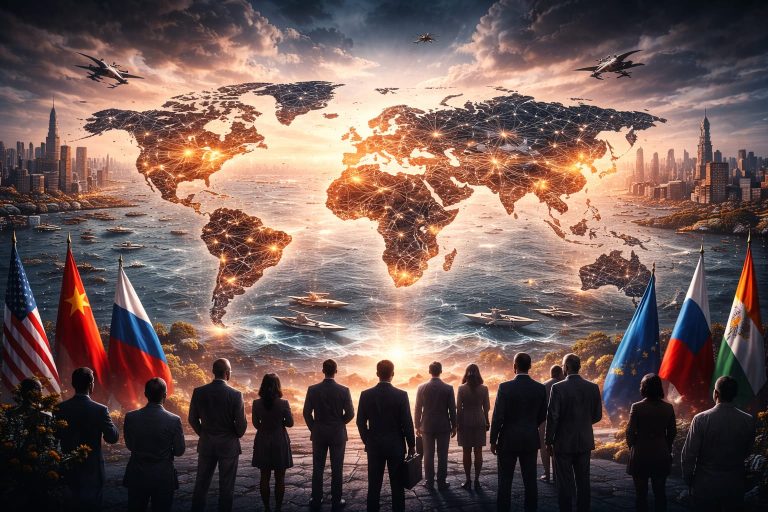
The year 2026 marks the beginning of a new global cycle shaped by geopolitical fragmentation, technological disruption, economic divergence, and declining institutional trust. After more than a decade of crisis management, the central challenge for leaders is shifting from responding to shocks to redesigning systems capable of operating in persistent volatility. Global Strategy Outlook 2026 outlines the major forces reshaping the world and presents a ten-point leadership agenda to help nations strengthen resilience, competitiveness, and strategic influence between 2026 and 2030.
Read MoreGlobal Strategy Outlook 2026

China’s Domination in Green Technology

China has emerged as the dominant force in global green technology, investing $625 billion in clean energy in 2024 and producing the vast majority of the world’s solar modules and wind turbines. With companies like BYD leading the electric vehicle market, the sector now drives over 11% of China’s GDP. Despite this progress, heavy coal reliance sustains high emissions. China’s scale and affordability in clean tech are reshaping global energy systems and accelerating electrification, particularly across emerging economies.

Read MoreChina’s Domination in Green Technology

2026 Geopolitics: Power Without Dominance

Geopolitics in 2026 is defined by power without dominance. Major states retain significant military and economic capacity, yet lack the ability to impose durable outcomes unilaterally. Strategic competition has shifted toward chokepoints in technology, energy, and finance, while unresolved conflicts are increasingly managed rather than resolved. Fiscal constraints, alliance recalibration, and regional power assertion are reshaping global behaviour, producing a fragmented international system marked by calibrated escalation, persistent friction, and heightened strategic uncertainty.

Read More2026 Geopolitics: Power Without Dominance

Global Order Under Strain: The Major Foreign-Policy Shocks of 2025

2025 exposed a global order under strain, defined less by decisive realignments than by accumulating shocks. U.S.–China economic confrontation became visibly symmetric, conflict mediation in Ukraine and the Middle East lost credibility, and regional actors assumed security roles once held by global powers. Trade routes, supply chains, and deterrence norms all proved fragile. The year underscored a central reality: major powers retain ambition, but their ability to enforce outcomes is increasingly constrained, producing a more volatile and contested international system.

Read MoreGlobal Order Under Strain: The Major Foreign-Policy Shocks of 2025

What does Chinese Military Expansion mean?

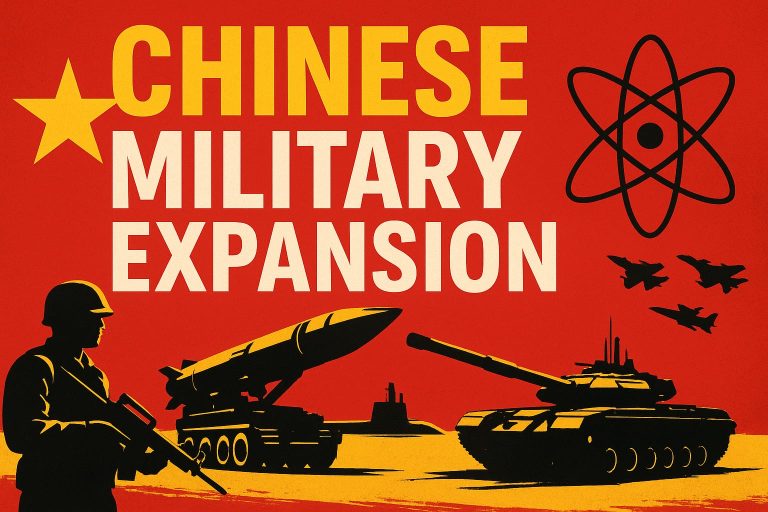
Beijing’s Victory Day parade has brought global attention to China’s military expansion and new nuclear capabilities. The strong demonstration of military power reflects President Xi’s political ambitions for China, carrying implications for both the East Asian region and international relations. Geopolitical tensions both within the region and between China and the US, as well as the development of diplomatic partnerships between China, Russia, and North Korea, mark an increase in militaristic competition and spending, and a united front against Western interference.

Read MoreWhat does Chinese Military Expansion mean?

India at Tianjin: Modi’s SCO Gambit in a Multipolar World

India enters the SCO summit walking a razor’s edge. Between Russia’s embrace, China’s rivalry, and America’s pressure, New Delhi’s old habit of “working with everyone” is becoming unsustainable. Modi’s meetings with Xi and Putin are more than routine diplomacy—they are tests of India’s strategic agility in a fractured world. The question is no longer whether India can remain non-aligned, but how long it can keep balancing before being forced to choose a side.

Read MoreIndia at Tianjin: Modi’s SCO Gambit in a Multipolar World

Strategic Partner or Dominant Power? Rethinking U.S. Influence on NATO’s Consensus Model

For decades, intergovernmental military alliance NATO has held up its consensus-based decision-making as proof of its democratic values. A system where every member has an equal voice and consensus dictates agreement through unity. Yet, as the dominant military and financial contributor, the influence of the United States has always been apparent. In 2025, does that influence increasingly override collaborative negotiation?

Read MoreStrategic Partner or Dominant Power? Rethinking U.S. Influence on NATO’s Consensus Model

Are African Economies Prepared for a Global Trade Reordering Driven by U.S. -China Decoupling?

As the U.S.–China economic decoupling redefines global trade, Africa faces a critical inflection point. The continent must either seize emerging supply chain opportunities or risk deeper marginalisation. This dispatch lays out a strategic readiness agenda—from industrial zoning to smart trade defence—aimed at positioning Africa within the evolving global trade order.

Read MoreAre African Economies Prepared for a Global Trade Reordering Driven by U.S. -China Decoupling?

Africa’s Strategic Position in the Red Sea and Indian Ocean Geopolitics: What’s really at stake as African coastal countries attract the world’s biggest powers?

Africa’s coastline is emerging as a geopolitical battleground where global powers vie for influence through strategic port access and dual-use infrastructure. From Djibouti to Lamu, African states must balance investment with sovereignty, transforming maritime assets into levers of power—not vulnerabilities—in the global contest shaping the Red Sea and Indian Ocean order.

Read MoreAfrica’s Strategic Position in the Red Sea and Indian Ocean Geopolitics: What’s really at stake as African coastal countries attract the world’s biggest powers?

Global Threat Report Evaluates National Security Challenges Facing Trump Administration

The U.S. Defence Intelligence Agency has released its annual threat assessment report in May 2025 offering a comprehensive appraisal of evolving global security challenges facing the United States. The report underscores the growing complexity of modern threats, shaped by rapid technological advancements and geopolitical rivalries.

Read MoreGlobal Threat Report Evaluates National Security Challenges Facing Trump Administration