What does Chinese Military Expansion mean?
Beijing’s Victory Day parade has brought global attention to China’s military expansion and new nuclear capabilities. The strong demonstration of military power reflects President Xi’s political ambitions for China, carrying implications for both the East Asian region and international relations. Geopolitical tensions both within the region and between China and the US, as well as the development of diplomatic partnerships between China, Russia, and North Korea, mark an increase in militaristic competition and spending, and a united front against Western interference.

Strategic Overview
On the 3rd of September, Beijing brought global attention to China as it unveiled new nuclear capabilities and military weapons in a strong display of militaristic power to show off the modernisation of the Peoples Liberation Army. This stands as a projection of national strength and resilience against Western influence and a response to modern unrestricted warfare, demonstrating China’s long-term objective of matching the US in military power.
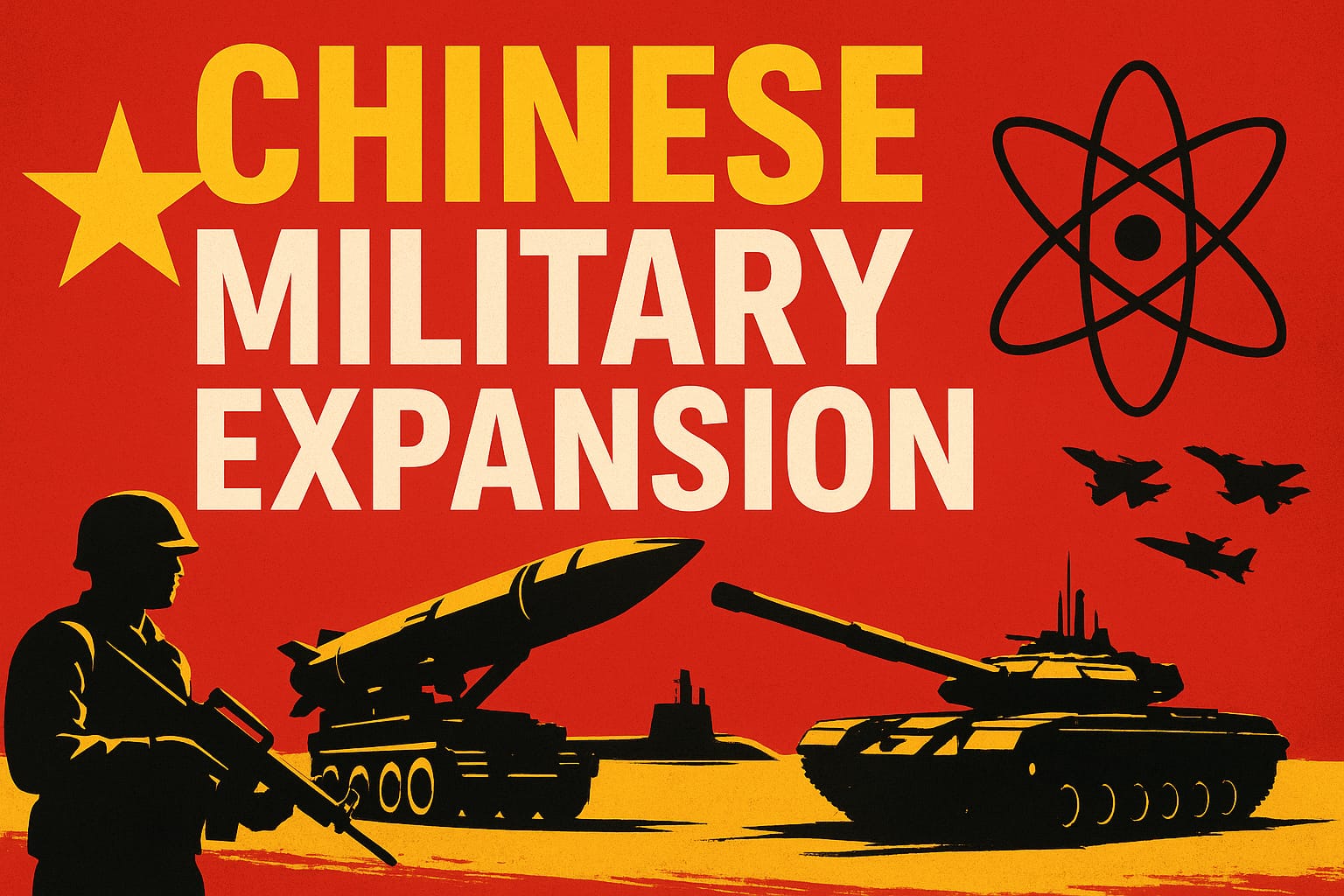
The China Victory Day military parade, celebrating the 80th anniversary of the end of the Second Sino-Japanese War and World War II, revealed a wide variety of new military tools, from four legged drones, cyber troops, and hypersonic missiles to a concerning trifecta of land-, sea-, and air-launched nuclear weapons.
Operational Context
Modernised military: The modernisation of China’s military has been in pursuit since the 1990’s, with China increasing its defence budget by thirteen times over the last 30-years, according to the Stockholm International Peace Research Institute (SIPRI). Beijing’s unveiling of new nuclear capabilities represents not only China’s military advancement in recent decades, but aspirations for the future of the nation, the establishment of China as a global leader.
Nuclear weapons: The nuclear centrepiece of the parade was made up of four new DF-61 intercontinental nuclear ballistic missiles, JL-3 ballistics designed for six new Jin-class submarines, and Chinas first ever air-launched nuclear weapon, the JL-1. China now joins other nuclear powers like the US, Russia, India, and Israel.
Foreign presence: Present to watch were 26 invited dignitaries, including from Iraq, Pakistan, Vietnam, Zimbabwe, Serbia, and Slovakia. None were more note-worthy than the presence of Russia’s’ and North Korea’s leaders, Vladimir Putin and Kim Jong Un, who were witnessed alongside Chinese President Xi Jinping.
It is estimated to currently possess 600 warheads, with an increasing rate of 100 a year, and a goal of 1,500 by 2035.
Geopolitical Tensions
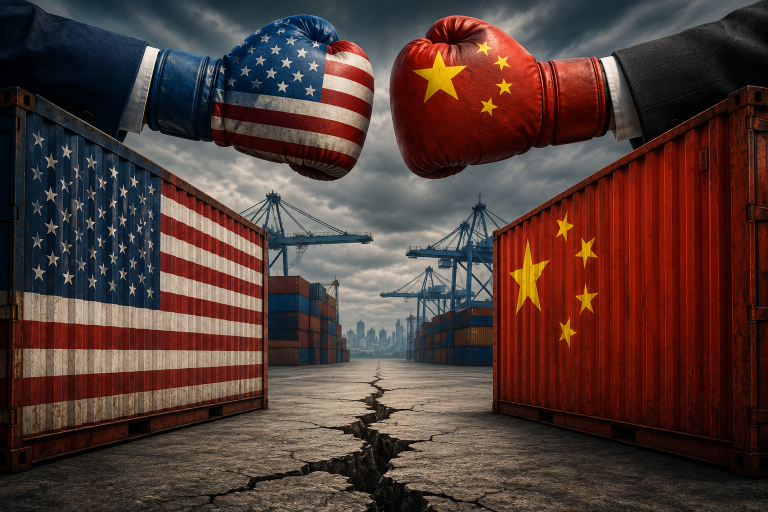
US and the West: While lacking in direct presence at the scene, a western audience was a strategic expectation of the parade. It is a message to the western world, and especially the US, against complacency, of militaristic competition, and of resistance. Chinese President Xi resists the current US led world order, seeking to upturn present global geopolitical standards. Military expansion of this scale reflects a political movement to safeguard the nations sovereignty against western influence and pressure. This has become all the more significant in the face of increasing geopolitical and economic tensions, as their support of Russia’s war in Ukraine has strained relations with European nations, resulting in sanctions.
South Korea: South Korean President Lee Jae Myung had been invited to the parade but had declined to attend. South Korea-China relations encompass deep economic interdependence and growing geopolitical tensions around the US-South Korea alliance, North Korea, and China’s regional ambitions. South Korea’s foreign policy navigating competition between the US and China aims to balance trade with China while strengthening ties with the US.
India: Indian Prime Minister Narendra Modi was also notably not present at the parade, after having met President Xi at the beginning of the month. It was only in May of this year that India was forced to question its ties with Beijing, when a four-day conflict with Pakistan indirectly involved China, as Pakistan’s armed forces heavily rely on China-made equipment. This did not result in any public stand against China, and six months later peace talks between the two Asian powers, electrified by US President Trumps global tariffs, have led to promises to cooperate for the benefits of their nations.
Russia: To President Xi, Putin stands as a key partner in achieving a new world order that is not headed by the US. However, China must balance international relations with Russia with other prospective economic partners that may be deterred by his dealing with Putin. President Putin, who has become an international pariah since Russia’s invasion of Ukraine in 2022, complicates future economic and military deals.
Strategic Outlook
Military power: China’s nuclear arsenal is growing faster than any other country’s according to SIPRI. It is estimated to currently possess 600 warheads, with an increasing rate of 100 a year, and a goal of 1,500 by 2035. However, this amount remains significantly smaller than either the US’s or Russia’s, both of which have over 5,000 warheads in stock. Despite this, the destructive potential of nuclear weapons has it remain that more damage than is acceptable can be done with even a handful of warheads. Alongside its other military investments, such as underwater drones and laser air defence weapons, China has established a clear warning to the rest of the world.
A show of solidarity: It was before the parade had even commenced that the leaders of China, Russia, and North Korea, Xi Jinping, Vladimir Putin, and Kim Jong Un, appeared together in public for the first time, demonstrating solidarity and unity between their nations. This three-way meeting between nations widely known for their controversial stances against the current world order marks a diplomatic success for President Xi against the US, in light of Trump previously stating intention to form deals with both Kim and Putin.
Implications for East Asian Region
Militaristic competition: China’s growing military power, alongside their position as an economic superpower and Xi’s political aspirations over the region, increases international concerns over potential economic and military conflict. An increase in defence and military spending is not unexpected as growing international geopolitical tension drives military competitiveness as well as potentially encouraging greater commitment to nuclear deterrence.
Western response: It was only last month that the US announced preparations to deploy officials to dozens of allied countries including in Taiwan and Japan in an effort to counter China’s military advancement, a trend that is likely to continue. This raises the question of Chinese response; so far signs suggest a commitment to confronting perceived Western overstep.
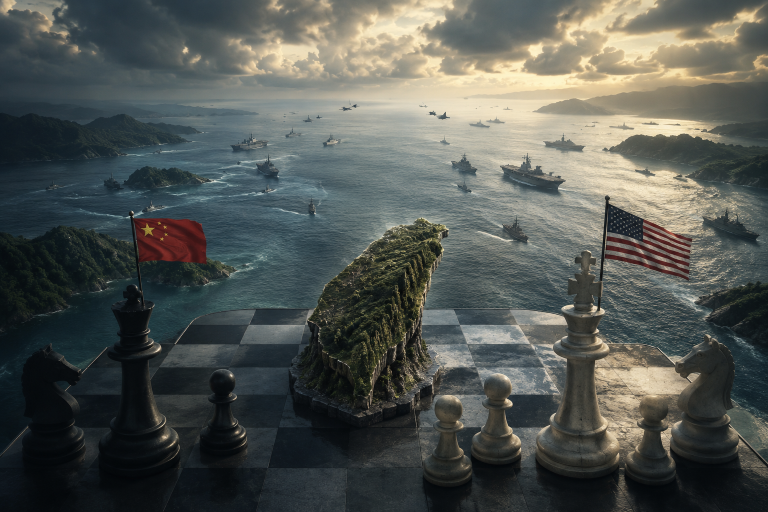
China-Taiwan conflict: In light of Xi’s statement that “the rise of China is unstoppable”, there is renewed concern of a Chinese invasion of Taiwan. The People’s Republic of China (PRC), which governs mainland China, seeks to claim Taiwan as part of its territory under its ‘One China Principle’, which aims to establish unification. In response, Taiwan has emphasised procurement of advanced Western weapons as well as partnerships with private industry and international allies to deter large-scale invasion by China and maintain its sovereignty. Alongside Taiwan, nations like Japan and the Philippines also resist the expansion of China.
Niamh Allen is a GPIU Fellow at the Sixteenth Council