Trump Can’t Take Greenland – and the World Knows Why

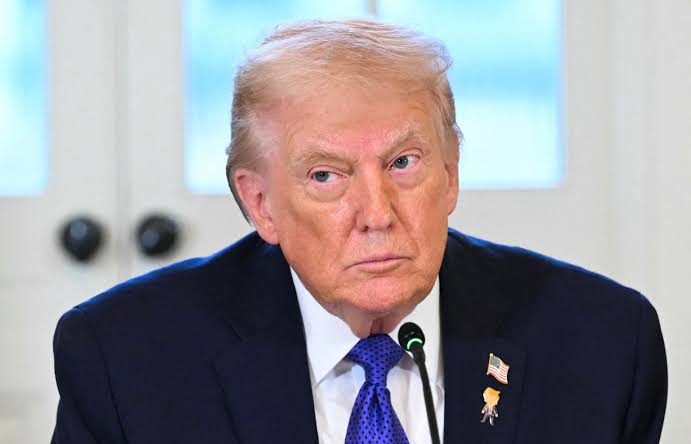
Any attempt by the United States to annex Greenland would collapse under its own contradictions. Washington cannot credibly defend Ukraine’s borders, threaten war over Taiwan’s sovereignty, and simultaneously flirt with territorial acquisition from a NATO ally. Such a move would not signal strength but moral exhaustion, eroding the very principles that give U.S. power global legitimacy. In a rules-based order the U.S. designed, restraint—not expansion—is what sustains leadership.

Read MoreTrump Can’t Take Greenland – and the World Knows Why

The House of Lords: A Blueprint for Strengthening Britain’s Democratic Architecture

The future of the House of Lords has become a defining question for British democracy. While calls for abolition grow louder, removing the upper chamber would erode expertise, weaken scrutiny, and concentrate excessive power in the executive. The real opportunity lies in intelligent reform—introducing term limits, strengthening committees, increasing transparency, and modernising appointments. A reformed Lords can offer continuity, strategic insight, and stronger governance at a time when the UK needs long-range thinking more than ever.

Read MoreThe House of Lords: A Blueprint for Strengthening Britain’s Democratic Architecture

The Missing Middle: The Structural Financing Gap That Keeps SMEs Small

Small and medium-sized enterprises (SMEs) drive over 90% of African businesses and are vital to employment, innovation, and industrialisation. Yet many remain trapped in the “missing middle”—too large for microfinance but too small or informal for bank loans or venture capital. This structural financing gap limits their ability to expand, modernise, or join regional value chains. Without growth capital, SMEs operate below potential, reinforcing inequality and slowing Africa’s broader economic transformation and competitiveness.

Read MoreThe Missing Middle: The Structural Financing Gap That Keeps SMEs Small

Aspiration or Implementation: Friction and the AfCFTA’s Great Experiment

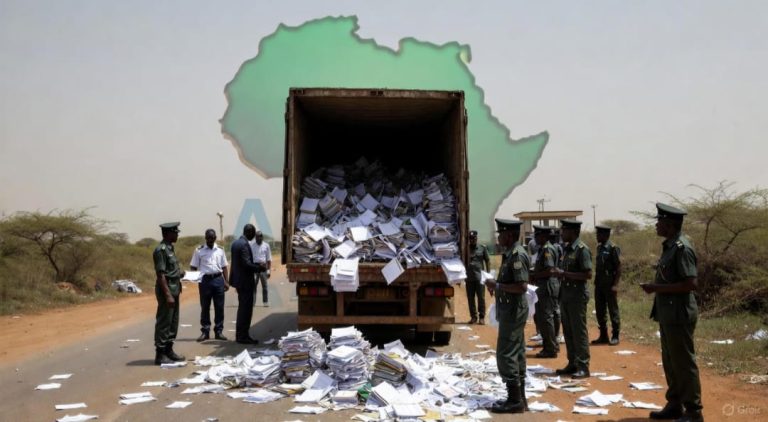
A shipment from Accra to Lagos should take a day but often takes four—stalled by paperwork, checkpoints, and unofficial fees. This reflects the persistent barriers undermining the African Continental Free Trade Area (AfCFTA). Launched in 2021 to create a seamless African market, AfCFTA promised lower tariffs, unified trade rules, and continental growth. Yet, nearly four years later, non-tariff barriers, weak infrastructure, and fragmented regulations continue to slow progress. Vision remains high, but real implementation lags behind ambition.

Read MoreAspiration or Implementation: Friction and the AfCFTA’s Great Experiment

India’s GST Reforms: Balancing Simplification, Growth, and Self-Reliance

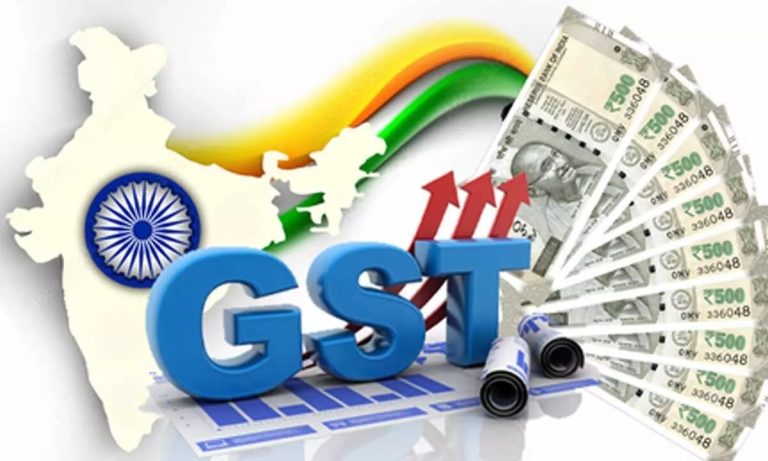
India is set to overhaul its Goods and Services Tax (GST) system, simplifying its multi-tiered structure into two main rates—5% for essentials and 18% for most goods, with a 40% rate on demerit products. The reforms focus on structural fixes, rate rationalization, and ease of compliance to boost consumption, support MSMEs, and attract global investment. Success will depend on managing Centre–state fiscal tensions and ensuring transparency. If implemented effectively, GST reforms could strengthen India’s self-reliance and secure stable, growth-driven development.

Read MoreIndia’s GST Reforms: Balancing Simplification, Growth, and Self-Reliance

The Last Days of the Nation-State: How Corporations Are Building the Next Global Order 

As governments falter under the weight of debt, disruption, and declining legitimacy, corporations are quietly stepping in—not just to influence the global order, but to construct a new one altogether. From private satellite constellations to platform-enforced speech, a corporate architecture of power is emerging with little democratic oversight. This dispatch traces the end of traditional sovereignty and the rise of algorithmic governance—and asks whether the public still governs the public sphere.

Read MoreThe Last Days of the Nation-State: How Corporations Are Building the Next Global Order 

After The Strike: Why Trump’s Ceasefire Isn’t the Endgame 

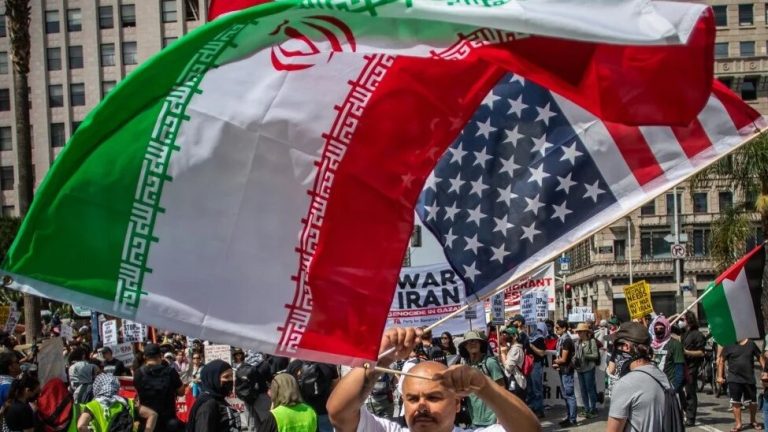
President Trump’s strike on Iran’s nuclear facilities, followed by a surprise ceasefire, has jolted the global order—but it’s not the endgame. This is a high-stakes pause, not peace. The real test lies in converting military leverage into a lasting strategic framework. For Africa and the Global South, the episode signals a shift in U.S. power projection—swift, forceful, then restrained. If not followed by coherent diplomacy, it risks becoming just another spark in a volatile world.

Read MoreAfter The Strike: Why Trump’s Ceasefire Isn’t the Endgame 

Trump’s High-Stakes Litmus Test: Can Peace Through Strength Survive the Israel–Iran War?

Trump’s doctrine of “peace through strength” faces a defining test in the escalating Israel–Iran war. As Tehran defies U.S. deterrence, Trump must choose between bold retaliation, risky ambiguity, or compromise—each with global consequences. The world is watching, from Beijing to Moscow. Can Trump project credible strength without losing his base or dragging America into war? This isn’t just about the Middle East—it’s a litmus test for U.S. power in a shifting world.

Read MoreTrump’s High-Stakes Litmus Test: Can Peace Through Strength Survive the Israel–Iran War?

Will Russia, Türkiye and China Back Iran?

As tensions escalate between Israel and Iran, Russia, Türkiye, and China face a critical test. Though all three condemn Israel’s strikes, none have offered military backing to Iran. Their strategic caution risks rendering their influence meaningless. A multilateral de-escalation strategy—through Astana Plus, BRICS diplomacy, and reconstruction planning—offers a peaceful path forward. The moment demands more than words; it demands coordinated action to avert a regional catastrophe.

Read MoreWill Russia, Türkiye and China Back Iran?