
Aspiration or Implementation: Friction and the AfCFTA’s Great Experiment
A shipment from Accra to Lagos should take a day but often takes four—stalled by paperwork, checkpoints, and unofficial fees. This reflects the persistent barriers undermining the African Continental Free Trade Area (AfCFTA). Launched in 2021 to create a seamless African market, AfCFTA promised lower tariffs, unified trade rules, and continental growth. Yet, nearly four years later, non-tariff barriers, weak infrastructure, and fragmented regulations continue to slow progress. Vision remains high, but real implementation lags behind ambition.

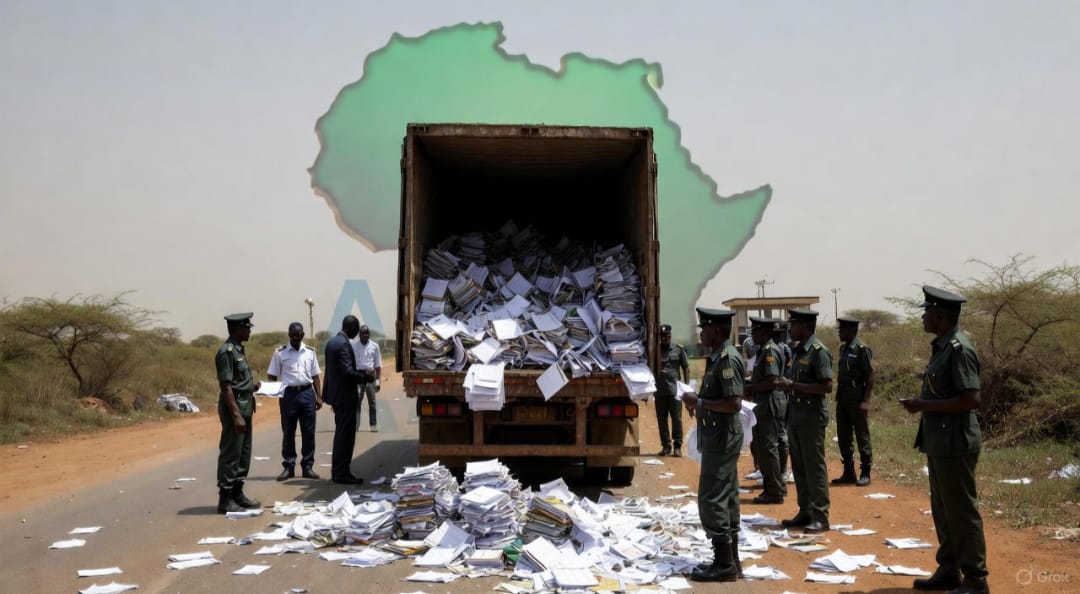
A shipment of textiles from Accra to Lagos should take a day. Instead, it often takes four, delayed by paperwork, choked at checkpoints, and chipped away by unofficial fees. The goods arrive lighter, the trader poorer, and the market no closer. This is not a one-off. It’s a snapshot of how intra-African trade still works, or fails to.
Since the African Continental Free Trade Area (AfCFTA) launched in 2021, the vision of a seamless African market has gained political momentum. Yet the numbers tell a slower story. In 2023, just 14.4% of Africa’s trade happened within the continent, a ratio barely changed in a decade. While leaders speak of integration, traders still queue at borders, navigating forms, fees, and fragmented rules.
This is not Africa’s first blueprint for a unified market. The Lagos Plan of Action, drafted in 1980, promised a common market by the year 2000. That deadline came and went. AfCFTA is its successor, not just another trade deal, but a bet on economic self-determination. Still, history offers a sober warning: vision without execution builds little. Today, the problem is not a lack of ambition. It is a shortfall in follow-through.
What Was Promised vs. What We See
The African Continental Free Trade Area was never meant to be just a political trophy. Conceived in 2018 and formally launched in 2021, it was designed as the world’s largest free trade area by number of participating countries: 54 in total, covering 1.4 billion people and a combined GDP of over $3 trillion. Its ambition went well beyond slashing tariffs. It aimed to rewire Africa’s trade logic: lower costs, expand manufacturing, deepen regional supply chains, and shift growth from extraction to production.
The blueprint was bold. Intra-African trade would rise by more than 50% by 2025. Ninety percent of tariffs would be eliminated. Customs procedures would be harmonised. A continental digital payments system would replace a patchwork of currency barriers and banking gaps. AfCFTA’s architects saw it as the vehicle to erase colonial trade borders, designed for shipping goods out, not across.
At its heart, the agreement sought to flip the script: Africa as not just a supplier of raw materials, but a web of value-adding economies. For small firms, it promised scale. For women-led businesses and young entrepreneurs, it offered access to new markets. And for Africa’s negotiating power on the global stage, it provided a foundation of unified economic weight.
Yet nearly four years on, the gap between design and delivery is growing. The promises remain on paper. The trade, for the most part, does not.
The Barriers That Still Bind
The AfCFTA may be signed, but trade still stalls at the border. Tariffs have nominally fallen across many sectors, but non-tariff barriers remain firmly in place. Truckers wait hours at checkpoints. Traders juggle conflicting paperwork. Customs officers apply national rules instead of continental ones.
In East Africa, goods moving from Kenya to Rwanda routinely hit snags, with each border demanding different forms and different fees. In West Africa, the Accra–Lagos corridor, once billed as a symbol of AfCFTA’s promise, ranks among the most costly and unpredictable trade routes on the continent. According to the African Trade Observatory, more than 70% of intra-African trade barriers are non-tariff in nature.
One key stumbling block: rules of origin. These guidelines determine which goods qualify for tariff-free trade under AfCFTA. Yet many countries have yet to agree on clear, harmonised criteria. As a result, even products made on African soil can end up taxed as if they weren’t.
The continent’s digital infrastructure also lags behind its ambition. The Pan-African Payment and Settlement System (PAPSS), designed to let traders transact in local currencies without relying on the US dollar, has yet to achieve scale. For now, most cross-border deals still rely on costly, time-consuming dollar-based transactions, exposing small businesses to currency risks they can’t afford.
And then there’s the quiet rollback. Some governments, wary of domestic backlash, continue to impose “temporary” import bans or protective tariffs. In practice, these moves shield local industries but erode trust in the broader project. Political caution is proving more agile than economic reform.
How Traders, Entrepreneurs and SMEs Experience the AfCFTA
Behind the declarations and summit speeches lies a quieter, harder truth: it is small businesses, not policymakers, who must navigate the messy reality of Africa’s “single” market.
In Goma, a coffee exporter says he pays more in roadside bribes than official customs fees. In Kigali, a fashion designer notes that shipping her garments to Ghana costs more than exporting to Europe. Across the continent, the refrain is similar: AfCFTA exists in theory, but in practice, the road is still long, costly, and clogged.
For women traders, the hurdles are even steeper. A 2022 UNDP report found that women account for more than 70% of informal cross-border trade in Africa. Yet they face daily harassment, operate outside formal legal protections, and are largely absent from policy consultations. Without tailored support: legal aid, finance, and security, they risk being left out of the very market designed to uplift them.
Young tech entrepreneurs face a different kind of wall. A Nigerian developer trying to scale into East Africa must navigate an alphabet soup of digital laws: data localisation requirements, cybersecurity rules, and licensing disparities. Few startups have the capacity to manage compliance across dozens of jurisdictions. The idea of one African digital market remains more aspiration than architecture.
These are not edge cases. They are the litmus test. If AfCFTA cannot serve small manufacturers, informal traders, and young innovators, the very people it claims to empower, then its impact risks remaining symbolic. The real measure of integration is not signatures on protocols, but whether a trader can cross a border without being shaken down and whether a startup can grow without getting lost in red tape.
What It Will Take to Make AfCFTA Work
Transforming AfCFTA from a headline into a functioning system will take more than trade protocols. It will take political courage, regulatory discipline, and a shared commitment to coherence over convenience. A single market is not just a legal construct; it’s a daily, deliberate choice.
First, we must finalise and simplify rules of origin. Without clear, continent-wide rules on what qualifies as “made in Africa,” confusion reigns and confidence erodes. Businesses hesitate. Customs officials improvise. Governments must resist the urge to carve out endless exceptions that, while politically tempting, weaken the core of the agreement.
Next, we must treat non-tariff barriers as seriously as tariffs. Tariff cuts mean little if goods get stuck at outdated checkpoints or buried in paperwork. Customs systems must be digitised and harmonised. States that block free movement, citing vague national interests, must face consequences. AfCFTA’s online platform to report trade barriers is a good start. What it lacks is teeth.
Then there is the need to invest in the roads, rails, and routers that make trade possible. AfCFTA cannot move forward on broken highways and analog borders. Cross-border infrastructure, from transport corridors to logistics hubs, must be prioritised as an economic strategy, not left to donor projects or wishful thinking.
Nothing moves without payment. We must scale up the payment infrastructure. A single market needs a single method to move money. PAPSS was built for this, but its adoption is slow. Without it, traders remain hostage to dollar-based systems that raise costs and limit reach.
Finally, move the politics beyond the podium. AfCFTA won’t work through trade ministries alone. It needs consistent backing from heads of state, particularly when integration creates discomfort at home. That means explaining the long game to voters and businesses alike: AfCFTA is not about instant wins, but long-term resilience and shared prosperity.
What AfCFTA Means for Africa’s Place in the World
AfCFTA is more than a trade deal. It is a strategic bet that a more integrated Africa can not only grow faster but speak louder, bargain harder, and shape the global rules of commerce rather than simply absorb them. But leverage in international forums comes from delivery, not declarations.
At the G20, in WTO negotiations, and across climate finance platforms, Africa’s voice has often been diluted by internal divergence. A working continental market would change that. It would shift Africa from a patchwork of small economies to a unified bloc, complete with regional supply chains, common standards, and collective clout.
The signal to global investors would also be clear. Today, many firms still see Africa as a market of regulatory headaches and fragmented risk. AfCFTA’s true power lies not in the numbers on paper, but in the ease of doing business on the ground. When border delays shrink and rules stay consistent, capital follows and stays.
Above all, AfCFTA is a statement of intent. In a world of fractured supply chains and shifting trade alliances, Africa is choosing to write its own economic script. A functioning single market is both shield and strategy: buffering external shocks while building internal momentum. But unity cannot be declared into existence. It must be earned, through policy, infrastructure, trust, and time. The prize is not just easier trade, it is a louder voice in the room when the world’s economic future is being negotiated and decided.
Israel Olaniyan is a Regional Fellow of the Africa Program at the Sixteenth Council


Energy, Food, and Power: The New Geopolitics of Global Markets