Putin Over Poland: Why Moscow Would Dare Cross NATO’s Red Line — And What the Alliance Must Do

Russia’s drone incursion into Poland underscores the fragility of NATO’s deterrence and the Kremlin’s strategy of probing allied thresholds. Poland, now NATO’s psychological tripwire, faces not just tactical provocations but existential tests of credibility. Moscow’s calibrated violations aim to erode unity, force hesitation, and broadcast weakness. NATO’s response must be decisive: integrated defences, rehearsed protocols, and unified political messaging. Poland is more than geography—it is the frontline of Europe’s collective security, where ambiguity fuels aggression and clarity sustains deterrence.
Read MorePutin Over Poland: Why Moscow Would Dare Cross NATO’s Red Line — And What the Alliance Must Do

Trump-Putin summit ends without material changes

The Trump–Putin summit in Alaska ended without progress on a ceasefire, underscoring the entrenched positions of both leaders. While Trump hailed the meeting as a success, little substance emerged beyond vague promises of future talks. Putin, however, gained symbolic victories—international recognition and time to advance Russia’s offensive in Ukraine. With Zelensky absent, peace remains distant and fragile. Europe now faces the task of pressuring both Washington and Moscow to sustain support for Kyiv and keep prospects for a fair settlement alive.

Read MoreTrump-Putin summit ends without material changes

The Trump–Putin Summit and its implications for Sustainable Development

The Trump–Putin summit in Anchorage underscored shifting geopolitical dynamics with far-reaching consequences for sustainable development. While dominated by the Russia–Ukraine war, its implications extend to energy security, climate goals, food supply chains, and global cooperation. Agreements hinting at fossil fuel dependency, U.S. security guarantees to Ukraine, and weakened multilateralism risk slowing progress on the SDGs. With disruptions to trade, aid, and decarbonization, the summit highlights the need for vigilant international advocacy for sustainability, inclusivity, and cooperative governance.

Read MoreThe Trump–Putin Summit and its implications for Sustainable Development

The Alaska Summit: Why Trump and Putin’s Meeting Marks a Diplomatic Success

The Alaska Summit between Trump and Putin marked a subtle but meaningful diplomatic success. While no ceasefire or land swap was announced, the meeting established common ground, opened channels for future talks, and secured a commitment to reconvene. Trump’s pledge to consult Zelenskyy, NATO, and European allies underscores a process-driven approach rather than unilateralism. History shows that first meetings often set the stage for breakthroughs. By creating momentum and continuity, Anchorage became a quiet step toward potential peace.

Read MoreThe Alaska Summit: Why Trump and Putin’s Meeting Marks a Diplomatic Success

Global Threat Report Evaluates National Security Challenges Facing Trump Administration

The U.S. Defence Intelligence Agency has released its annual threat assessment report in May 2025 offering a comprehensive appraisal of evolving global security challenges facing the United States. The report underscores the growing complexity of modern threats, shaped by rapid technological advancements and geopolitical rivalries.

Read MoreGlobal Threat Report Evaluates National Security Challenges Facing Trump Administration

Panic in Washington: US Lawmakers Admit They’ve Lost Strategic Control in Africa

Africa is no longer passively awaiting Western aid, it is actively reshaping global power structures. As U.S. influence recedes due to policy neglect and strategic confusion, countries like China, Russia, and Türkiye have filled the void with investments and diplomatic engagement. African leaders are rejecting paternalism, insisting on equal partnerships and sovereign respect. The United States, once a dominant presence, now watches from the sidelines, adrift while the continent forges a multipolar future on its own terms.

Read MorePanic in Washington: US Lawmakers Admit They’ve Lost Strategic Control in Africa

Growing Pains of BRICS: Expansion Tests Unity and Purpose

The recently convened BRICS foreign ministers' meeting in April 2025 failed to issue a joint statement on the bloc’s response to the United States’ protectionist trade policies under President Donald Trump. While the grouping has lofty ambitions to credibly represent the Global South, there are lingering doubts whether the organisation is wavering in establishing a unified direction and purpose with an expanded membership.

Read MoreGrowing Pains of BRICS: Expansion Tests Unity and Purpose

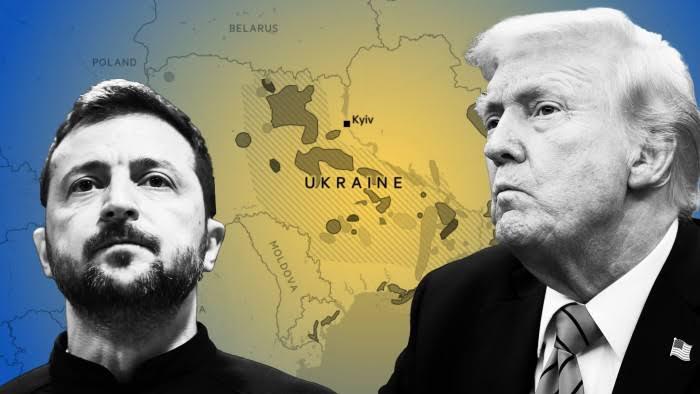
Zelenskyy: ‘President Trump is living in this disinformation space’

Ultimately, the human cost compels a renewed sense of urgency. The stories of families torn apart by shelling in Mariupol, the harrowing journeys of refugees fleeing Kharkiv, and the mounting mental and emotional toll on frontline soldiers remind us of the stakes. Millions of people yearn for a future free of conflict—where children can attend schools safely, homes are not threatened by missile strikes, and peace is more than a distant aspiration.

Read MoreZelenskyy: ‘President Trump is living in this disinformation space’

Trump tells Ukraine ‘You should have never started the war, you could have given up land’

President Trump’s stance, as captured by a BBC broadcast and supported by fresh statements from his Florida residence at Mar-a-Lago, goes further than his previous rhetorical positioning. Instead of stressing deterrence through strength—his usual rationale—he placed partial responsibility on Ukraine, suggesting that a territorial concession could have averted the conflict altogether. These statements have elicited strong reactions worldwide, most notably in Ukraine itself, which has borne the brunt of the Russian invasion.

Read MoreTrump tells Ukraine ‘You should have never started the war, you could have given up land’