Global Strategy Outlook 2026

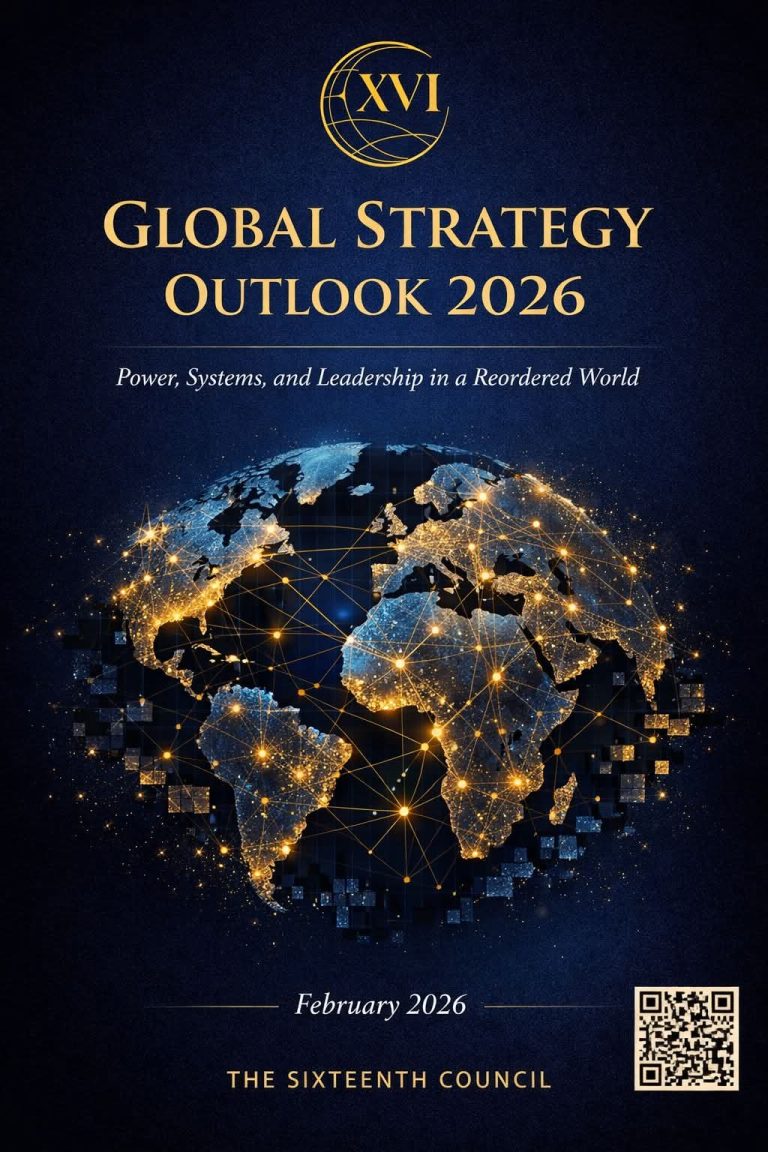
The year 2026 marks the beginning of a new global cycle shaped by geopolitical fragmentation, technological disruption, economic divergence, and declining institutional trust. After more than a decade of crisis management, the central challenge for leaders is shifting from responding to shocks to redesigning systems capable of operating in persistent volatility. Global Strategy Outlook 2026 outlines the major forces reshaping the world and presents a ten-point leadership agenda to help nations strengthen resilience, competitiveness, and strategic influence between 2026 and 2030.

Read MoreGlobal Strategy Outlook 2026

Who Checks Trump? Who Checked the U.S.?

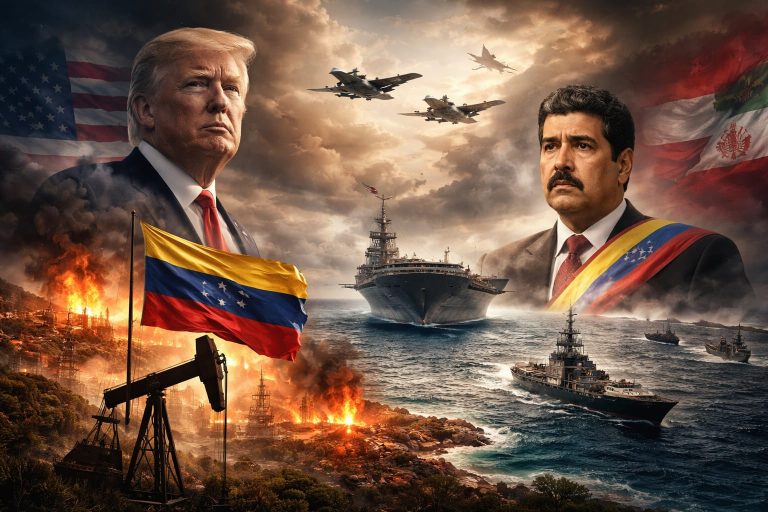
The U.S. capture of Nicolás Maduro marks a dangerous rupture in global governance. By openly declaring its intent to “run” Venezuela, the United States has crossed from influence into occupation, undermining the very rules-based order it once championed. For Africa and states like Ghana, the message is stark: sovereignty is now conditional, and unchecked power—not law—risks becoming the new global norm.

Read MoreWho Checks Trump? Who Checked the U.S.?

What Trump Really Wants in Venezuela and How it Affects India?

Trump’s Venezuela strategy is less about democracy and more about power: oil leverage, geopolitical signaling, and dismantling rival influence from Russia, China, and Iran. By framing pressure on Caracas as a war on drugs, Washington creates legal and political cover for escalation. For India, the fallout is tangible—sanctions disrupt crude supplies, stall ONGC Videsh investments, and expose the fragility of energy planning in a sanctions-driven world. Geopolitics, not markets, now dictates access.

Read MoreWhat Trump Really Wants in Venezuela and How it Affects India?

Global Order Under Strain: The Major Foreign-Policy Shocks of 2025

2025 exposed a global order under strain, defined less by decisive realignments than by accumulating shocks. U.S.–China economic confrontation became visibly symmetric, conflict mediation in Ukraine and the Middle East lost credibility, and regional actors assumed security roles once held by global powers. Trade routes, supply chains, and deterrence norms all proved fragile. The year underscored a central reality: major powers retain ambition, but their ability to enforce outcomes is increasingly constrained, producing a more volatile and contested international system.

Read MoreGlobal Order Under Strain: The Major Foreign-Policy Shocks of 2025

Are African Economies Prepared for a Global Trade Reordering Driven by U.S. -China Decoupling?

As the U.S.–China economic decoupling redefines global trade, Africa faces a critical inflection point. The continent must either seize emerging supply chain opportunities or risk deeper marginalisation. This dispatch lays out a strategic readiness agenda—from industrial zoning to smart trade defence—aimed at positioning Africa within the evolving global trade order.

Read MoreAre African Economies Prepared for a Global Trade Reordering Driven by U.S. -China Decoupling?

The Great Experiment: How to Make Trump’s Tariffs Work for America

Trump’s tariffs target countries like China and industries where America has been losing competitive ground. The goal is to make it more expensive for U.S. companies to rely on cheap foreign imports, thereby pushing them to manufacture goods domestically. This aligns with his broader “America First” agenda, which aims to bring back jobs, reduce trade deficits, and protect critical industries like steel, semiconductors, and pharmaceuticals

Read MoreThe Great Experiment: How to Make Trump’s Tariffs Work for America

Canada’s Strategic Misstep: Why Trudeau’s Retaliatory Tariffs Were a Costly Mistake and How Canada Can Recover

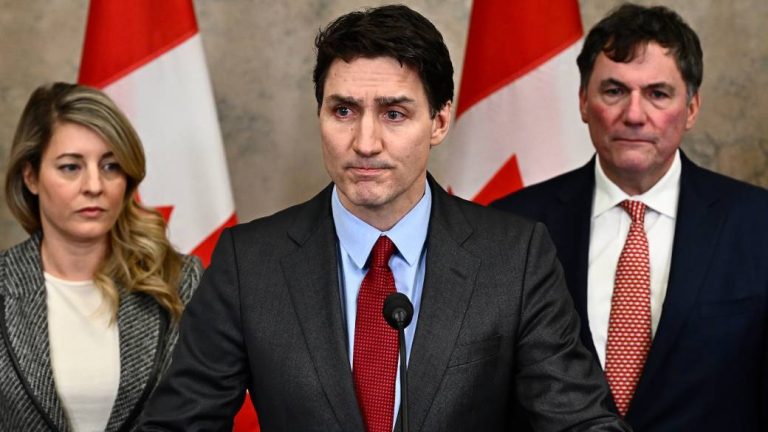
Unlike larger economies such as China or the European Union, Canada does not have the economic or political leverage to engage in a prolonged trade war with the United States. This makes Trudeau’s response not only impractical but also strategically flawed. If Canada had approached the situation differently—through diplomacy, economic realignment, and targeted negotiations—the outcome could have been more beneficial.

Read MoreCanada’s Strategic Misstep: Why Trudeau’s Retaliatory Tariffs Were a Costly Mistake and How Canada Can Recover