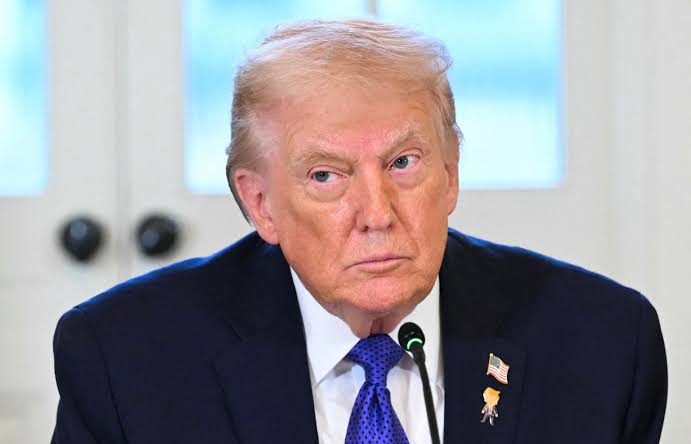
Trump Can’t Take Greenland – and the World Knows Why

Any attempt by the United States to annex Greenland would collapse under its own contradictions. Washington cannot credibly defend Ukraine’s borders, threaten war over Taiwan’s sovereignty, and simultaneously flirt with territorial acquisition from a NATO ally. Such a move would not signal strength but moral exhaustion, eroding the very principles that give U.S. power global legitimacy. In a rules-based order the U.S. designed, restraint—not expansion—is what sustains leadership.

Read MoreTrump Can’t Take Greenland – and the World Knows Why

The Fragmentation of Western Politics 

Western politics is fragmenting as unilateral power eclipses post-WWII cooperation. Assertive US interventions, from Venezuela to Greenland, expose weak international enforcement and embolden rival powers. Europe faces alliance uncertainty, rising nationalism, and economic coercion while NATO’s credibility strains. The precedent of unchecked interference risks normalising ‘might makes right,’ encouraging China and Russia to test boundaries. Without renewed collective security and democratic oversight, Western cohesion erodes, reshaping global stability and accelerating a volatile, multipolar order under growing strategic mistrust worldwide today.

Read MoreThe Fragmentation of Western Politics 

EU–Mercosur: A Win–Win Partnership in an Era of Strategic Uncertainty

After more than two decades of negotiations, the EU–Mercosur Agreement creates one of the world’s largest free trade areas, connecting over 700 million consumers. It offers Mercosur preferential access to the EU’s high-income market for agri-food and bioeconomy exports, while providing the EU improved access to Mercosur markets for industrial goods, machinery, automobiles, and services. This structural complementarity drives mutual gains rather than zero-sum competition, enhancing economic resilience, investment flows, and supply-chain diversification for both partners in a fragmenting global order.

Read MoreEU–Mercosur: A Win–Win Partnership in an Era of Strategic Uncertainty

Who Checks Trump? Who Checked the U.S.?

The U.S. capture of Nicolás Maduro marks a dangerous rupture in global governance. By openly declaring its intent to “run” Venezuela, the United States has crossed from influence into occupation, undermining the very rules-based order it once championed. For Africa and states like Ghana, the message is stark: sovereignty is now conditional, and unchecked power—not law—risks becoming the new global norm.

Read MoreWho Checks Trump? Who Checked the U.S.?

U.S. Capture of Nicolás Maduro and the Inception of a New, Volatile Foreign Policy Doctrine

The U.S. capture of Nicolás Maduro marks a watershed in global politics: a shift from rules to raw power. Framed as law enforcement by United States under Donald Trump, the operation signals a new doctrine of unilateral regime removal tied to strategic resources. The immediate prize is Venezuelan oil; the long-term cost is a destabilized international order, where sovereignty becomes conditional and retaliation increasingly likely.

Read MoreU.S. Capture of Nicolás Maduro and the Inception of a New, Volatile Foreign Policy Doctrine