Reimagining Nigeria’s Business Environment for Inclusive Growth

Nigeria’s private sector holds immense potential, but systemic frictions—regulatory inefficiencies, infrastructure gaps, and weak contract enforcement—continue to limit growth. This report offers a structural assessment of the business environment across five critical pillars, highlighting the urgent need for institutional reform. While recent policy efforts show intent, deeper, systemic change is required to unlock investment, drive innovation, and position the private sector as a key engine of national development. The time for coordinated, transformative reform is now.

Read MoreReimagining Nigeria’s Business Environment for Inclusive Growth

Strategic Partner or Dominant Power? Rethinking U.S. Influence on NATO’s Consensus Model

For decades, intergovernmental military alliance NATO has held up its consensus-based decision-making as proof of its democratic values. A system where every member has an equal voice and consensus dictates agreement through unity. Yet, as the dominant military and financial contributor, the influence of the United States has always been apparent. In 2025, does that influence increasingly override collaborative negotiation?

Read MoreStrategic Partner or Dominant Power? Rethinking U.S. Influence on NATO’s Consensus Model

Monthly Geopolitical Policy Brief – July 2025 Edition

This edition of the Monthly Geopolitical Policy Brief explores pivotal developments reshaping the global policy landscape—from Syria’s $800 million Tartous Port deal to landmark privacy and AI legislation in the United States and European Union. With insights on Africa’s continental agrifood framework and Gulf re-engagement in the Levant, this brief offers diplomats, policymakers, and business leaders timely intelligence on emerging regulatory paradigms and strategic power shifts across regions. Essential reading for future-focused decision-making.

Read MoreMonthly Geopolitical Policy Brief – July 2025 Edition

Are African Economies Prepared for a Global Trade Reordering Driven by U.S. -China Decoupling?

As the U.S.–China economic decoupling redefines global trade, Africa faces a critical inflection point. The continent must either seize emerging supply chain opportunities or risk deeper marginalisation. This dispatch lays out a strategic readiness agenda—from industrial zoning to smart trade defence—aimed at positioning Africa within the evolving global trade order.

Read MoreAre African Economies Prepared for a Global Trade Reordering Driven by U.S. -China Decoupling?

Ursula von der Leyen’s Multiannual Financial Framework Gamble

On 16 July, Ursula von der Leyen unveiled a bold EUR 2 trillion budget proposal for the EU’s 2028–2034 Multiannual Financial Framework. Aiming to shift priorities toward competitiveness, defence, and strategic investment, the plan marks a significant departure from traditional focuses like agriculture and cohesion. While it reflects her vision of a stronger, more centralised EU, the proposal has triggered internal dissent and sparked backlash from member states. The battle over Europe’s future direction is now firmly underway.

Read MoreUrsula von der Leyen’s Multiannual Financial Framework Gamble

The Big Beautiful Bill: Domestic Vision, Global Ripples

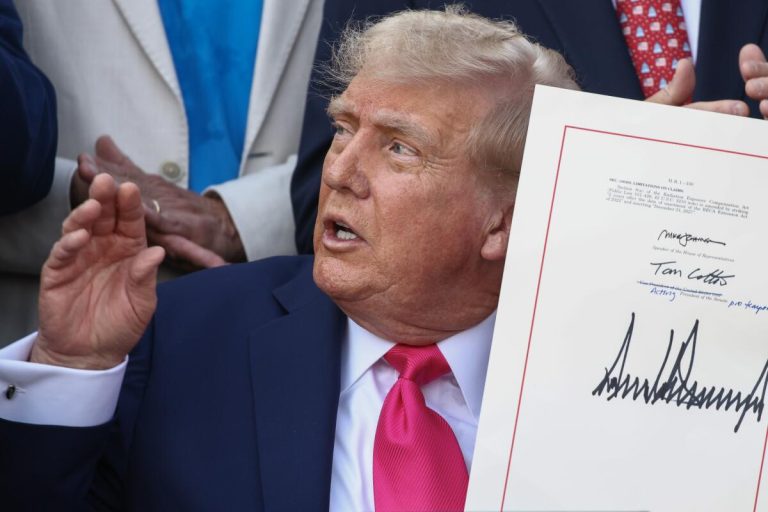
Donald Trump’s “Big Beautiful Bill,” passed on July 4, 2025, delivers sweeping tax cuts and boosts defense and immigration enforcement, but faces sharp criticism over its impact on debt and social safety nets. While the administration touts economic benefits, the bill reallocates Medicaid and SNAP funding to states and imposes new work requirements. Internationally, Trump’s tariff strategy—especially on countries like South Africa—raises economic uncertainty. The bill marks a bold, polarising vision with far-reaching domestic and global implications.

Read MoreThe Big Beautiful Bill: Domestic Vision, Global Ripples

Britain and Germany Cement a New European Defence Order

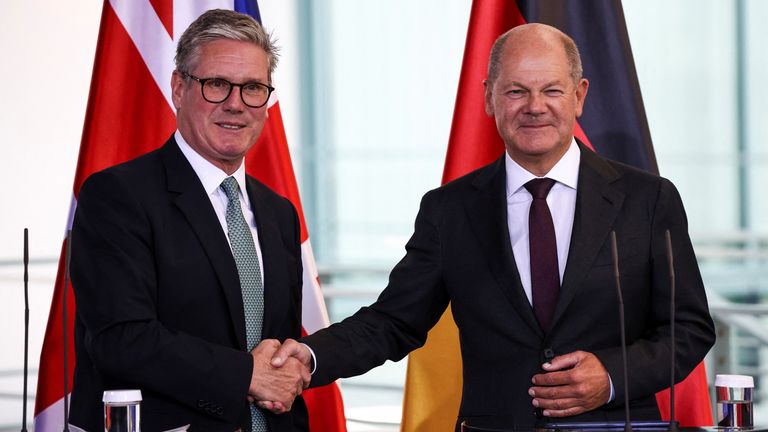
The UK-Germany defence pact, first signed in 2024, is evolving into a landmark mutual defence treaty with global implications. Anchored in joint missile development, industrial integration, and space cooperation, it signals a new model of European defence leadership. As Britain and Germany deepen their partnership, alongside growing trilateral coordination with France, this agreement reshapes Europe’s strategic landscape—advancing autonomy while reinforcing NATO. The upcoming July 2025 treaty marks a pivotal shift from reactive defence to purposeful, future-driven military architecture.

Read MoreBritain and Germany Cement a New European Defence Order

Europe’s Trade Reboot: From Liberal Idealism to Strategic Geo-Economics 

Europe’s trade model is undergoing a seismic shift—from liberal idealism to strategic geo-economics. As global power rivalries reshape economic flows, the EU must reforge trade policy as an instrument of statecraft, aligning it with security, resilience, and influence. The age of values-driven trade is ending; purpose-driven trade must begin.

Read MoreEurope’s Trade Reboot: From Liberal Idealism to Strategic Geo-Economics 

The Last Days of the Nation-State: How Corporations Are Building the Next Global Order 

As governments falter under the weight of debt, disruption, and declining legitimacy, corporations are quietly stepping in—not just to influence the global order, but to construct a new one altogether. From private satellite constellations to platform-enforced speech, a corporate architecture of power is emerging with little democratic oversight. This dispatch traces the end of traditional sovereignty and the rise of algorithmic governance—and asks whether the public still governs the public sphere.

Read MoreThe Last Days of the Nation-State: How Corporations Are Building the Next Global Order