The Real Cost of Trump’s Strategy: America’s Reckoning with Power and Consequence
Donald Trump is not playing politics as usual. His strategy is clear: dismantle globalist entanglements, put America first, and force the world to operate on terms favorable to the United States. It is a bold, unrelenting push to restore dominance.

Donald Trump is not playing politics as usual. His strategy is clear: dismantle globalist entanglements, put America first, and force the world to operate on terms favorable to the United States. It is a bold, unrelenting push to restore dominance. But what is the real cost? Not the surface-level tariff debates or diplomatic disputes, but the fundamental price America will pay for pursuing his vision.
Trump’s strategy carries an undeniable burden of consequence—one that will test the limits of America’s economic resilience, its global alliances, and even its own internal unity.
The Price of Dominance: A World Recalibrating Against the U.S.
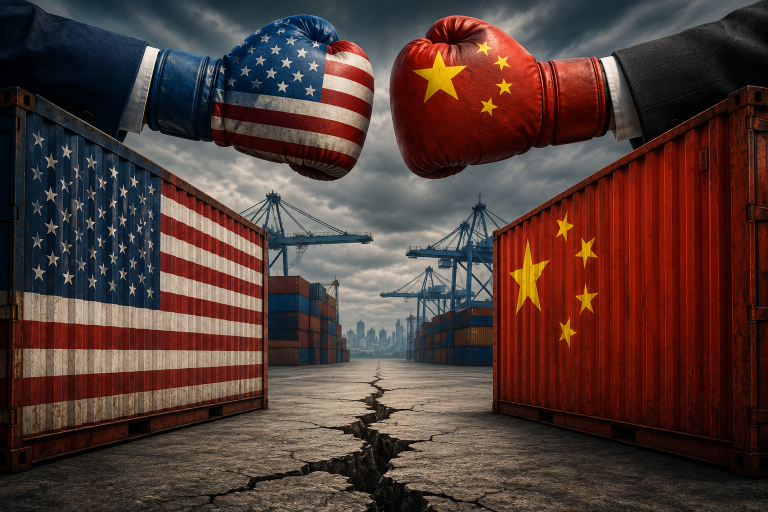
For decades, America has relied on a network of alliances—NATO, free trade agreements, security pacts—to project its power with minimal direct confrontation. Trump is tearing that model apart, replacing it with a transactional approach to global power. He demands that allies pay their fair share, that trade partners accept unfavorable terms, and that rivals like China and Russia submit to economic and diplomatic pressure.
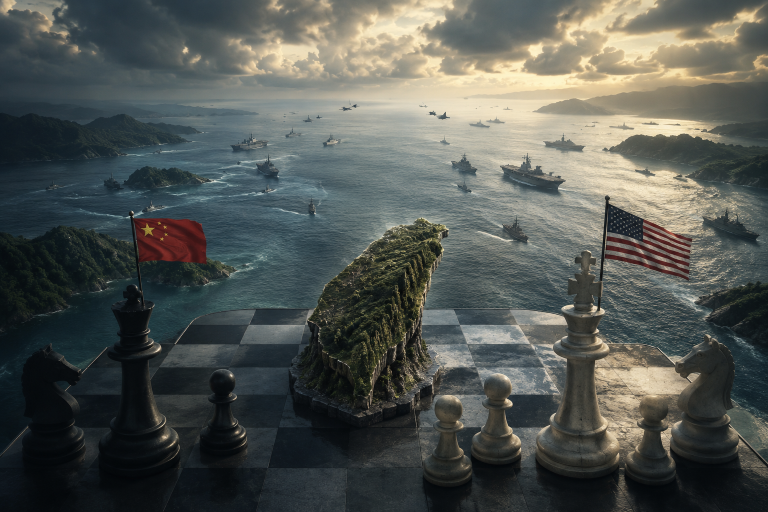
But power vacuums don’t stay empty for long. As America withdraws from its role as the world’s stabilizer, others step in. Europe, long reliant on American leadership, is now questioning whether it should forge its own path. China is aggressively expanding its global influence, signing trade deals that exclude the U.S., and cementing its dominance in Africa and Asia. Russia, benefiting from Trump’s recalibrated focus, is tightening its grip over former Soviet territories.
The cost? The long-term erosion of American influence. A world that moves forward without needing U.S. leadership is a world where America is no longer the global superpower it once was.
The Price of Economic Warfare: Can America Withstand the Shock?
Trump’s economic war against China, Europe, and even Latin America is meant to revive American industry and reduce dependence on foreign manufacturing. Tariffs, supply chain realignment, and immigration restrictions are all part of a broader economic nationalism aimed at making America self-sufficient.
But here’s the reality: economies don’t shift overnight. Manufacturing jobs don’t return instantly. Supply chains don’t realign without severe disruptions. The immediate cost of Trump’s policies will be higher consumer prices, supply shortages, and inflation—all of which could hurt the very middle-class Americans who form his base.
Even if these policies succeed in the long run, the short-term economic pain could be staggering. Will American consumers tolerate a recession in pursuit of Trump’s economic vision? Will businesses accept years of uncertainty while waiting for the promised resurgence of American industry?
The cost? Potential economic instability, with small businesses and consumers bearing the brunt of the transition.
The Price of Political Chaos: A Nation Divided, A Government in Flux
Trump thrives on division. He sees polarization not as a weakness but as a strategy. His policies on immigration, social programs, and law enforcement are designed to mobilize his base while enraging his opponents. This is not accidental—it is a deliberate reshaping of American politics into a battle between those who embrace his America First vision and those who reject it.
But at what cost? America is more divided than at any point in modern history. The country is now so deeply polarized that even basic governance is nearly impossible. Protests, civil unrest, and widespread political distrust are the inevitable consequences of a government that no longer functions on consensus but on conquest.
The cost? A fractured nation, where political opposition is no longer about policy differences but about existential survival.
The Ultimate Cost: America’s Gamble on Trump’s Vision
The real cost of Trump’s strategy is that America is now gambling with its future. If his vision succeeds, the country could emerge stronger—economically independent, globally dominant, and politically reshaped in his image. But if it fails, the damage could be irreversible.
The economy could suffer lasting instability. America’s global alliances could crumble beyond repair. Internal divisions could deepen to the point where national unity itself is at risk.
This is the price of Trump’s strategy: a high-stakes gamble where the cost of failure is America’s standing as the world’s leading power. Whether history will judge it as a necessary transformation or a reckless dismantling remains to be seen. But one thing is certain—Trump’s America is not the America of the past, and the cost of that transformation is yet to be fully realized.
Dr Brian O Reuben is the Executive Chairman of the Sixteenth Council