
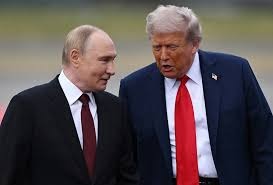
Trump-Putin summit ends without material changes
The Trump–Putin summit in Alaska ended without progress on a ceasefire, underscoring the entrenched positions of both leaders. While Trump hailed the meeting as a success, little substance emerged beyond vague promises of future talks. Putin, however, gained symbolic victories—international recognition and time to advance Russia’s offensive in Ukraine. With Zelensky absent, peace remains distant and fragile. Europe now faces the task of pressuring both Washington and Moscow to sustain support for Kyiv and keep prospects for a fair settlement alive.

The summit
US president Donald Trump and Russian president Vladimir Putin met in Alaska to discuss a potential peace deal to bring an end to the Russia-Ukraine conflict. This marks another attempt, of many, to negotiate a ceasefire or a lasting peace in Ukraine, as of now these attempts have all failed. This summit has continued this trend, being considered a failure by most analysts, and is further proof of President Trump’s inability to make any tangible progress with Putin and produce a deal. This is likely due to Putin’s assertion that no deal will be possible until Russia’s security guarantees are also assured and the ‘root cause’ of the conflict tackled. This so-called root cause references a range of excuses Russia has produced for the war, including assertion Ukraine is controlled by neo-nazi’s, and NATO encroaching into Russian security space. With the legitimacy of these causes constantly in question by the west, undoing them is likely, by design, an impossible task.
The summit followed a similar blueprint to previous, ceasefire talks were discussed, conditions thrown around, with Trump ultimately claiming it was a success, and that he and Putin got on well, Despite Putin not staying for lunch and quickly jetting off. The key result of the summit is Trump’s plan to set up a meeting between Ukrainian president Voldymyr Zelensky and Putin, and likely himself. Despite this Putin seems to have come away unchanged, sticking to his narratives on the causes of the war, and hitting back at meddling Europeans who he does not want Trump consulting. Apart from the optics, it seems little to no progress was made in areas such as the ownership of occupied land, which will be a hot topic issue in any ceasefire or peace talks, as neither state will likely return the land seized in the years of fighting.
Putin’s victories
With little change in the material aspects of the war, this summit has gifted Putin with two main wins, reputation and time. Putin was welcomed with respect and honour on US soil, treated as a foreign dignitary rather than an alleged war criminal, making himself look strong and the US pandering. Alongside this the lack of ceasefire allows Putin to continue his summer offensive in Ukraine. Putin’s offensive has not been a compressive success, however they have made a lot of progress in one region, around the town of Dobropillya, where Russian troops advanced 10km in a very short period, likely spurred on by the summit. These advancements, whilst not decisive victories for Russia, highlight the nature of a war of attrition. Russia continues to make inroads as Ukraine continues to struggle in the face of superior manpower. As the conflict is dragged out, Russia slowly gains the upper hand purely based on the overwhelming size of their manpower reserve.
The future
With the outcome of the summit unclear, Ukraine will be happy that there is not a peace deal brokered without their input they would have to contest or swallow. However, peace remains in a liminal space, with the conflict no closer to a close. Going forward Zelensky’s involvement in peace talks will be significant and necessary step towards a conclusion. Beyond peace talks, Trump continues to threaten new sanctions on Russia, showing that talks could not have gone as well as he previously stated. Likely Trump is becoming frustrated with his inability to influence Putin and bring about a peace deal, meaning his time siding with Putin over his own European allies may be ending.
Europe must continue their support of Ukraine, pressuring Trump to do so as well. Now is an opportunity for Europe to regain Trump’s support, push for more sanctions and aid for Ukraine. Russia has suffered economically since the war began, and continued pressure could bring them to the table to broker a fairer peace.
Riya Kothavale is a fellow at the Asia Program of the Sixteenth Council


Trump Can’t Take Greenland – and the World Knows Why