Global Policy Intelligence Unit

Global Policy Intelligence Unit

Hedging or Heading Away? The Quiet Drift of US Allies Toward China

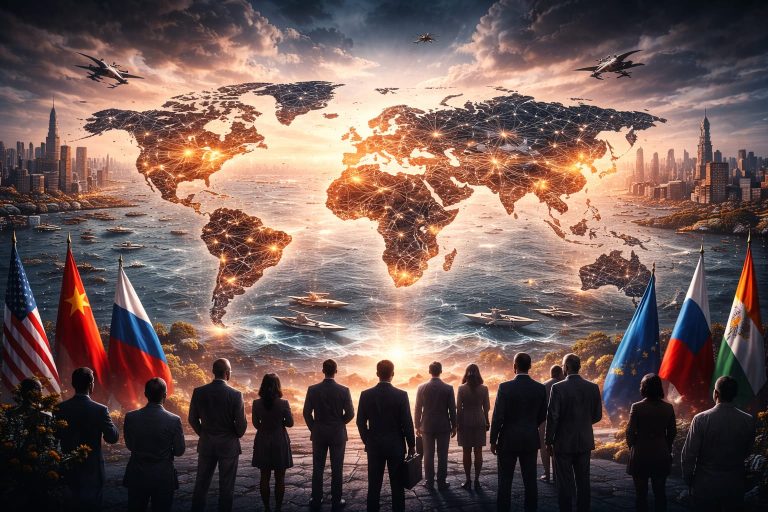
US allies are quietly recalibrating their relationships with China, exploring economic and technological partnerships while maintaining security commitments to Washington. This hedging reflects pragmatic flexibility rather than outright abandonment, but signals a growing multipolar reality. Europe and Asia are diversifying trade, infrastructure, and tech ties with Beijing, testing limits of US influence. The trend highlights a critical choice for Washington: adapt to conditional loyalty and shared influence, or risk incremental erosion of its global primacy as allies hedge for security and opportunity

U.S. Capture of Nicolás Maduro and the Inception of a New, Volatile Foreign Policy Doctrine

The U.S. capture of Nicolás Maduro marks a watershed in global politics: a shift from rules to raw power. Framed as law enforcement by United States under Donald Trump, the operation signals a new doctrine of unilateral regime removal tied to strategic resources. The immediate prize is Venezuelan oil; the long-term cost is a destabilized international order, where sovereignty becomes conditional and retaliation increasingly likely.

2026 Geopolitics: Power Without Dominance

Geopolitics in 2026 is defined by power without dominance. Major states retain significant military and economic capacity, yet lack the ability to impose durable outcomes unilaterally. Strategic competition has shifted toward chokepoints in technology, energy, and finance, while unresolved conflicts are increasingly managed rather than resolved. Fiscal constraints, alliance recalibration, and regional power assertion are reshaping global behaviour, producing a fragmented international system marked by calibrated escalation, persistent friction, and heightened strategic uncertainty.

Global Trade in 2025: From Efficiency to Power

By 2025, global trade stopped pretending to be neutral. Efficiency gave way to resilience, markets to strategy, and institutions to power. Shipping routes, carbon rules, currencies, and data flows became tools of statecraft rather than technical details. Trade did not collapse; it realigned around security and political trust. The era of frictionless globalization ended quietly, replaced by a world where who you trade with now matters as much as what you trade.

Global Order Under Strain: The Major Foreign-Policy Shocks of 2025

2025 exposed a global order under strain, defined less by decisive realignments than by accumulating shocks. U.S.–China economic confrontation became visibly symmetric, conflict mediation in Ukraine and the Middle East lost credibility, and regional actors assumed security roles once held by global powers. Trade routes, supply chains, and deterrence norms all proved fragile. The year underscored a central reality: major powers retain ambition, but their ability to enforce outcomes is increasingly constrained, producing a more volatile and contested international system.

Economies to Watch in 2026

The global economy entering 2026 is no longer governed primarily by growth cycles, but by strategic stress. Fiscal exhaustion in advanced economies, geopolitical fragmentation, energy realism, and uneven technological diffusion are reshaping economic outcomes. The most consequential economies in 2026 will not be those expanding fastest, but those sitting at critical inflection points—capable of transmitting shock, absorbing volatility, or redefining alignment. Economics has become an instrument of power, constraint, and contest.

Syria’s Tartous Gamble: UAE’s $800 Million Bet on a Port in the Eye of the Storm

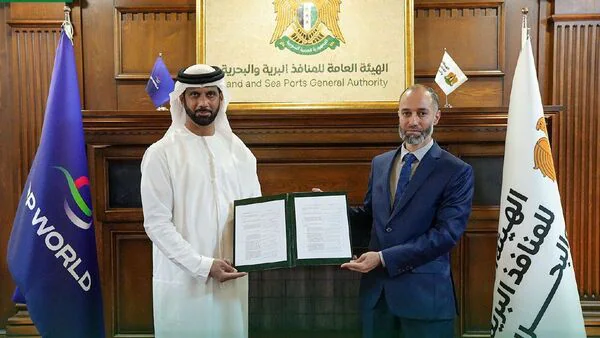
The $800 million UAE–Syria deal to redevelop Tartous port positions the site as a potential East Mediterranean logistics hub linking Asia, Europe, and Africa. Operated by DP World, the project could revitalise Syria’s economy and integrate it into regional trade. Yet deep instability, sanctions, and the port’s dual role as a Russian naval base complicate execution. Without security and political breakthroughs, Tartous risks becoming another unrealised infrastructure vision — rich in promise, poor in delivery.

Baghdad–Erbil Oil Accord: Tactical Convergence Under Strategic Uncertainty

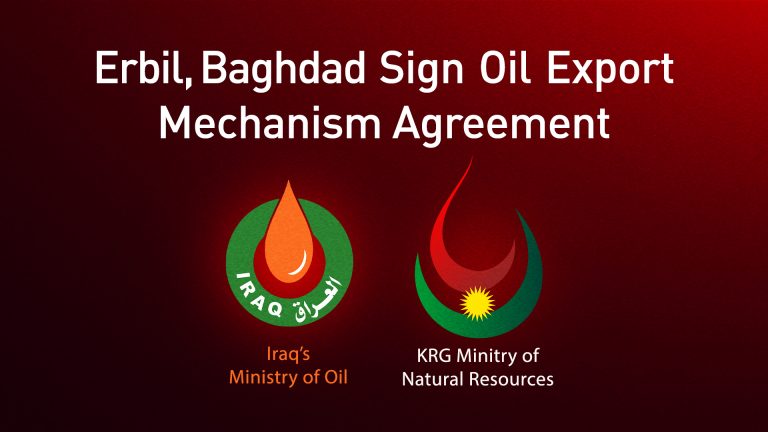
The Baghdad–Erbil oil accord marks a tentative step toward stabilising Iraq’s fractious energy politics. Under the deal, the Kurdistan Regional Government will channel all crude exports through SOMO, receiving $16 per barrel, while a joint audit team reviews revenues and federal entitlements. The KRG has also transferred salary lists and 120 billion dinars to Baghdad. Yet, unresolved issues over future oil contracts and delayed public salary payments underscore that implementation, not signature, will determine whether this agreement becomes a durable framework or another fragile truce.

Italy’s Migration Crossroads: Redefining Europe’s Southern Frontier

Italy is recalibrating its migration strategy through a dual track: expanding legal work visas to offset a shrinking workforce while tightening maritime deterrence along the central Mediterranean. Offshore asylum centres in Albania aim to separate arrival from entry rights, though EU divisions and Libya’s fragmented politics strain coordination. If courts uphold the model, it could redefine Europe’s southern frontier; if not, Italy risks renewed arrival surges, humanitarian strain, and deepened fractures in EU solidarity on migration policy

Ethiopia’s Regional Influence and Nile Politics

As global power dynamics shift, infrastructure sovereignty is emerging as a decisive frontier of national strategy. From AI regulation to data localization and critical supply chains, states are reasserting control over foundational systems. This Strategic Dispatch explores how these developments are redefining geopolitics and what they mean for long-term competitiveness, security, and influence. For policymakers and corporate leaders alike, navigating this terrain requires a strategic recalibration—one grounded in foresight, coordination, and a sober understanding of evolving global realities.