

Growing Pains of BRICS: Expansion Tests Unity and Purpose
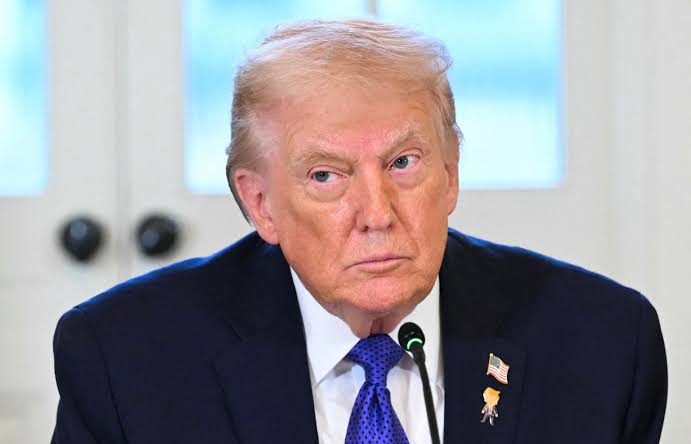
The recently convened BRICS foreign ministers' meeting in April 2025 failed to issue a joint statement on the bloc’s response to the United States’ protectionist trade policies under President Donald Trump. While the grouping has lofty ambitions to credibly represent the Global South, there are lingering doubts whether the organisation is wavering in establishing a unified direction and purpose with an expanded membership.

Introduction
The recently convened BRICS foreign ministers’ meeting in Rio de Janeiro held on April 29, 2025, discussed the bloc’s response to the United States’ trade policies under President Donald Trump. Given that the group welcomed new members in the last three years, the fact that this meeting concluded without a joint communique being issued has hinted at the challenges that await the international organisation in terms of unifying its members’ diverse national interests. While Brazil, as the host country, issued a statement condemning the current U.S. administration’s protectionist trade practises, a joint statement by the bloc would only likely be finalised at the BRICS summit in July 2025.
Emerging Powers in a Changing World
Originally an acronym for the emerging economies of Brazil, Russia, India, China, and South Africa, BRICS has carved a space for itself on the international stage as a significant geopolitical and economic alliance. The concept of BRIC was first coined by economist Jim O’Neill in 2001 to describe fast growing states that would lead the global economy in the 21st century. This idea came to be widely recognised and in 2006, the foreign ministers of Brazil, Russia, India, and China met informally on the sidelines of the UN General Assembly in New York. Formally, BRIC was instituted and its first summit held in Yekaterinburg, Russia in 2009. In 2010, South Africa joined and brought an African voice into the group. Together the five states encompass not only a substantial portion of the world’s population and landmass, but also a large percentage of the Gross Domestic Product (GDP) per capita. According to World Economic Forum statistics, as of 2024, BRICS countries are home to roughly 3.3 billion people (over 40% of the global population) and possess an estimated 37.3% of GDP based on purchasing power parity.
At the 15th BRICS Summit held in Johannesburg, South Africa, in August 2023, the group took the first step towards expansion and invited six new states to join. Out of these six states, Argentina bowed out due to a change in its home government, while the other five countries officially became extended BRICS members. These are Egypt, Ethiopia, Iran, Saudi Arabia and the United Arab Emirates (UAE). This expansion of BRICS has marked a new phase for the organisation that accounts for shifting global geopolitical dynamics and emphasises the need for inclusivity and South-South cooperation. Adding representation from the Middle Eastern region of the world is aligned with the cause of BRICS to act as a counterbalance to the Western-dominated financial institutions and global power structures
Impact of the Expanded Membership
The expansion of BRICS was motivated by several geopolitical considerations:
- Economic Diversity:
As the group builds up to exert significant influence in global economic discussions, including major economies from the Middle East and Africa as member states help to broaden trade and investment opportunities that the organisation can generate. As two of the world’s largest oil producers, Gulf states of Saudi Arabia and the UAE, give the bloc a leverage in global energy markets, potentially enabling coordinated policies on energy pricing and supply. These wealthy states also bring in investment potential to infrastructure and development projects across the Global South. Including a state like Iran, which has been at the receiving end of the U.S.-led sanctions and political isolation, adds to the narrative of the group challenging established institutional dominance by Western powers.
- Counterweight to Western Institutional Dominance:
The bloc poses itself as an alternative to Western-led financial institutions like the International Monetary Fund (IMF) and the World Bank. While the existing global institutional mechanisms do ensure monetary cooperation and provide financial assistance to smaller economies, they also sustain the status quo by keeping Western economies at the helm of decision making. BRICS aims to reform this global structure and to include upcoming economies in decision making processes. Hence, as the IMF and World Bank follow a weighted voting system based on the financial contributions that member states make to these international organisations, BRICS functions with consensus-based democratic decision-making processes among its members.
- Strengthening South-South Cooperation:
As the bloc has now expanded to include states like Ethiopia and Iran- that are otherwise underrepresented in global forums or even at the receiving end of economic seclusion and sanctions by the U.S. like in the case of Iran- their inclusion aligns with BRICS’ goal of creating a more equitable international order. As the developing states are made to contend with limited participation in West-led institutions, despite representing a large size of population or GDP, initiatives by more equitable organisations such as BRICS reinstitute inclusivity and multipolarity, and bring back the agency of smaller powers in coordinating policies and shaping global norms and rules.
Today BRICS has emerged as a robust international coalition striving to reshape global governance and the inclusion of five new members reflects its willingness to evolve with time and remain committed to ensure inclusive distribution of power in a balanced and representative international system.
BRICS at the Crossroads
BRICS is now larger in number in terms of membership, but it remains to be seen whether it has grown stronger through inclusion or diluted its effectiveness through overreach.
Some of the best accomplishments of BRICS include:
- Creation of the New Development Bank (NDB):
Launched with an initial capital of $100 billion in 2015 and set up under the aegis of BRICS, the NDB is part of alternative financial mechanisms, in addition to the Contingent Reserve Arrangement (CRA). Together, both initiatives support finance infrastructure and sustainable development projects among emerging economies. Unlike institutions like the IMF and World Bank, the NDB’s loans do not come with strings attached and do not impose policy conditionalities on loan recipients.
Perhaps the most successful creation under BRICS, NDB supports the main goals of the organisation by offering an alternative development model that stands for equality, national sovereignty and mutual respect. In April 2020, the bank instituted an Emergency Assistance Facility to support its member countries in their fight against the global epidemic of Coronavirus and targeted to provide up to $ 10 billion for the cause. In the year 2024, the bank has approved the following loans, among others:
– $1 billion to South Africa for the development of water and sanitation infrastructure.
– $281.5 million to support the modernisation and improvement of South Africa’s freight rail sector.
– $700 million worth of loans to boost transportation, water, and sanitation infrastructure in India.
– First non-sovereign loan agreement providing $50 million to the Bank of Huzhou, China.
- Challenging the Global Financial Order:
BRICS has consistently advocated for reforming the outdated nature of post-World War II power structures. One of the most ambitious undertakings of the organisation is its agenda of ‘de-dollarisation’, challenging the dominance of the U.S. dollar in international trade and finance. This is meant to bring down the considerable power that vests in the dollar which allows the U.S. to exert undue financial influence over international trade, and impose unilateral monetary sanctions, at whose receiving end have been BRICS members Russia, China and Iran. As part of its long-term strategy to promote financial multipolarity, BRICS members have taken the following steps:
– The member states have started signing trade agreements in their domestic currencies.
– Established cross-border interbank payment systems like China’s CIPS (Cross-Border Interbank Payment System)
– Established financial messaging systems like Russia’s SPFS (System for Transfer of Financial Messages)
– Discussed developing a common BRICS currency to be known as ‘BRICS coin’.
Some of the challenges confronting BRICS include:
- Lack of institutional mechanisms:
If BRICS envisages itself to turn into an effective global force, it has to match the permanent institutional structures and legal frameworks that exist in other multilateral organisations, yet:
– It has no permanent secretariat or central administrative body that can manage day to day activities.
– There is no overarching body to implement policy enforcement mechanisms, and therefore no binding compliance to enforce resolutions.
– While there is space for policy discussion, the lack of bureaucracy hinders the follow-through and implementation of policy decisions.
– Annual summits are dependant on priorities set by the host country, lacking policy continuation between successive summits.
– Participation, till recently, has been limited to founding members and has a long way to go to involve more members and establish a credible South-South representative bloc.
- Lack of Strategic Unity:
As the membership expands, keeping the bloc cohesive and strategically united will be a challenge towards generating consensus, and to prevent BRICS from degenerating into a symbolic platform rather than an action-oriented coalition. Some contradictions to a cohesive structure include:
– Founding members China and India have tense border disputes and a history of competing interests as they are two of the major upcoming powers in their region of the world.
– The inclusion of authoritarian regimes like Iran, China and Russia, alongside democracies like India, Brazil, South Africa as a group lacks inherently similar political values and ideological foundation.
– Political diversity could lead to greater fragmentation and ideological incoherence could result in a diluted agenda.
These contradictions and divergent interests have stymied efforts to present a unified stance on major global issues, the most recent example of which is the failure to reach a unified stand and issue a joint communique at the 2025 foreign ministers’ meeting.
Stronger or Weaker?
While there is strength in numbers and the relevance of any international organisation is gauged by its large membership and participation, an expanded membership cannot be at the cost of strategic coherence and operational effectiveness. The group’s ambition to counterbalance Western influence is a lofty one and hinges on its own members being united on core principles. The inability to produce joint statements on critical global issues undermines a show of unity and reflects upon the challenge of striving to align diverse national interests under a common purpose. A stronger BRICS with greater geopolitical participation would require institutionalisation of decision-making processes, a clearly defined mission, and mechanisms to manage internal disputes. So far, these remain elusive.
Dr. Shivani Yadav is a non-resident research fellow at the America Program of the Sixteenth Council

Critical Minerals and the Green Transition: Europe’s New Dependency Risk