Are We Witnessing the End of the Neoliberal World Order?
President Trump’s “Liberation Day” on April 2, 2025 will be remembered as a day that shook the financial world. American stock markets shed nearly $5.4 trillion within 48 hours of the tariff announcements, causing panic among investors worldwide. Despite receiving multiple calls and messages from people predicting complete financial meltdown and watching the media frenzy

Introduction
President Trump’s “Liberation Day” on April 2, 2025 will be remembered as a day that shook the financial world. American stock markets shed nearly $5.4 trillion within 48 hours of the tariff announcements, causing panic among investors worldwide. Despite receiving multiple calls and messages from people predicting complete financial meltdown and watching the media frenzy, I argue for a more measured response. This article is my attempt to cut across the clamor surrounding the recent developments and looking at the big picture. I will thus refrain from commenting on whether tariffs were the right policy. Instead, this article will analyze what they mean for America’s position in the global political economy, the broader geoeconomic implications of these tariffs, and effects on the neoliberal world order.
I argue that the chaos in global stock markets only tells a partial story. As British economist John Maynard Keynes postulated through his ‘animal spirits’ assertion, investor decision-making, especially in times of uncertainty, is influenced by behavioral factors. Instead, changes in macroeconomic fundamentals provide a more concrete foundation for analyses as the dust settles. At a deeper structural level, I assert that the United States is moving away from its position as the guarantor of the international rules-based neoliberal order. It is evident that the Trump administration sees little benefit in remaining a global provider of public goods such as financial stability and international security, a defining feature of a hegemon in the international system. Instead, there is a renewed focus on looking inward, evidenced by President Trump’s claims of the United States being taken advantage of by other countries across various sectors. While he might want the United States to remain the dominant politico-economic force in the world, his administration is certainly unhappy with the costs that accompany global hegemony. Therefore, the Trump administration’s protectionist stance is likely to only become stronger as it moves away from the globalist neoliberalism historically championed by the United States, to a more transactional and mercantilist approach to foreign relations featuring a greater focus on nationalist economic policies favoring the minimization of trade and current account deficits.
Is the United States Treated Unfairly by its Trade Partners?
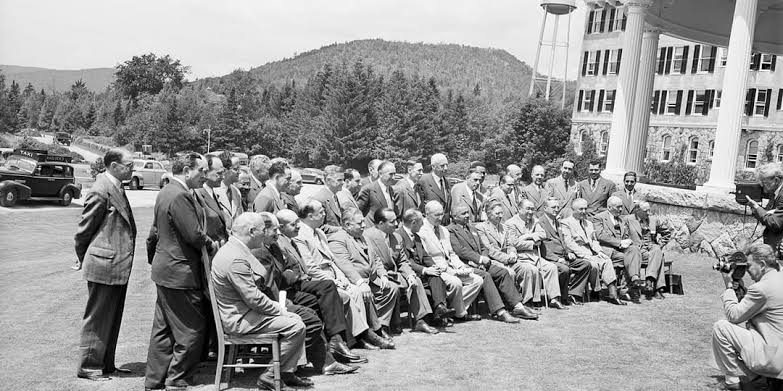
The United States has been the underwriter of the international political and financial system since the end of the Second World War, finding itself to be the world’s preeminent superpower in the aftermath of the conflict. It cemented its economic hegemony by expanding its influence in Europe through the Marshall Plan, and more globally through institutions such as the World Bank and the IMF. Often referred to as the ‘Bretton Woods Institutions,’ they reinforced the role of the dollar as the world’s reserve currency.
However, recent political opinion has moved away from the free trade and globalist ideals championed by these neoliberal institutions. A U.S Chamber of Commerce article, for instance, asserts that the international playing field is unfairly tilted against American stakeholders. This shift in opinion has precipitated from the rising costs of maintaining the entrenched post-war American hegemonic system, evidenced by rising trade deficits and ballooning public debt. Moreover, the world order has evolved significantly since the end of the Second World War, featuring the rise of powers such as China that have reduced the relative power advantage the United States enjoyed over other countries in the 20th century. These developments have encouraged the United States to adopt a more transactional approach to diplomacy and international trade. Now, interest-driven policies, including ‘America First’, advocate for burden sharing to split the costs of American hegemony equitably among participants of the international system. Interestingly, the new tariff regime introduced by President Trump on liberation day makes no exceptions for traditional American allies, raising questions about the sustainability of the Western-led international liberal order.
Geopolitical and Geoeconomic Implications
A receding United States catalyzes the emergence of multipolarity in the international system by creating power vacuums across regions. As stated before, the Trump administration is seeking to minimize the costs of maintaining a U.S-dominated unipolar world order that have only risen since countries such as China have bridged the economic and military gap to Washington. The newly introduced tariffs are part of the American toolkit to prolong American dominance while sharing burdens, for example by limiting free-riding. This has had profound impacts on historical American allies in regions such as Europe that so far relied on the United States to provide public goods including financial stability and security. The recent scramble among European countries to achieve self-sufficiency in critical industries such as defense evidences Brussels’ efforts to de-link from the now unreliable and inconsistent American security guarantees. Hence, countries dependent on the United States have had the carpet pulled from under their feet and must actively seek alternative partners to fill the void.
On the other hand, countries that have traditionally challenged the United States, particularly China, face a different set of opportunities and challenges. The recent wave of tariffs mean that Chinese exports to the United States are subject to a 54% levy. However, China finds itself with an unprecedented opportunity to expand its geopolitical and economic influence. However, Beijing can position itself as a ‘reliable partner’ in international political discourses to gain ‘diplomatic market share’ as countries seek to diversify their relations with the United States. On the economic front, China can benefit from American tariffs by finding new markets for its products, solving its industrial overcapacity problem especially in sectors such as solar panels, electric vehicles, and battery technology. Europe may be a primary target for Chinese products as Beijing looks for alternative export markets, bringing the two closer in the US-China-Europe triangle. However, Europe must not replace its vulnerable dependencies on the United States with those on China. Moreover, it may complicate an already complex relationship between Brussels and Beijing that traded tariffs on each other’s exports . This points to another significant risk for China: an all-out trade war with the United States which would cripple its already fragile economy. Therefore, both American friends and foes find themselves with unprecedented challenges and opportunities, and potential pathways should become clearer in the coming months.
American Economic Supremacy and the Future of Neoliberalism
While the tariff onslaught caused significant chaos in financial markets and dented confidence, the economic fundamentals of the United States seem robust enough to pull through in the immediate short-term. However, rising inflation and consequently high interest rates can create downward pressures on growth going forward. Employment remains strong as the United States added 228,000 jobs in March, a number surpassing past expectations. However, the figure only serves as a rear-view mirror for the labour market which will face uncertainties in the aftermath of the liberation day tariffs. These sentiments were echoed by Federal Reserve chair Powell, arguing that the central bank may have to tighten monetary policy if inflation rates rise. Parallelly, the role of the Dollar as the world’s reserve currency remains unchallenged, providing the United States with a unique advantage over other countries. Therefore, policy analysis must stem from changes in long-term macroeconomic fundamentals rather than myopic financial market analysis.
In the long term however, long supply chains may suffer due to the entrenched offshoring of production informed by neoliberal trade policies. The Trump administration’s discourse on the re-shoring of production in the United States seems to discount the complexity of value chains that stretch across the globe. These supply chains developed as countries developed comparative advantages in specific industries, including raw material exports. On the other hand, countries such as the United States benefited from importing these goods that were produced more efficiently by other countries to manufacture high-value goods of their own. For instance, the United States imports almost half of its aluminum from overseas but uses it to manufacture goods where it posses the advantage, such as aircraft and industrial engines. Manufacturers in these critical industries will have to maneuver themselves depending on the nature and duration of the newly imposed tariffs. Further, the deeply entrenched neoliberal value chains forming the backbone of the modern economy may be threatened as countries ratchet up protectionist tariffs in response to American levies, creating long-term repercussions on trade and growth. These risks may overshadow the currently strong economic fundamentals of the U.S economy, trapping it in a contentious trading environment.
Conclusion
President Trump’s Liberation Day tariffs have profoundly disrupted the global political economy, marking a clear shift away from America’s traditional role as the guarantor of the neoliberal international order toward transactional diplomacy and mercantilist economics. Allies are now compelled to seek alternative partnerships as American security and economic commitments become uncertain, while competitors such as China face both opportunities to expand geopolitical influence and heightened risks of escalating tensions. At a deeper structural level, these tariffs challenge established neoliberal globalization, potentially unraveling intricate global supply chains and redefining trade dynamics built upon comparative advantage. Ultimately, as the United States attempts to maintain its economic supremacy while minimizing the costs associated with global hegemony, the international community must respond strategically, embracing adaptation and cooperation to navigate the uncertainties of this evolving geoeconomic landscape.
Ishan Jasuja is a research fellow at the Sixteenth Council Asia Program