
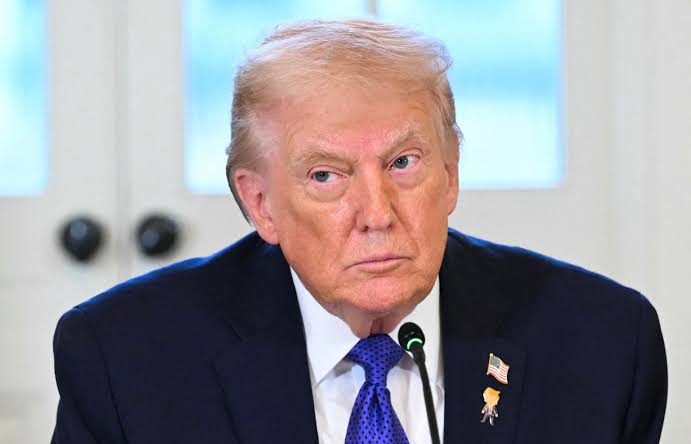
Trump Can’t Take Greenland – and the World Knows Why
Any attempt by the United States to annex Greenland would collapse under its own contradictions. Washington cannot credibly defend Ukraine’s borders, threaten war over Taiwan’s sovereignty, and simultaneously flirt with territorial acquisition from a NATO ally. Such a move would not signal strength but moral exhaustion, eroding the very principles that give U.S. power global legitimacy. In a rules-based order the U.S. designed, restraint—not expansion—is what sustains leadership.

Donald Trump’s claim that the United States will take Greenland “one way or the other” is not merely implausible; it is internally contradictory to the very strategic logic the United States has spent the last eight decades constructing. The idea collapses under historical precedent, alliance doctrine, moral positioning, and—most importantly—the United States’ own arguments in Ukraine and Taiwan. Greenland is not an isolated case. It sits at the intersection of America’s self-image as a defender of sovereignty and its temptation, under Trump, to revert to raw power politics. That contradiction is precisely why annexation is impossible.
History Is the First Constraint
The United States has expanded territorially before, but never in the modern international order it helped design. Alaska was purchased in 1867, long before self-determination became a governing principle of international law. The Philippines, Guam, and Puerto Rico were acquired in an imperial age the U.S. now officially disavows. Even those episodes remain morally uncomfortable footnotes in American history.
After 1945, the U.S. deliberately positioned itself as anti-annexation. It championed sovereignty, borders, and consent not out of altruism, but because stability served American power better than conquest. The UN Charter, NATO, Bretton Woods—these institutions were designed to freeze borders and channel competition away from territorial grabs.
Greenland sits firmly inside that post-1945 architecture. Any attempt to annex it would not be a continuation of American history; it would be a repudiation of it.
Ukraine Makes Greenland Impossible
The U.S. position on Ukraine is unambiguous: borders cannot be changed by force, and sovereignty cannot be overridden by power. Washington has invested hundreds of billions of dollars, vast diplomatic capital, and real escalation risk to defend that principle against Russia.
Annexing Greenland—even coercively—would destroy that argument overnight.
It would validate Moscow’s claim that sovereignty is conditional on strength. It would turn every American condemnation of Russian territorial revisionism into hypocrisy. The Global South, already sceptical of Western moral claims, would not need persuading; they would simply point to Greenland and stop listening.
No serious U.S. strategist believes America can afford that collapse of credibility while still trying to contain Russia.
Taiwan Is the Fatal Contradiction
The Greenland fantasy collapses completely when placed alongside Taiwan.
The core U.S. argument on Taiwan is that territorial acquisition by force—especially against the will of the population—is illegitimate, destabilising, and unacceptable, regardless of historical claims. This is the moral and legal basis on which the U.S. threatens war with China.
Now apply that logic to Greenland.
Greenland is not threatening the United States. Greenlanders have not requested annexation. Denmark is a U.S. ally. No historical grievance exists.
If the U.S. were to annex Greenland while warning China not to annex Taiwan, it would be arguing simultaneously that annexation is both intolerable and acceptable—depending on who does it. That is not strategic ambiguity; that is strategic incoherence.
China would weaponise that contradiction instantly. Every U.S. red line in the Indo-Pacific would become negotiable. Every Taiwanese reassurance would weaken. Washington would be asking others to fight for principles it had already abandoned.
A superpower cannot afford that kind of moral asymmetry.
The Real Cause: Anxiety, Not Strategy
The Greenland episode is not driven by necessity; it is driven by insecurity. The Arctic is opening faster than governance mechanisms can adapt. Russia is militarising its Arctic coastline. China is positioning itself as a “near-Arctic” power. The U.S. fears being out-manoeuvred in a region it once dominated by default.
Trump’s instinctive response to strategic anxiety is ownership. If you own it, you control it. That logic works in real estate. It fails in alliances.
The irony is that the United States already has what it needs in Greenland: basing rights, early-warning systems, and strategic depth. What it lacks is not access, but patience—and Trump mistakes impatience for strength.
Europe’s Weakness Is Not America’s License
It is true that Europe cannot defend itself without the United States. It is also true that NATO would struggle to function without American leadership. But dependence does not confer legitimacy. Protection is not ownership.
If the U.S. were to exploit European military weakness to coerce territorial outcomes, it would redefine alliances as protection rackets. That would not strengthen American power; it would hollow it out. Allies would comply publicly and hedge privately. Trust would evaporate. Influence would become transactional and brittle.
The U.S. has learned this lesson repeatedly—from Vietnam to Iraq. Trump’s rhetoric ignores it, but American institutions remember.
Why Annexation Fails Even Morally
Power alone does not sustain global leadership; restraint does. The United States’ greatest comparative advantage over its rivals has never been perfection, but credibility—the belief that it ultimately abides by the rules it enforces.
Annexing Greenland would signal that rules are optional when inconvenient. That message would echo far beyond the Arctic. It would reach Kyiv, Taipei, Warsaw, Seoul, and every small state that aligns with Washington not because it is strong, but because it claims to be just.
A United States willing to annex Greenland would no longer have the moral stamina to demand sacrifice elsewhere. You cannot ask Ukrainians to die for borders you yourself disregard. You cannot threaten war over Taiwan while flirting with territorial coercion in the Arctic.
The world would not miss the contradiction.
Conclusion: Control Without Collapse
Trump cannot take Greenland—and more importantly, he cannot afford to try. The act would unravel the very strategic logic that allows the United States to confront Russia, deter China, and lead alliances simultaneously.
What he can do is expand influence quietly, deepen presence incrementally, and extract advantage without crossing the annexation line. That path preserves American power. Crossing it would expose its limits.
In the 21st century, the strongest states are not those that take territory, but those that can resist the temptation to do so. The United States, for all its contradictions, still understands that—even when its loudest voice pretends otherwise.
Dr Brian O Reuben is the Executive Chairman of the Sixteenth Council
Critical Minerals and the Green Transition: Europe’s New Dependency Risk