
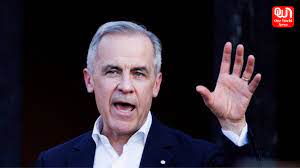
The Aftermath of the Canadian Federal Elections: Who are the Winners and Losers?
Although Carney and the Liberal Party were able to gain enough seats to form a government, they do not have enough to form a majority government. This is clear as the Liberals managed to win 169 seats in the House of Commons, which is three shy of the 172 needed to have a supermajority (Faguy, 2025). As a result, the Liberals will have to negotiate and build ties with the other opposition parties in order to form an effective government and produce policy

Introduction:
The Canadian federal elections concluded and resulted in a consequential victory for Prime Minister Mark Carney and his Liberal Party. Although the Liberal Party managed to win 169 seats in the House of Commons, it was not enough to form a majority government and will therefore have to rely on smaller parties to make government. This election has seen the Liberal Party make a historical comeback to remain as the ruling party, while the other parties have suffered heavy losses. The purpose of this article is to analyse the results of the Canadian federal elections based on party and candidate performance. This analysis will be divided into sections to analyse the winners and losers of the election:
- Winner-Prime Minister Mark Carney and the Liberal Party
- Loser-Conservative Leader Pierre Poilievre and the Conservative Party
- Mixed-Yves-François Blanchet and Bloc Québécois
- Loser-Jagmeet Singh and the New Democratic Party (NDP)
Winner-Prime Minister Mark Charney and the Liberal Party:
The Liberal Party under Carney managed to gain enough seats in the House of Commons to form a government, which is considered by some to be monumental considering they were polling 25 points behind the Conservative Party in January. This comeback victory can be attributed to the “Trump factor”, which saw Carney and the Liberal Party candidates focus their platform on economic security and the protection of Canadian sovereignty in the face of Trump tariffs and annexation threats (Ljunggren, Shakil, and Nickel, 2025). Moreover, this election win can also be attributed to the idea that the Canadian electorate was looking for a leader who can stabilise the economy and is considered a steady individual during turbulent times. According to Michael Bociurkiw of the Atlantic Council “Voters appeared to be looking for a steady, capable hand in Carney, a former banker: someone with the backbone to confront Trump, who seems intent on turning Canada into a de facto fifty-first state, and the competence to undo nearly a decade of economic mismanagement under Trudeau.” (Bociurkiw, 2025). By focusing on economic security and the Trump threat, Carney was able to garner enough seats to form government in a time of economic uncertainty for Canada.
Although Carney and the Liberal Party were able to gain enough seats to form a government, they do not have enough to form a majority government. This is clear as the Liberals managed to win 169 seats in the House of Commons, which is three shy of the 172 needed to have a supermajority (Faguy, 2025). As a result, the Liberals will have to negotiate and build ties with the other opposition parties in order to form an effective government and produce policy. A possible way for the Liberals to form a functioning government would be to align themselves once again with the NDP, as they have enough seats to help the Liberals reach a supermajority (Al-Jazeera Staff, 2025). It would be understandable if the remaining 7 NDP Members of Parliament are skeptical of forming a government with the Liberal Party, after all, it was their support of confidence for a failing Trudeau government that damaged their image as a progressive movement. However, if Carney can pass legislation that can benefit the progressive movement in Canada, it can benefit the NDP going into the next election.
Although Carney and the Liberal Party were able to gain enough seats to form a government, they do not have enough to form a majority government. This is clear as the Liberals managed to win 169 seats in the House of Commons, which is three shy of the 172 needed to have a supermajority (Faguy, 2025). As a result, the Liberals will have to negotiate and build ties with the other opposition parties in order to form an effective government and produce policy
Overall, with the Liberal victory, Carney can now focus on making sure his campaign promises are realised. This is clear as Carney mentioned in his victory speech that he will focus on diversifying Canada’s relationships with international partners while also letting his voter base and the rest of the Canadian electorate know that Trump cannot break Canada (Cecco, 2025). Moreover, Carney can also focus on campaign promises such as keeping “…dental care in place, offer a middle-class tax cut, return immigration to sustainable levels and increase funding to Canada’s public broadcaster, the Canadian Broadcasting Corporation” (Gillies, 2025). Therefore, the Liberals have work to do in order to quell the economic and housing issues facing Canada while also dealing with threats from Trump.
Loser-Conservative Leader Pierre Poilievre and the Conservative Party:
While the Liberal Party under Carney experienced success during this election, the same cannot be said for Pierre Poilievre and the Conservative Party. As mentioned before, the Poilievre’s Conservative Party enjoyed a surmountable lead against the Liberals prior to the elections and were predicted to win a supermajority until Trudeau’s resignation. However, despite the Conservatives winning 144 seats in the House of Commons, the election saw Poilievre lose his riding in Carleton to Liberal candidate Bruce Fanjoy, ending Poilievre’s 20 year tenure (Shamim, 2025). The question remains, why did Poilievre and the Conservatives lose an election that was going in their favour?
It can be argued that a major contributing factor to Poilievre’s defeat is his affiliation to Trump and his Trump-like political tactics. This is clear as Poilievre “…embraced some Trump-style policies, such as cutting foreign aid and defunding state media, and the Liberals sought to portray him as aligned with the controversial U.S. president” (Starcevic, 2025). Beyond embracing Trump-like policies, Poilievre also embraced a Trump-like image, which he had hoped would bode well with a frustrated Canadian electorate. This is evident as a piece from Times Magazine mentioned how Poilievre tried to import a culture-war to Canada during the US-Canada trade war (Kanal, 2025). Furthermore, although the Trump mannerisms played a role in Poilievre’s downfall, it can also be said that Trudeau’s departure from government was to an extent a contributing factor. Trudeau’s departure from government served as a blow to Poilievre’s campaign as Poilievre “Poilievre hoped to make the election a referendum on former Prime Minister Justin Trudeau, whose popularity declined toward the end of his decade in power as food and housing prices rose” (Gillies, 2025). Of course with Trudeau’s resignation, Poilievre lost the primary focus of his campaign, which played a role in hindering his reelection campaign.
Although Poilievre and the Conservatives lost the election, it can be argued that their election run was not a complete disaster. For starters, the Conservatives managed to increase their share of the vote by winning 144 seats in the House of Commons, which makes them the second largest party in parliament. This is clear as the Conservatives held 41.3% of the vote share, just 2.40% shy of the Liberals’ vote share of 43.7%, while also having a seat share of 42% compared to the Liberals’ 49% (Leake et.al, 2025). Moreover, although the Conservatives finished second, this is considered a strong result. This is evident as “This will be their strongest performance since 2011, when the Conservatives secured a majority of 166 seats” (Hagopian, 2025). This increase in seats for the Conservatives can allow them to mount a strong opposition to Liberal Party policies and can make the lawmaking process difficult for the ruling party. While this can be considered good news for the Conservatives, there is also hope for Poilievre to regain a seat in parliament and remain the opposition leader. This is clear, as Poilievre can stay on as Conservative leader and gain a seat in the House of Commons if a byelection can take place in a safe blue riding, which would require a member of the Conservative Party to give up their seat for Poilievre to run (Aiello and Van Dyk, 2025). At this point however, this is not confirmed, but it is a possibility. Ultimately, although Conservatives managed to win a lot of seats in the elections, their leader lost their riding, while also losing a 25 point lead, which makes this election a loss for the party.
Mixed-Yves-François Blanchet and Bloc Québécois:
Bloc Québécois and their leader Yves-Francois Blanchet had an interesting election cycle. Yes, the Bloc Québécois can be considered a loser in this election due to the fact they lost 13 of their seats and now hold 22 seats in the House of Commons. This can be attributed to the idea that the Bloc Québécois’ campaign was derailed due to the Trump tariffs and annexation threats (Authier, 2025). Moreover, due to the annexation threats and tariffs made by the US, it led to a rise in Canadian pride in Quebec, which in turn saw an increase in support for the Liberal Party entering election day. This is clear as voters viewed having a Liberal government would be beneficial for Quebec in the face of the American threat (Murphy, 2025). In the end, the result was a massive Liberal win in Quebec, as the Liberal Party was able to win 44 seats in the province which accounts for 43% of the popular vote in comparison to Bloc Québécois’ 22 seats which was approximately 27.9% of the popular vote (CBC News, 2025). Therefore, it can be said that Bloc Québécois lost a chunk of their seats due to the “Trump factor”, which saw the Liberal Party make substantive gains in Quebec.
Although the Bloc Québécois lost numerous seats to the Liberal Party, the election was not a massive loss for them considering the circumstances. According to Stéphanie Chouinard, Associate Professor at the Royal Military College, “…a Liberal minority government is “probably the best case scenario for the Bloc Québécois because they would unofficially be able to hold the balance of power.”” (Chouinard, 2025 cited in Cabrera, 2025). This position would allow the Bloc Québécois to be able to collaborate with the minority government in order to build a closer partnership between Quebec and the federal government. Moreover, the Bloc Québécois has maintained its official party status, which could play a role in furthering its political agenda going forward under the Carney government.
Loser-Jagmeet Singh and the New Democratic Party (NDP):
It is without question that the biggest losses of the election were incurred by the NDP and Jagmeet Singh. The NDP lost 17 seats, which saw the total number of seats held by the NDP be reduced to 7, with Singh losing his own seat after finishing third in his riding (Leake et.al, 2025). As a result of this devastating loss, Singh resigned from his position and the NDP lost its official party status. There are some contributing factors to why the NDP managed to lose their status, with one being Singh’s inability to gain support for his platform during a time where the “Trump factor” dominated the election cycle. According to Spencer Van Dyk and Rachel Aiello “…Singh faced repeated questions about his inability to gain traction in what largely came down to a two-way race between the Liberals and Conservatives, centred on the ballot question of who would be best to handle the economic and sovereignty threats posed by U.S. President Donald Trump” (Van Dyk and Aiello, 2025).
By not adequately addressing the Trump threat during the campaign, Singh and the NDP opened themselves up to a massive loss, as other parties used the threat to steal NDP voters. This is clear as Jonathan Malloy, a Political Science Professor from Carleton University mentioned “…the election night results mostly centred on voter fear of President Donald Trump, which drove NDP supporters to the Liberals.” (Malloy, 2025 cited in Gollom, 2025). Therefore, it can be said that the NDP’s losses can be attributed to their inability to make the Trump threat part of their platform. The best option for NDP going forward would be to align themselves with the minority government, which could help boost their numbers in a future election and provide them with political survival in the meantime.
Conclusion:
Conclusively, the Liberals managed to become the winners of this election even though they fell short of forming a majority government. This unique position allows the Carney government to align itself with smaller parties in order to produce laws and policies for the betterment of Canada. Moreover, while the Conservative Party managed to win a good amount of seats in the House of Commons, their leader Poilievre lost his seat, which puts the party in a political limbo for the time being. Although Poilievre lost his seat, he could potentially stay on as leader, as the Conservatives can force a byelection in a safe riding, which could allow Poilievre a way back into parliament.
The Bloc Québécois lost a number of seats to the Liberal Party, but they do have enough seats to maintain official party status and could work with the Liberals to form government. The biggest loss of the election would have to go to the NDP, as they lost their leader after Singh finished third in his riding as well as losing official party status, which puts their political survival at risk. A possible chance for the NDP’s future survival can hinge on forming an alliance with the Liberal Party, which could allow them to be involved in the policy making process. Overall, this election saw the Liberal Party make a massive comeback, which through their anti-Trump stance, put Canadian economic and sovereignty fears to rest.
Sherif Amin is a non resident research fellow at the America Program of the Sixteenth Council


Critical Minerals and the Green Transition: Europe’s New Dependency Risk