
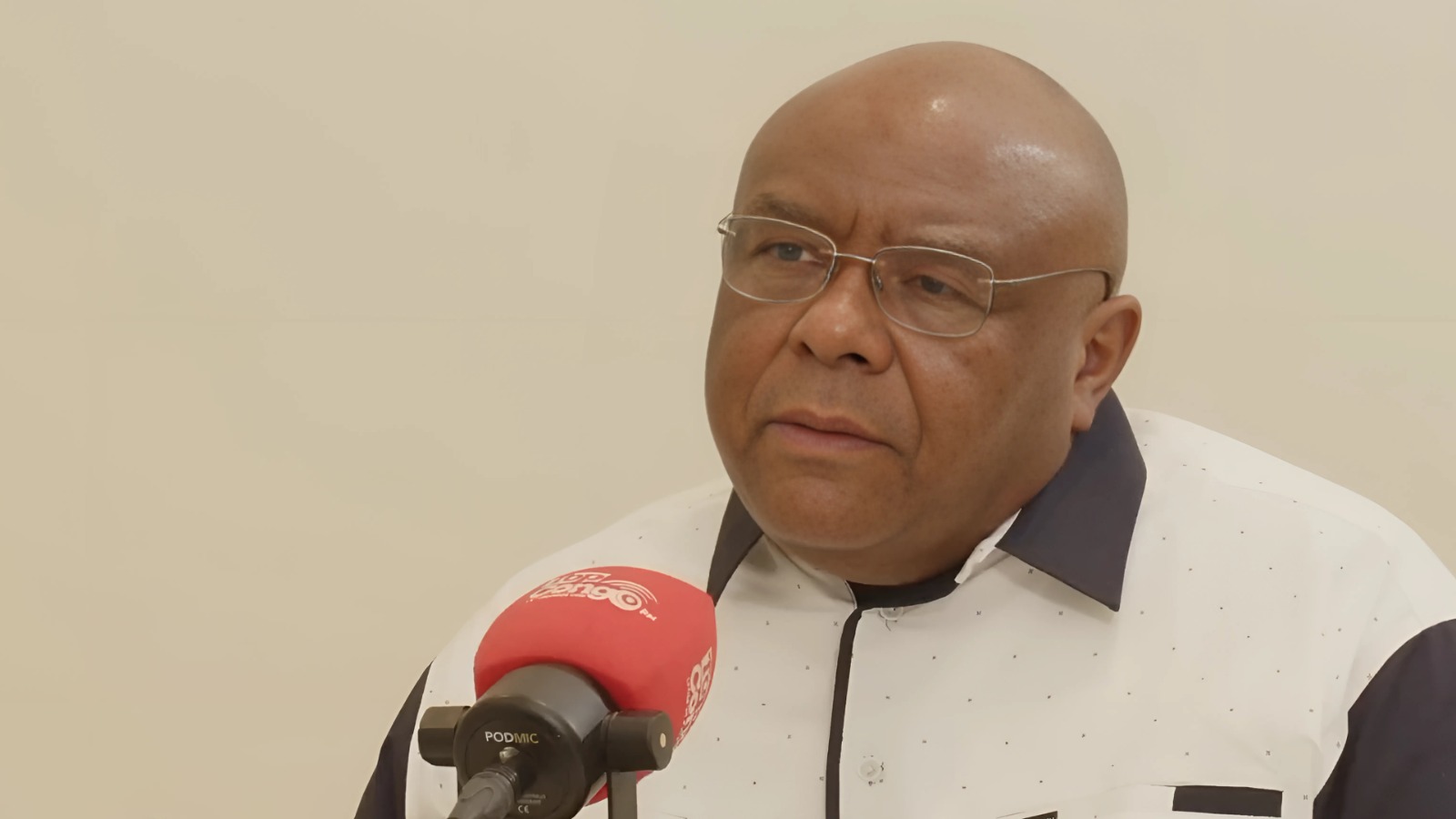
Jean-Pierre Bemba Confronts National Crisis and Calls Out Joseph Kabila, Moïse Katumbi and CENCO in Landmark Interview
Jean-Pierre Bemba alleges high-level sabotage and outlines urgent reforms in aviation, river transport and governance in the DRC.

In a seismic media appearance on 9 June 2025, Deputy Prime Minister and Minister of Transport Jean-Pierre Bemba Gombo took centre stage in a Face à Face interview broadcast on Top Congo FM. His performance was equal parts exposé, administrative report and political reckoning. Without hesitation, Bemba issued a public accusation against former President Joseph Kabila, opposition leader Moïse Katumbi and senior clerics of the National Episcopal Conference of the Congo (CENCO), alleging a plot to remove President Félix Tshisekedi and destabilise national institutions.
“These are not mere suspicions,” Bemba said gravely. “I have the documents and proof, and I will release them.”
His message struck a country already weakened by insecurity, inflation and institutional paralysis. The political class, civil society and the wider Congolese public were left reeling from both the gravity of the accusations and the depth of the dysfunction revealed.
Allegations Against the Political and Religious Elite
Bemba’s most explosive claims directly targeted the inner circles of Congolese power. He accused Joseph Kabila and Moïse Katumbi of orchestrating a destabilisation strategy to violently remove President Tshisekedi. “There is a project underway to eliminate the President of the Republic,” he said, adding that senior members of CENCO were also complicit.
For months, Bemba claimed, he withheld evidence in hopes that the situation would calm. But continued inflammatory rhetoric and subversive speeches, some delivered from within the country and others from abroad, had pushed him to break his silence. “If they want me to say I accuse, I will,” he vowed.
His position was not merely defensive. It was a full-throated counterattack aimed at silencing what he called internal saboteurs determined to subvert the democratically elected government.
Air Congo and the Struggle to Reclaim National Sovereignty
Beyond politics, Bemba provided detailed updates on transport sector reforms. At the centre was the relaunch of Air Congo, developed in partnership with Ethiopian Airlines. Four Boeing 737 aircraft have already been received. The project aims to serve both domestic destinations and major regional capitals, including Nairobi, Luanda and Abidjan.
Yet the country remains blacklisted by the European Union for failing to meet international safety standards. According to Bemba, this is largely due to mismanagement under previous administrations, including a 50-million-dollar loan misused under the GOPAX project. He assured citizens that the DRC will be removed from the blacklist before the end of 2025, citing new safety equipment, international certification audits and improved staff training.
Additionally, a new international airport in Kinshasa is scheduled for completion by December 2027. The 500-million-dollar project is being led by Congolese firm InfraRouge through a public and private partnership.
Congo River as the Artery of National Revival
Bemba highlighted the Congo River’s strategic importance, calling it the greatest highway of the nation. In 2025 alone, over 200 lives have been lost in boat accidents due to unregulated wooden vessels and gross negligence. He confirmed that multiple fluvial commissioners and boat captains have been arrested.
To address this, his ministry is constructing four steel passenger boats for 300,000 dollars each, with plans to scale the project to 100 vessels through private investment. In addition, river dredging and beaconing are underway to restore 24-hour navigability across the national waterways.
Railways and Urban Roads: Repairing What Was Abandoned
The rail sector, once a symbol of national ambition, has collapsed. Bemba cited the rehabilitation of the Kinshasa to Matadi line and plans for Kalemie, Kisangani and the Banana deep-sea port. However, landslides and erosion have slowed progress, particularly around Kasangulu.
In the capital, 60 kilometres of roads are being resurfaced. The city has introduced new traffic regulations for heavy vehicles and will deploy 1,000 police officers to manage congestion. Fifty-five new traffic lights are being installed to manage flow in priority zones.
Power Struggles and the Question of Succession
On the topic of political transitions, Bemba addressed growing speculation around Martin Fayulu’s recent visit to President Tshisekedi. He confirmed that he had not been informed in advance but denied any political tension within the Union Sacrée alliance. “Whether Fayulu becomes Prime Minister or not is irrelevant,” he said. “What matters is that the person is chosen from within the parliamentary majority.”
This was an implicit reminder that the ruling coalition holds over 450 seats in the National Assembly and has full authority to designate a successor.
Defence Policy and State Resilience
Bemba, who formerly served as Minister of Defence, also addressed the situation in the eastern provinces. While supporting diplomatic efforts under Foreign Minister Thérèse Kayikwamba Wagner, he insisted that military reform remains essential. He credited his own tenure with significant advances in payroll transparency, logistical efficiency and troop morale.
While he declined to disclose the number of active troops, citing state security concerns, he reaffirmed the role of the Armed Forces of the Democratic Republic of the Congo in stabilising conflict zones and supporting humanitarian operations.
Conclusion: Between Collapse and Redemption
Jean-Pierre Bemba’s Face à Face interview was more than a political address. It was a cry of alarm, a policy report and a national reckoning all at once. His accusations against Kabila, Katumbi and CENCO are likely to deepen political fractures, but his administrative clarity and call for institutional reform offer a path forward.
The DRC stands on the knife’s edge. Insecurity, corruption and sabotage threaten its core institutions. Yet Bemba’s vision of a connected, stable and sovereign Congo shows that with courage and integrity, a different future is possible. His message was unmistakable. Let the people know the truth. Let the state stand.
Aric Jabari is the Editorial Director of the Sixteenth Council.


Trump Can’t Take Greenland – and the World Knows Why